如今,大多数老年人都随身带着智能手机,而且这一比例还在上升:中年时就开始用智能手机的人正陆续年满 65 岁,已经年长的人也在不断开始使用。但拥有率在 75 岁以后仍会急剧下降,各国之间差异很大,而且取决于调查的提问方式。本页汇集了以下数据:有多少老年人拥有或使用智能手机或其他手机、有多少人上网,按年龄、国家和年份划分;他们用手机做什么;哪些人仍未上网、原因何在,以及依然存在的数字鸿沟(包括在独自生活的人当中);还有这一切对健康、求助和诈骗问题意味着什么。除非注明其他年龄段,本页所说的「老年人」均指 65 岁及以上的人。
01 / 有多少人
有多少老年人拥有智能手机?
78% 的 65 岁及以上美国成年人拥有智能手机(2025 年)。[1]
如今,在已过退休年龄的美国人中,智能手机已是常态,几乎每位老年人都有某种手机。下面的数字来自不同的调查,每项调查都注明了它统计的是什么:拥有智能手机、使用智能手机,还是用手机上网,以及针对哪个年龄段。
- 95% 的 65 岁及以上美国成年人拥有某种手机(2025 年)。[1]
- 16% 的 65 岁及以上美国成年人拥有的手机不是智能手机(2025 年),而 18-29 岁成年人中这一比例为 2%(Pew Research Center, 2025)。[1]
- 2021 年,户主为 65 岁及以上的美国家庭中有 75.4% 拥有智能手机,而全部家庭为 90.0%,户主为 15-34 岁的家庭为 97.9%(美国人口普查局,2024)。[8]
- 2018 年,户主为 65 岁及以上的美国家庭中有 62.4% 拥有智能手机,而全部家庭为 84.4%(美国人口普查局,2021)。[9]
- 2016 年,户主为 65 岁及以上的美国家庭中有 48.5% 拥有智能手机,而全部家庭为 76.5%(美国人口普查局,2018)。[10]
| 国家和地区、衡量指标与年龄(年份) | 比例 | 范围 | 来源 |
|---|---|---|---|
| 英国:本人使用智能手机,65 岁及以上(2026 年) | 81% | 英国 65 岁及以上的成年人;本人使用智能手机(面访调查,以全部受访者为基数) · 英国 · 2026 年(3 月至 6 月) | [11] |
| 加拿大:拥有个人用智能手机,65 岁及以上(2020 年) | 54.1% | 拥有个人用智能手机的 65 岁及以上加拿大人(对比全部 15 岁及以上人口);占该年龄段全部人口的百分比(该问题仅询问过去 3 个月内的互联网用户) · 加拿大(10 个省) · 2020 年 | [12] |
| 日本:拥有智能手机,65 岁及以上(2025 年) | 59.2% | 日本私人住户中拥有智能手机的 65 岁及以上人口(家庭成员调查,邮寄和网络填答;占该年龄段全部人口的比例,未作答者保留在基数中) · 日本 · 2025 年(2025 年 8 月底调查) | [3] |
| 韩国:拥有智能手机,65 岁及以上(2023 年) | 76.6% | 韩国 65 岁及以上人口(社区居住,全国调查),拥有智能手机 · 韩国 · 2023 年 | [13] |
| 香港:拥有智能手机,65 岁及以上(2025 年) | 89.7% | 统计时拥有智能手机的 65 岁及以上香港人士 · 香港特别行政区 · 2025 年 | [14] |
| 新加坡:拥有智能手机,60 岁及以上(2025 年) | 94% | 拥有智能手机的 60 岁及以上新加坡居民 · 新加坡 · 2025 年 | [15] |
| 芬兰:在使用智能手机,65-74 岁(2025 年) | 87% | 芬兰 65-74 岁人口;在使用触摸屏手机 · 芬兰 · 2025 年 | [16] |
| 欧盟 27 国:过去 3 个月内用手机上网,65-74 岁(2025 年) | 70.3% | 欧盟 27 国 65-74 岁的个人;在过去 3 个月内用手机或智能手机上网,占该年龄段全部个人的百分比 · 欧盟 27 国 · 2025 年 | [2] |
| 瑞典:用手机上网,65-74 岁(2025 年) | 88% | 瑞典 65-74 岁人口;用手机或智能手机上网,占该群体全部人口的百分比 · 瑞典 · 2025 年 | [17] |
| 瑞士:用手机上网,60 岁及以上(2025 年) | 89.3% | 瑞士 60 岁及以上人口;上网所用设备:手机或智能手机,占该群体全部人口的百分比 · 瑞士 · 2025 年 | [18] |
| 荷兰:用手机上网,75 岁及以上(2025 年) | 71.5% | 荷兰 75 岁及以上人口;用手机或智能手机上网(所用设备),占该群体全部人口的百分比 · 荷兰 · 2025 年 | [19] |
| 澳大利亚:用手机上网,75 岁及以上(2025 年) | 88.1% | 在过去 6 个月内用手机上网的 75 岁及以上澳大利亚成年人(以全部 75 岁及以上成年人为基数) · 澳大利亚 · 截至 2025 年 6 月的 6 个月 | [20] |
| 巴西:过去 3 个月内用手机上网,60 岁及以上(2025 年) | 58% | 在过去 3 个月内用手机上网的 60 岁及以上个人(对比全部 10 岁及以上人口) · 巴西 · 2025 年 | [21] |
| 智利:拥有智能手机,60 岁及以上(2022 年) | 51% | 报告拥有智能手机的 60 岁及以上人口(Encuesta Calidad de Vida en la Vejez 2022) · 智利 · 2022 年 | [22] |
| 39 个非洲国家:拥有智能手机,56 岁及以上(2021/2023 年) | 29% | 本人拥有可上网手机的 56 岁及以上成年人(非洲晴雨表对智能手机的定义),39 国平均值 · 39 个非洲国家(平均值) · 2021-2023 年 | [23] |
为什么各项数字不一致
有四个因素会让一个数字相差十个百分点或更多:年龄段、调查问的是拥有还是使用手机、调查如何接触受访者,以及由谁来做调查。下面每一对数字展示其中一个因素。
- 2025 年,90% 的 50 岁及以上美国成年人拥有智能手机,高于 2016 年的 55%。[24]
- 2021 年初,61% 的 65 岁及以上美国成年人拥有智能手机,而 18-29 岁成年人为 96%(Pew Research Center, 2022)。[25]
- 2021 年 11 月,美国 65 岁及以上的人中有 65.6% 使用智能手机或可上网的手机(NTIA, 2024)。[26]
- 2026 年,英国 75 岁及以上的成年人中有 72% 本人使用智能手机,而全体成年人为 95%(Ofcom Technology Tracker, 2026)。[11]
- 2025 年秋季,英国 75 岁及以上的成年人中有 56% 使用智能手机(Ofcom Adults' Media Literacy Tracker, 2026)。[28]
- 2025 年,60 岁及以上的巴西人中有 74.5% 在此前三个月内使用过互联网,而 10 岁及以上的全体人口为 90.5%(巴西地理统计局,PNAD Contínua ICT 模块 2025)。[29]
- 2025 年,60 岁及以上的巴西人中有 54% 是互联网用户(过去三个月内使用过),而 10 岁及以上人口为 85%(Cetic.br, TIC Domicílios 2025)。[30]
- 2025 年,爱尔兰 75 岁及以上的人中有 63% 在过去 3 个月内使用过互联网,高于 2024 年的 54%(爱尔兰中央统计局,2025)。[31]
- 2025 年,爱尔兰 75-89 岁的人中有 87.6% 在过去 3 个月内使用过互联网(欧盟统计局 ICT 调查,2026)。[32]
| 时期 | 50 岁及以上者中的比例 | 范围 | 来源 |
|---|---|---|---|
| 2017 年(11 月 16 日至 27 日) | 70% | 表示自己拥有智能手机的 50 岁及以上美国成年人(AARP 技术调查);GfK KnowledgePanel 网络调查 · 美国 | [33] |
| 2019 年(6 月 25 日至 7 月 9 日) | 77% | 表示自己拥有智能手机的 50 岁及以上美国成年人(AARP 技术调查);Ipsos 在线样本调查 · 美国 | [34] |
| 2020 年 | 85% | 表示自己拥有智能手机的 50 岁及以上美国成年人(AARP 技术调查);网络调查(NORC 样本库和 Dynata) · 美国 | [35] |
| 2021 年 | 84% | 表示自己拥有智能手机的 50 岁及以上美国成年人(AARP 技术调查);网络调查(NORC 样本库和 Dynata) · 美国 | [35] |
| 2022 年 | 86% | 表示自己拥有智能手机的 50 岁及以上美国成年人(AARP 技术调查);网络调查(NORC 样本库和 Dynata) · 美国 | [35] |
| 2023 年 | 89% | 表示自己拥有智能手机的 50 岁及以上美国成年人(AARP 技术调查);网络调查(NORC 样本库和 Dynata) · 美国 | [35] |
| 2024 年 | 91% | 表示自己拥有智能手机的 50 岁及以上美国成年人(AARP 技术调查);网络调查(NORC 样本库和 Dynata) · 美国 | [35] |
什么会改变一个数字。年龄段:AARP 被广泛引用的数字涵盖的是 50 岁及以上的成年人,而不是老年人。衡量指标:拥有智能手机、使用智能手机、在过去三个月内用手机上过网,是不同的问题;而按家庭统计的指标,只要家中有人拥有就会计入。调查方式:Pew 在 2023 年从电话访问改为网络和邮寄访问,这是其数字在 2021 年之后大幅跃升的部分原因;而在线样本会漏掉完全不上网的人。调查机构:同一个国家的两项官方调查,结果可能相差十个百分点以上。本页的每一个数字都注明了其年龄段和衡量指标。
我们不会发布的数字。有几个数字在流传时,缺少了使其成立的年龄段或日期。「65 岁及以上的人中多达 90% 现在拥有智能手机」和「老年人的智能手机使用率从 55% 飙升至 90%」,都是把 AARP 针对 50 岁及以上成年人的数字换了标签。Pew 2016 年的数字(80 岁及以上的美国人中有 17% 拥有智能手机;较富裕的老年人为 81%,较贫困的老年人为 27%)至今仍被当作最新数据;它们已有十年之久,本页在展示时注明了年份。「77% 的老年人需要别人帮忙使用新设备」出自 2013 年的一项调查。「45.2% 的智能手机使用时间花在社交媒体上」和「每天两个半小时」,在据称作为其出处的那项挪威小型研究中根本找不到。「43% 的澳大利亚老年人停止使用智能手机」误读了 2017 年一项关于智能手机接入情况的调查。「27.2% 的 70 岁及以上韩国人拥有智能手机」其实是把智能手机视为必需媒体的人所占的比例,而不是拥有智能手机的比例,后者要高得多。「80% 的英国 65 岁及以上老人拥有智能手机」出自 Statista,而不是 Ofcom 自己的调查。如果您知道其中任何一个数字的原始出处,请告诉我们。
02 / 增长
老年人使用智能手机的比例在增长吗?
2023 年 11 月,美国 65 岁及以上的人中有 71.7% 使用智能手机或可上网的手机,高于 2011 年 7 月的 6.6%(NTIA, 2024)。[26]
是的,而且是从两个方向增长。每年年满 65 岁的那一代人,手里早已有了智能手机;已经年长的人也在不断开始使用。下面的图表把每个较年长的年龄组与同一调查中比它年轻十岁的年龄组并列,让人看到下一代老年人正在到来。
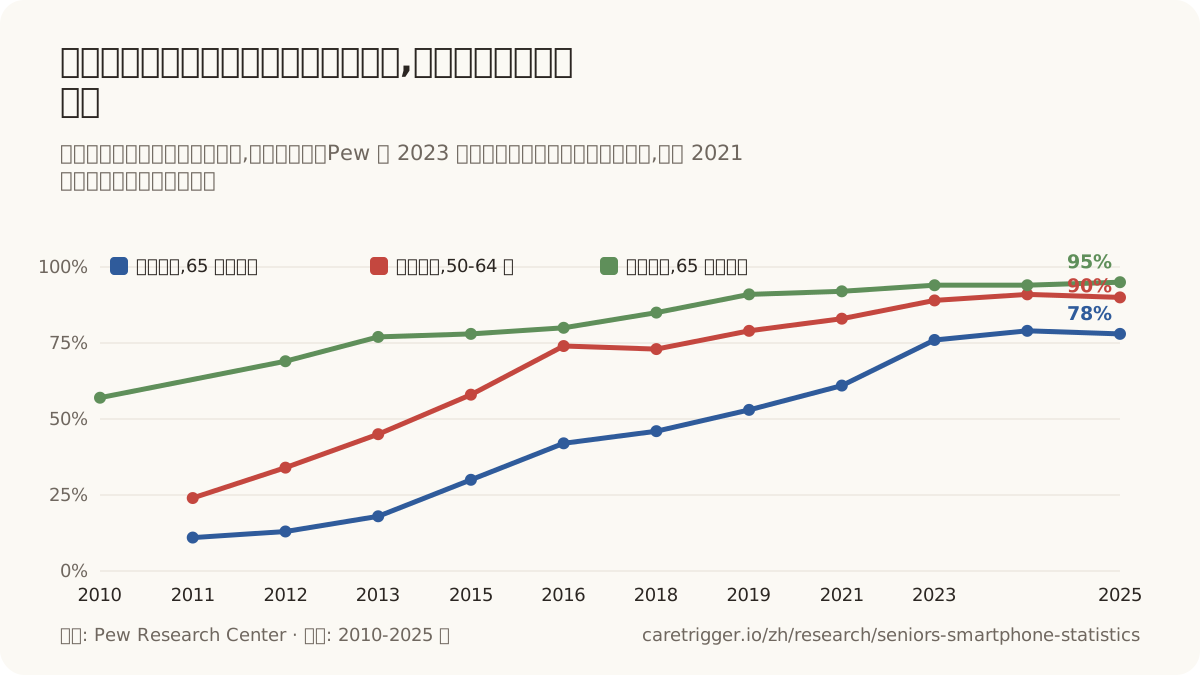
- 2024 年,79% 的 65 岁及以上美国成年人拥有智能手机,而 50-64 岁者为 91%(Pew Research Center, 2024)。[36]
- 2025 年,92% 的 18-49 岁美国成年人拥有智能手机,与 50 岁及以上成年人的 90% 在统计上持平(AARP Research, 2025)。[37]
| 时期 | 65 岁及以上者中的比例 | 范围 | 来源 |
|---|---|---|---|
| 2011 年(7 月) | 6.6% | 使用可上网手机的 65 岁及以上美国非机构平民人口(NTIA 变量 mobilePhoneUser;2017-2023 年的问题:「那么智能手机,或者能连接互联网的手机呢?」;住户受访者可代他人作答) · 美国 | [26] |
| 2013 年(7 月) | 17.0% | 使用可上网手机的 65 岁及以上美国非机构平民人口(NTIA 变量 mobilePhoneUser;2017-2023 年的问题:「那么智能手机,或者能连接互联网的手机呢?」;住户受访者可代他人作答) · 美国 | [26] |
| 2015 年(7 月) | 31.6% | 使用可上网手机的 65 岁及以上美国非机构平民人口(NTIA 变量 mobilePhoneUser;2017-2023 年的问题:「那么智能手机,或者能连接互联网的手机呢?」;住户受访者可代他人作答) · 美国 | [26] |
| 2017 年(11 月) | 49.0% | 使用可上网手机的 65 岁及以上美国非机构平民人口(NTIA 变量 mobilePhoneUser;2017-2023 年的问题:「那么智能手机,或者能连接互联网的手机呢?」;住户受访者可代他人作答) · 美国 | [26] |
| 2019 年(11 月) | 57.6% | 使用可上网手机的 65 岁及以上美国非机构平民人口(NTIA 变量 mobilePhoneUser;2017-2023 年的问题:「那么智能手机,或者能连接互联网的手机呢?」;住户受访者可代他人作答) · 美国 | [26] |
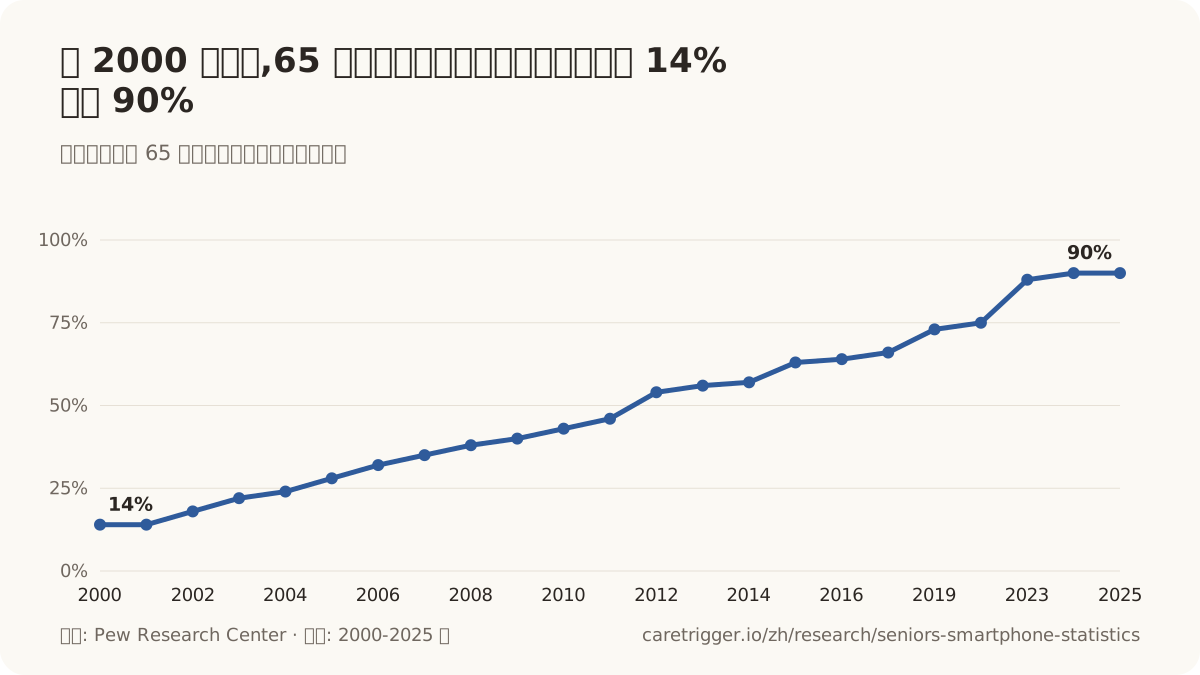
- 2025 年,90% 的 65 岁及以上美国成年人表示自己使用互联网,高于 2000 年的 14%;全体美国成年人中这一比例为 96%(Pew Research Center, 2025)。[38]
- 2023 年 11 月,美国 65 岁及以上的人中有 76.8% 使用互联网,高于 1998 年 12 月的 7.2%,而 3 岁及以上的全体人口为 83.3%(NTIA, 2024)。[26]
- 2024 年,美国住户中 65 岁及以上的人有 88.2% 订购了宽带互联网服务,高于 2015 年的 67.0%,而全部住户人口为 94.6%(美国人口普查局,American Community Survey, 2025)。[39]
下一代老年人早已接入网络
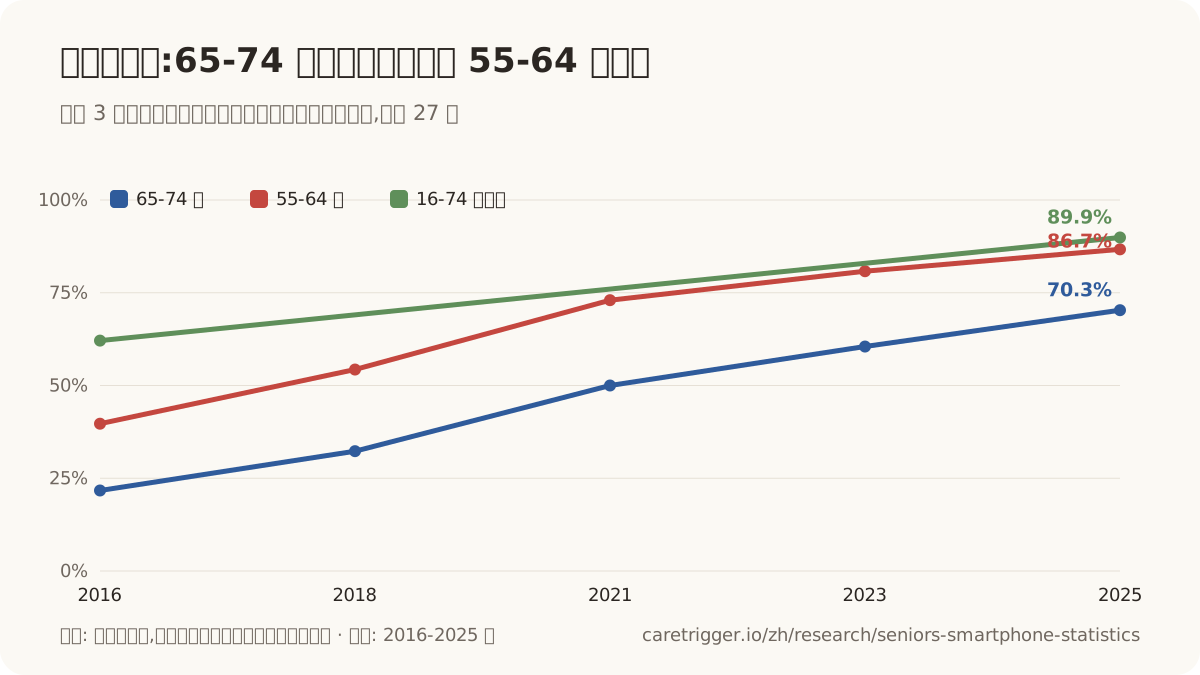
在每个公布可比年龄段数据的国家,年轻十岁的那一组都走得更远,而年长的一组在几年后沿着大致相同的路径跟上。
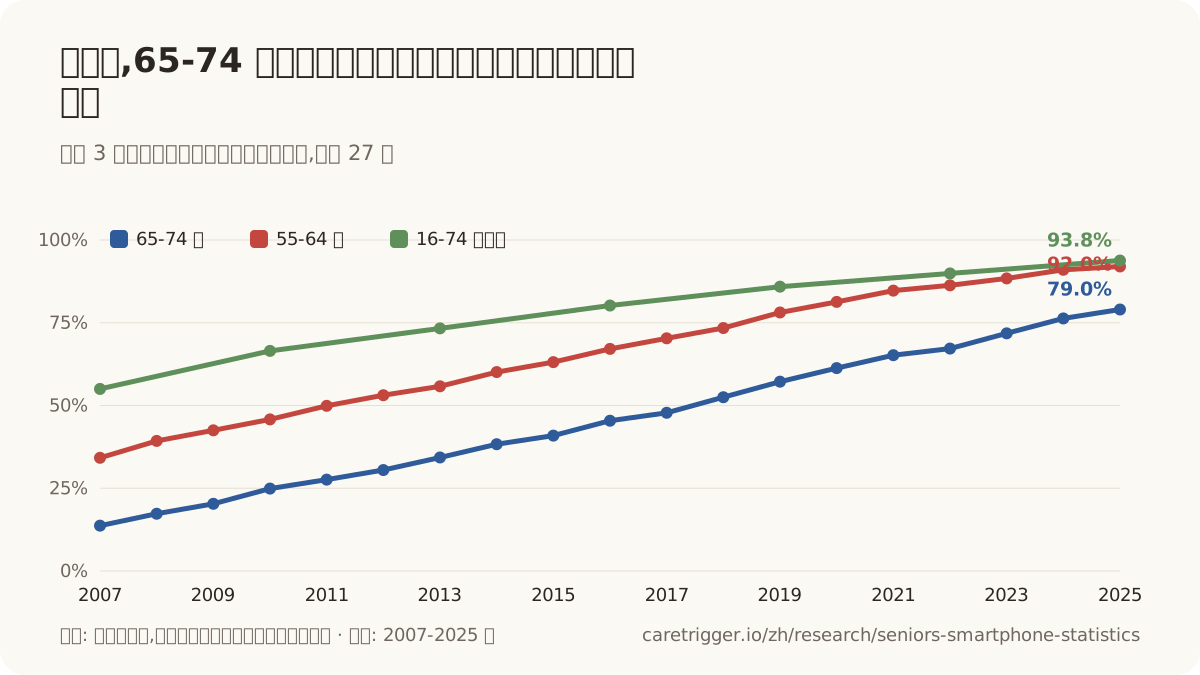
- 2025 年,欧盟 27 国 65-74 岁的人中有 79.0% 在调查前 3 个月内使用过互联网,高于 2007 年的 13.7%(欧盟统计局 ICT 调查,2026)。[32]
- 2025 年,欧盟 27 国 55-64 岁的人中有 92.0% 在调查前 3 个月内使用过互联网,而 65-74 岁者为 79.0%,16-74 岁的全体人口为 93.8%(欧盟统计局 ICT 调查)。[32]
- 2025 年,欧盟 27 国 55-64 岁的人中有 86.7% 在过去 3 个月内用手机或智能手机上过网,而 65-74 岁者为 70.3%,16-74 岁的全体人口为 89.9%(欧盟统计局 ICT 调查)。[2]
- 2025 年,欧盟 27 国 16-74 岁的全体人口中有 93.8% 在过去 3 个月内使用过互联网,高于 2007 年的 55.0%(欧盟统计局 ICT 调查,2026)。[32]
- 2025 年,欧盟 27 国 16-74 岁的人(全部个人)中有 89.9% 在过去 3 个月内用手机或智能手机上过网,高于 2016 年的 62.1%(欧盟统计局 ICT 调查,2026)。[2]
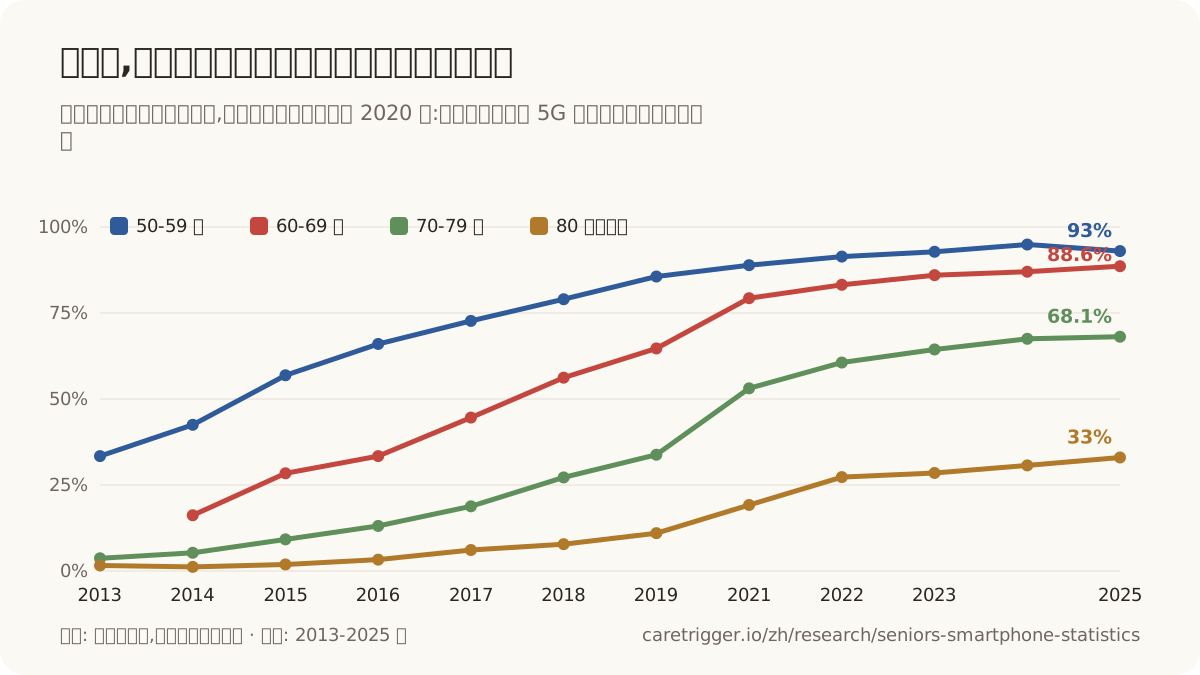
| 时期 | 65 岁及以上者中的比例 | 范围 | 来源 |
|---|---|---|---|
| 2013 年(2013 年底调查) | 4.2% | 日本私人住户中拥有智能手机的 65 岁及以上人口(家庭成员调查,邮寄和网络填答;占该年龄段全部人口的比例,未作答者保留在基数中) · 日本 | [40] |
| 2014 年(2014 年底调查) | 5.8% | 日本私人住户中拥有智能手机的 65 岁及以上人口(家庭成员调查,邮寄和网络填答;占该年龄段全部人口的比例,未作答者保留在基数中) · 日本 | [41] |
| 2015 年(2015 年底调查) | 10.2% | 日本私人住户中拥有智能手机的 65 岁及以上人口(家庭成员调查,邮寄和网络填答;占该年龄段全部人口的比例,未作答者保留在基数中) · 日本 | [42] |
| 2016 年(2016 年 9 月底调查) | 14.1% | 日本私人住户中拥有智能手机的 65 岁及以上人口(家庭成员调查,邮寄和网络填答;占该年龄段全部人口的比例,未作答者保留在基数中) · 日本 | [43] |
| 2017 年(2017 年 9 月底调查) | 20.4% | 日本私人住户中拥有智能手机的 65 岁及以上人口(家庭成员调查,邮寄和网络填答;占该年龄段全部人口的比例,未作答者保留在基数中) · 日本 | [44] |
| 2018 年(2018 年 9 月底调查) | 26.8% | 日本私人住户中拥有智能手机的 65 岁及以上人口(家庭成员调查,邮寄和网络填答;占该年龄段全部人口的比例,未作答者保留在基数中) · 日本 | [45] |
| 2019 年(2019 年 9 月底调查) | 32.1% | 日本私人住户中拥有智能手机的 65 岁及以上人口(家庭成员调查,邮寄和网络填答;占该年龄段全部人口的比例,未作答者保留在基数中) · 日本 | [46] |
| 2021 年(2021 年 8 月底调查) | 46.4% | 日本私人住户中拥有智能手机的 65 岁及以上人口(家庭成员调查,邮寄和网络填答;占该年龄段全部人口的比例,未作答者保留在基数中) · 日本 | [47] |
| 2022 年(2022 年 8 月底调查) | 53.7% | 日本私人住户中拥有智能手机的 65 岁及以上人口(家庭成员调查,邮寄和网络填答;占该年龄段全部人口的比例,未作答者保留在基数中) · 日本 | [48] |
| 2023 年(2023 年 8 月底调查) | 56.2% | 日本私人住户中拥有智能手机的 65 岁及以上人口(家庭成员调查,邮寄和网络填答;占该年龄段全部人口的比例,未作答者保留在基数中) · 日本 | [49] |
| 2024 年(2024 年 8 月底调查) | 58.2% | 日本私人住户中拥有智能手机的 65 岁及以上人口(家庭成员调查,邮寄和网络填答;占该年龄段全部人口的比例,未作答者保留在基数中) · 日本 | [50] |
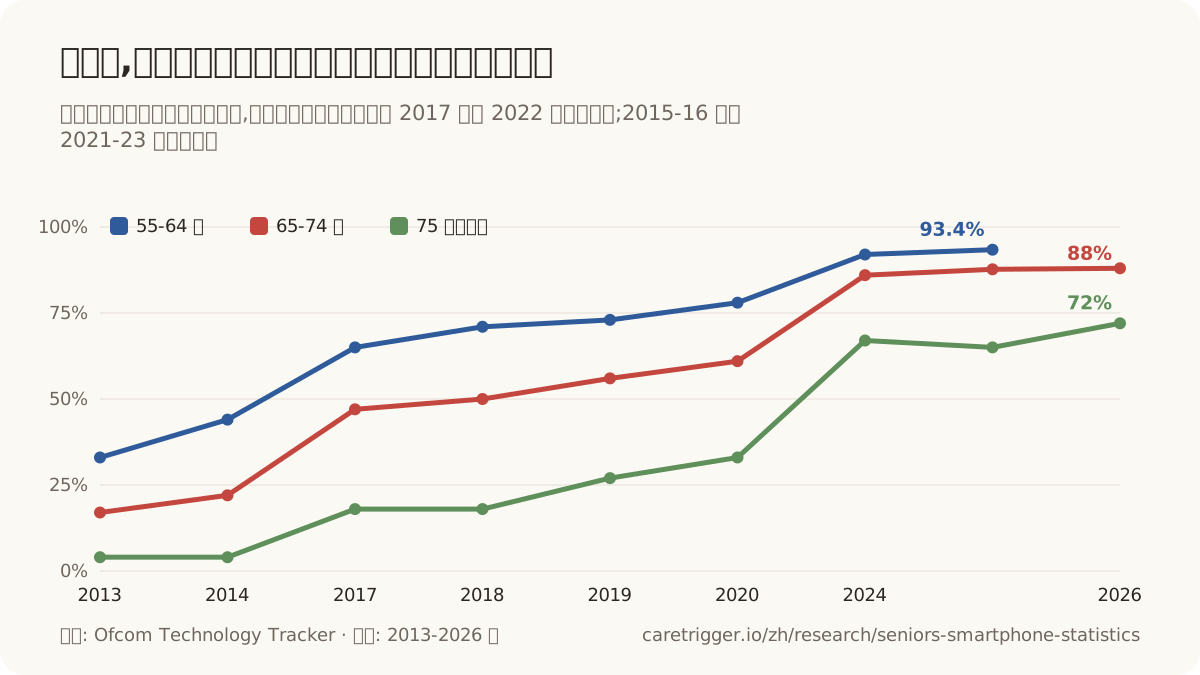
- 2025 年,英国 55-64 岁的成年人中有 93.4% 本人使用智能手机,而全体成年人为 92%(根据 Ofcom Technology Tracker 2025 年表格推算)。[51]
- 2026 年,英国 65-74 岁的成年人中有 88% 本人使用智能手机,而全体成年人为 95%(Ofcom Technology Tracker, 2026)。[11]
- 2020 年,在大不列颠,65 岁及以上的成年人中有 53% 将智能手机用于私人用途,而全体成年人为 84%(英国国家统计局,2020)。[52]
| 时期 | 65 岁及以上者中的比例 | 范围 | 来源 |
|---|---|---|---|
| 2013 年(5 月 13 日至 7 月 27 日) | 11% | 英国 65 岁及以上的成年人;本人使用智能手机(QD4(QD24B)「您本人是否使用智能手机?」,以全部受访者为基数;入户面访调查) · 英国 | [53] |
| 2014 年(5 月 12 日至 7 月 26 日) | 13% | 英国 65 岁及以上的成年人;本人使用智能手机(QD4(QD24B)「您本人是否使用智能手机?」,以全部受访者为基数;入户面访调查) · 英国 | [54] |
| 2017 年(1 月 3 日至 2 月 28 日) | 33% | 英国 65 岁及以上的成年人;本人使用智能手机(QD4(QD24B)「您本人是否使用智能手机?」,以全部受访者为基数;入户面访调查) · 英国 | [55] |
| 2018 年(1 月 3 日至 2 月 28 日) | 35% | 英国 65 岁及以上的成年人;本人使用智能手机(QD4(QD24B)「您本人是否使用智能手机?」,以全部受访者为基数;入户面访调查) · 英国 | [56] |
| 2019 年(1 月 3 日至 2 月 28 日) | 42% | 英国 65 岁及以上的成年人;本人使用智能手机(QD4(QD24B)「您本人是否使用智能手机?」,以全部受访者为基数;入户面访调查) · 英国 | [57] |
| 2020 年(1 月 9 日至 3 月 7 日) | 48% | 英国 65 岁及以上的成年人;本人使用智能手机(QD5(QD24B)「您本人是否使用智能手机?」,以全部受访者为基数;入户面访调查) · 英国 | [58] |
| 2024 年(1 月 8 日至 4 月 30 日) | 78% | 英国 65 岁及以上的成年人;本人使用智能手机(QM2「您家中的手机里有智能手机吗?」,回答「有,而且我本人在用」,按全部受访者重新计算基数;以面访为主,20% 为网络调查) · 英国 | [59] |
| 2025 年 | 78% | 英国 65 岁及以上的成年人;本人使用智能手机(以全部受访者为基数) · 英国 | [51] |
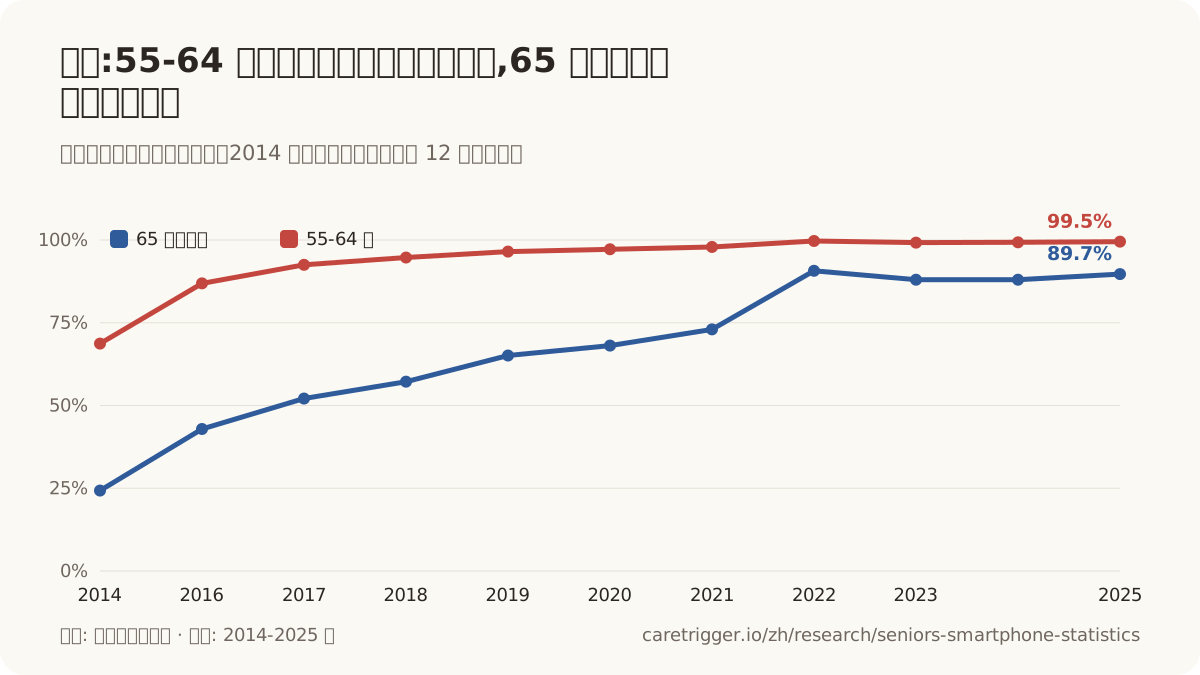
- 2025 年,香港 55-64 岁的人中有 99.5% 拥有智能手机,而 65 岁及以上者为 89.7%,10 岁及以上的全体人士为 96.8%(香港政府统计处,2026)。[14]
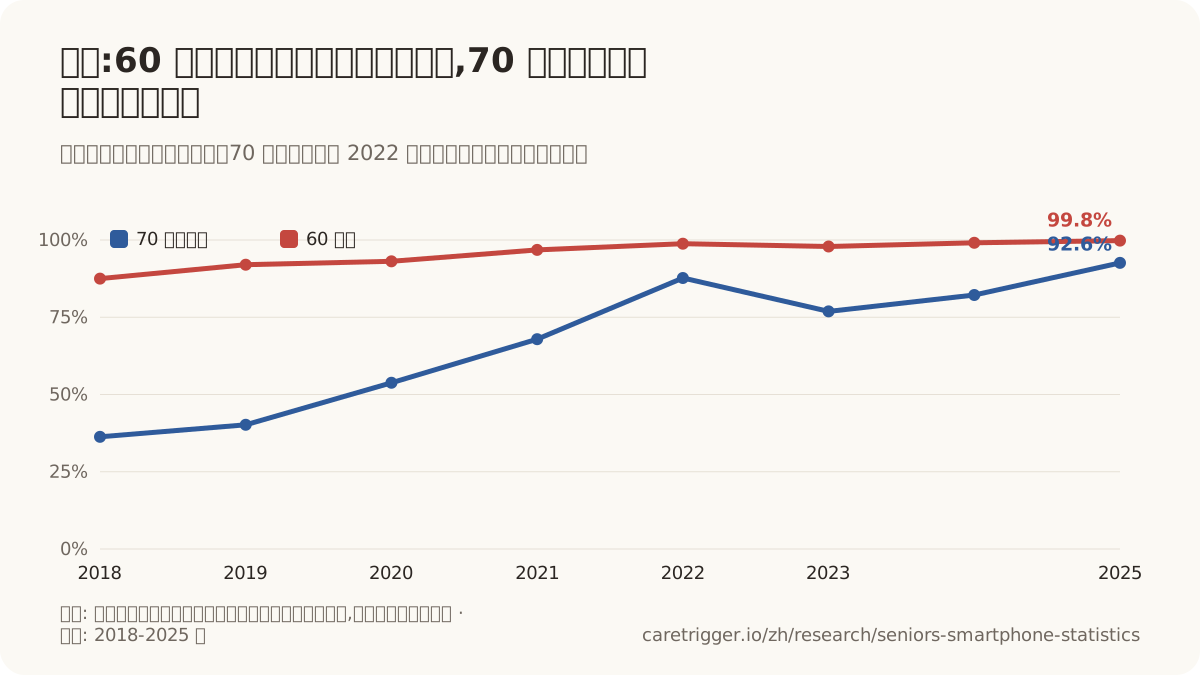
- 2025 年 7 月,韩国 60 多岁的人中有 99.8% 拥有智能手机,而 70 岁及以上者为 92.6%(50 多岁:100.0%;6 岁及以上全体人口:98.8%)(韩国科学技术信息通信部、韩国智能信息社会振兴院,2026)。[60]
- 2025 年 7 月,韩国 70 岁及以上的人中有 92.6% 拥有智能手机,高于 2021 年的 67.9%(韩国科学技术信息通信部、韩国智能信息社会振兴院,2026)。[60]
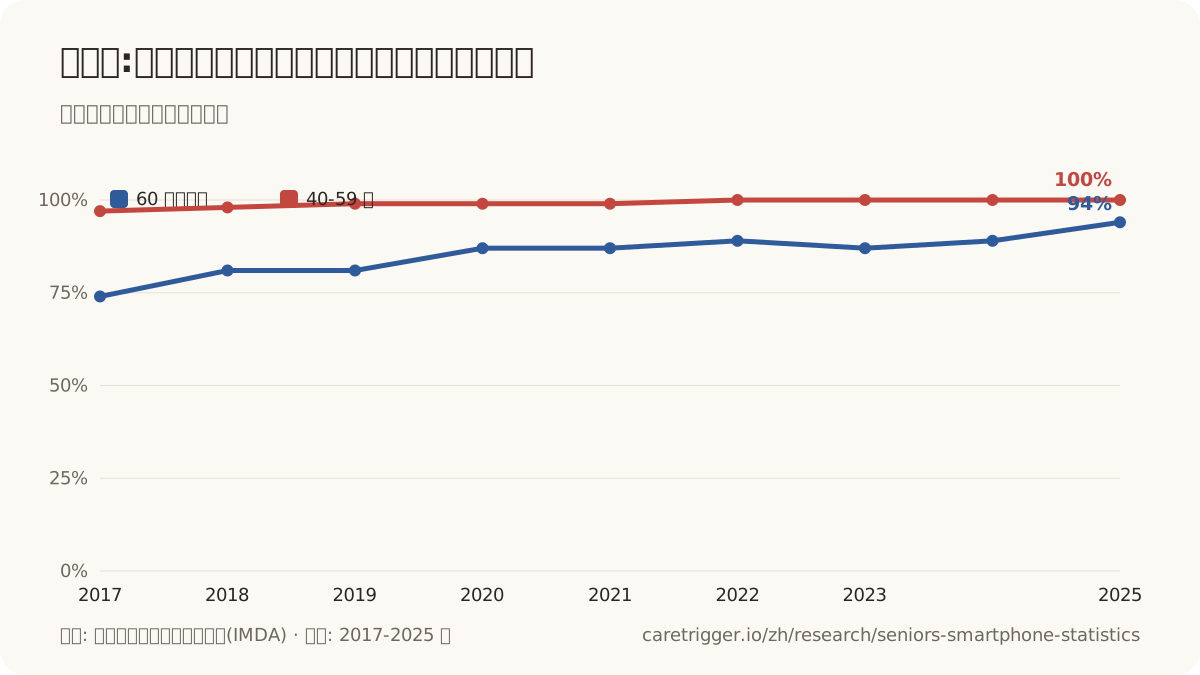
- 2025 年,40-59 岁的新加坡居民 100% 拥有智能手机,而 60 岁及以上居民为 94%,18 岁及以上的全体居民为 98%(新加坡资讯通信媒体发展局,2026)。[15]
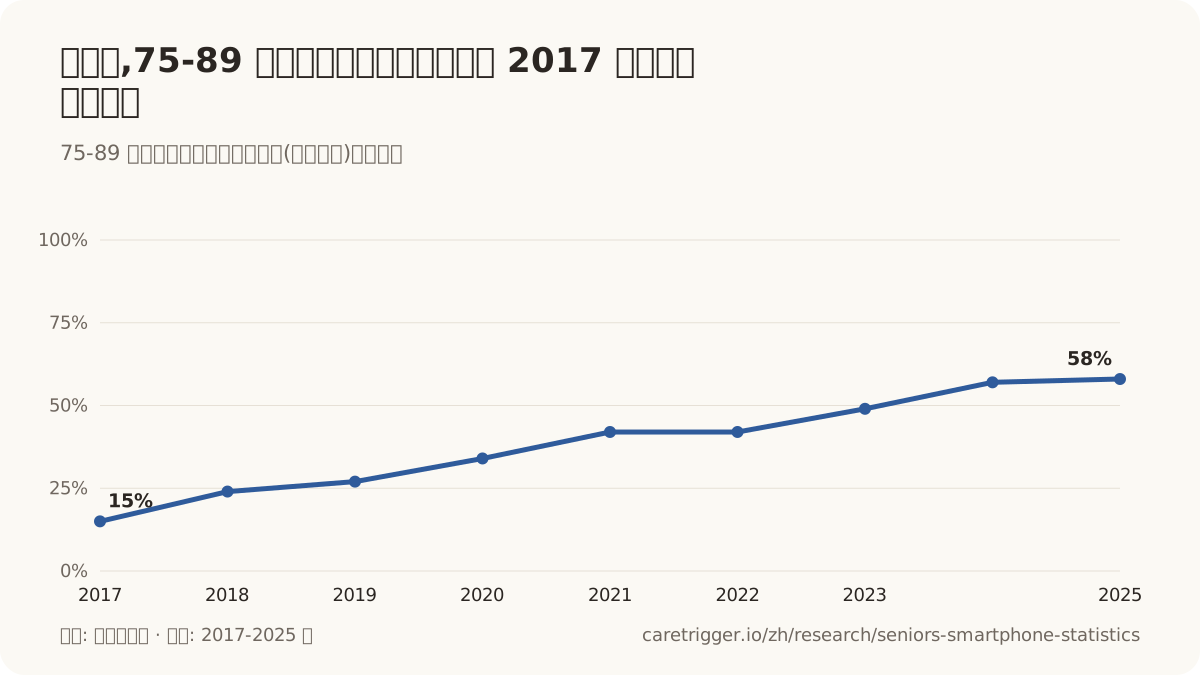
- 2025 年,芬兰 16-89 岁的全体人口中有 91% 在使用触摸屏手机(智能手机)(芬兰统计局)。[16]
增长的两个引擎
把一个较年长年龄组十年间的增长拆分为两部分,即步入该年龄组那一代人的起点优势,以及之后才发生的新增使用,就会发现两者都很重要。就智能手机而言,60 岁以后的新增使用贡献了大部分增长;而就是否上网而言,主要贡献来自从下一个年龄组升上来的那一代人。
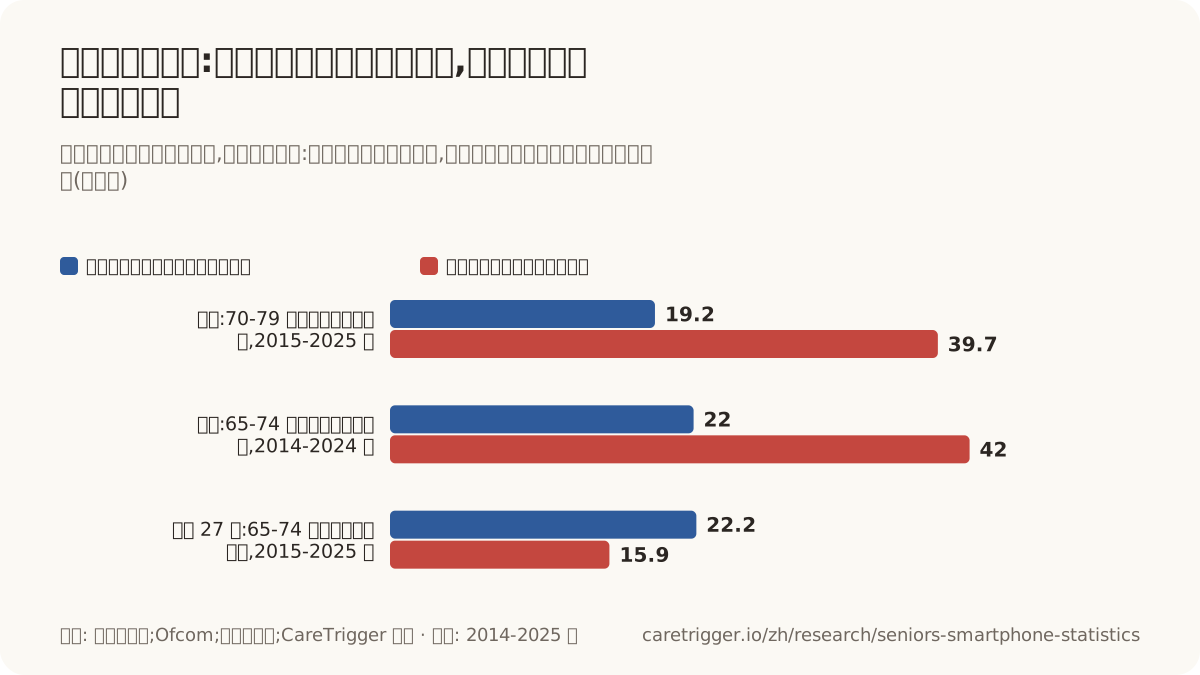
- 42 个百分点:在 1949-1959 年前后出生的英国成年人中,本人使用智能手机的比例从 2014 年 5 月至 7 月(55-64 岁时)的 44% 升至 2024 年 1 月至 4 月(65-74 岁时)的 86%(根据 Ofcom Technology Tracker 2014 年和 2024 年表格推算)。[59]
- 2015 年时 55-64 岁的那一代欧盟 27 国居民,到 2025 年步入 65-74 岁时,互联网使用率(过去 3 个月)上升了 15.9 个百分点,从 63.1% 升至 79.0%(伪队列;欧盟统计局 ICT 调查)。[32]
- 2014 年 5 月至 7 月,英国 55-64 岁成年人(44%)与 65-74 岁成年人(22%)本人使用智能手机的比例相差 22 个百分点(根据 Ofcom Technology Tracker 2014 年数据推算)。[54]
- 2015 年,欧盟 27 国 55-64 岁者(63.1%)与 65-74 岁者(40.9%)的互联网使用率(过去 3 个月)相差 22.2 个百分点,这就是到 2025 年步入 65-74 岁的那一代人的起点优势(欧盟统计局 ICT 调查)。[32]
如何解读伪队列。这些比较追踪的是同一批出生年份的人在相隔十年的两个不同调查样本中的情况。它们并不是对同一批人的两次访问,而且死亡和迁移会在此期间改变这一群体,因此它们显示的是每种效应的方向和大致规模,而不是精确的拆分。
逐年变化
一年之内的变化很小,有时还在调查的误差范围之内,所以长期序列比任何一次跃升都更重要。最年长的人群仍然增长最快,因为他们的增长空间最大。
- 2024 年,居住在社区的 85 岁及以上美国联邦医疗保险受益人中有 57.3% 拥有智能手机,而 65-74 岁者为 90.8%(CMS Medicare Current Beneficiary Survey, 2025)。[61]
- 2024 年,居住在社区的 75-84 岁美国联邦医疗保险受益人中有 81.5% 拥有智能手机(CMS Medicare Current Beneficiary Survey, 2025)。[61]
- 2024 年,居住在社区的 65-74 岁美国联邦医疗保险受益人中有 90.8% 拥有智能手机(CMS Medicare Current Beneficiary Survey, 2025)。[61]
- 2024 年,居住在社区的 85 岁及以上美国联邦医疗保险受益人中有 76.6% 能够接入互联网(CMS Medicare Current Beneficiary Survey, 2025)。[61]
- 2023 年,居住在社区的 85 岁及以上美国联邦医疗保险受益人中有 72.9% 能够接入互联网(CMS Medicare Current Beneficiary Survey, 2025)。[62]
- 从 2015 年到 2016 年 11 月,65 岁及以上美国成年人的智能手机拥有率一年内上升了 12 个百分点,达到 42%;同期 50-64 岁者的拥有率上升 16 个百分点,达到 74%(Pew Research Center, 2017)。[63]
- 从 2015 年到 2016 年 11 月,50-64 岁美国成年人的智能手机拥有率一年内上升了 16 个百分点,达到 74%(Pew Research Center, 2017)。[63]
- 从 2011 年 5 月(11%)到 2012 年 2 月(13%),65 岁及以上美国成年人的智能手机拥有率变化了 2 个百分点,Pew 认为这一变化在统计上并不显著;同期 55-64 岁者的拥有率上升了 9 个百分点(Pew Research Center, 2012)。[64]
需要接入网络的老年人越来越多
老年人口本身也在增长,因此拥有智能手机的老年人数量,比单看比例所显示的增长得更快。
03 / 按年龄
智能手机拥有率如何随年龄变化?
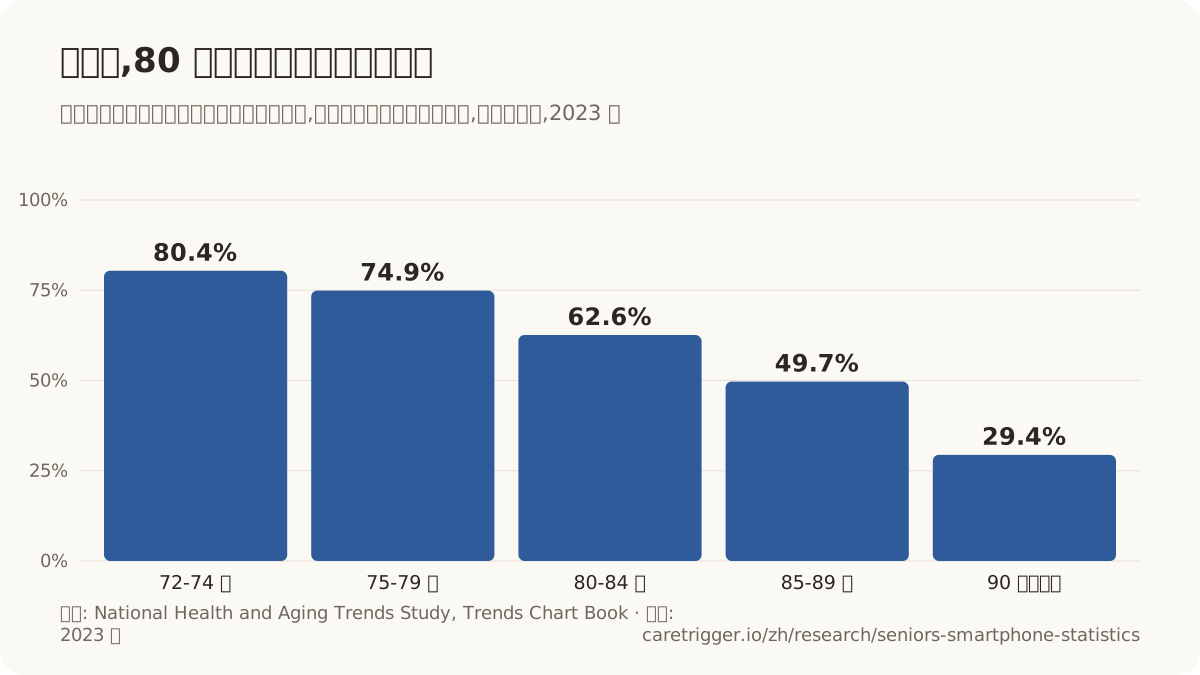
2025 年,居住在社区的 85 岁及以上美国联邦医疗保险受益人中有 61.8% 拥有智能手机,而 65-74 岁者为 91.3%(CMS Medicare Current Beneficiary Survey, 2026)。[69]
年龄每增加五岁,拥有率就下降一截,起初缓慢,80 岁以后急剧下降。如今增长主要发生在最年长的人群中,而仍然没有智能手机的人也大多集中在这里。
- 2025 年,居住在社区的 65-74 岁美国联邦医疗保险受益人中有 91.3% 拥有智能手机(CMS Medicare Current Beneficiary Survey, 2026)。[69]
- 2025 年,居住在社区的 75-84 岁美国联邦医疗保险受益人中有 84.2% 拥有智能手机(CMS Medicare Current Beneficiary Survey, 2026)。[69]
- 2025 年,居住在社区的 85 岁及以上美国联邦医疗保险受益人中有 75.4% 拥有电脑、智能手机或平板电脑,而 65-74 岁者为 95%(CMS Medicare Current Beneficiary Survey, 2026)。[69]
- 2025 年,居住在社区的 85 岁及以上美国联邦医疗保险受益人中有 77.6% 能够接入互联网,而 65-74 岁者为 94.6%,75-84 岁者为 90.8%(CMS Medicare Current Beneficiary Survey, 2026)。[69]
- 2021 年初,43% 的 75 岁及以上美国成年人拥有智能手机,而 65-74 岁者为 71%(Pew Research Center, 2021)。[71]
- 2019 年初,40% 的 75 岁及以上美国成年人拥有智能手机,而 65-74 岁者为 59%(Pew Research Center, 2019)。[72]
- 2025 年,台湾地区 65-69 岁的人中有 83.1% 曾经上网(60-64 岁:89.4%;12 岁及以上全体:90.3%)(台湾地区数字事务主管部门,2026)。[73]
- 2025 年,台湾地区 70-74 岁的人中有 67.2% 曾经上网(60-64 岁:89.4%;12 岁及以上全体:90.3%)(台湾地区数字事务主管部门,2026)。[73]
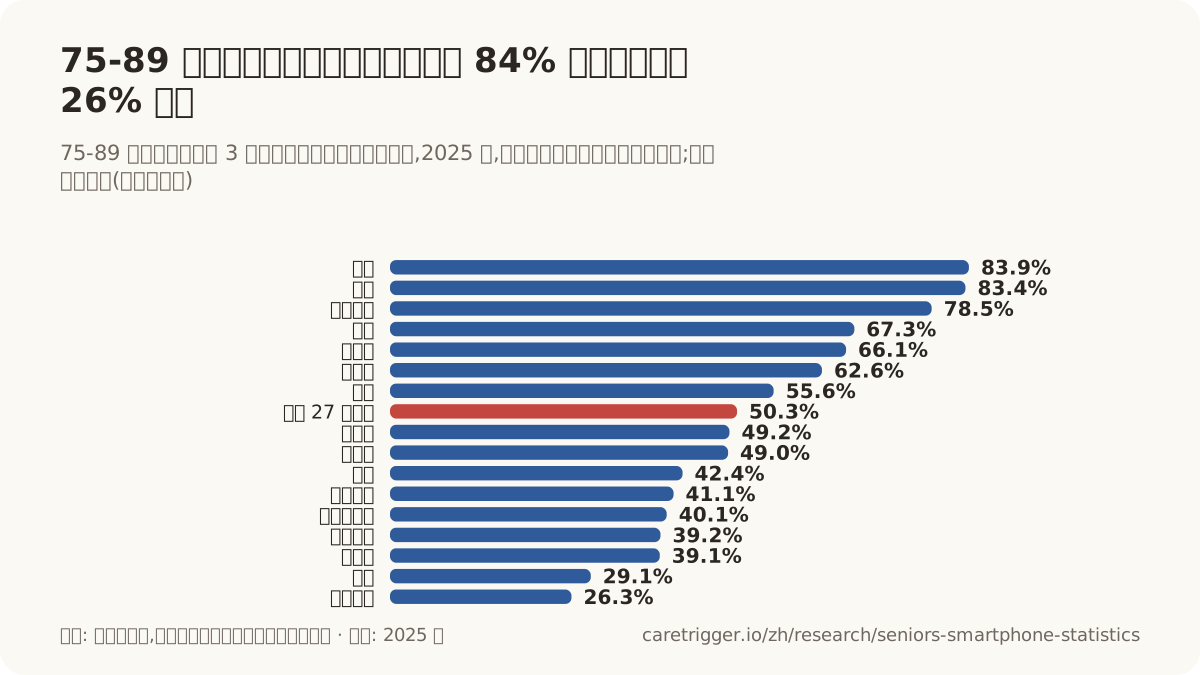
- 2025 年,欧盟 27 国 75-89 岁的人中有 50.3% 在过去 3 个月内使用过互联网;在欧盟统计局的互联网使用表中,这是该年龄段唯一有欧盟数值的年份(欧盟统计局 ICT 调查,2026)。[32]
- 2025 年,西班牙 75-84 岁的人中有 53.0% 在过去 3 个月内使用过互联网(西班牙国家统计局,2025)。[74]
- 2026 年,瑞典 75-84 岁的人中有 87% 在过去 3 个月内使用过互联网(瑞典统计局)。[75]
- 2025 年,瑞典 75-84 岁的人中有 74% 用手机或智能手机上网(瑞典统计局,2025)。[17]
- 2025 年,瑞典 85 岁及以上的人中有 36% 用手机或智能手机上网(瑞典统计局,2025)。[17]
- 2025 年,丹麦 80-84 岁的人中有 86% 在过去一年内使用过互联网,而 15-89 岁的全体人口为 98%(Aeldre Sagen 对丹麦统计局数据的分析,2026)。[76]
- 2024 年,丹麦 75-89 岁的人中有 85% 是互联网用户(过去 3 个月内上过网),而 15-89 岁的全体人口为 98%(丹麦统计局,2024)。[77]
- 2016 年,80 岁及以上的加拿大人中有 40.8% 是互联网用户,而 75-79 岁者为 62.2%,70-74 岁者为 75.3%,65-69 岁者为 84.9%(General Social Survey;加拿大统计局,2019)。[78]
- 2016 年,80 岁及以上的加拿大人中有 59.2% 在过去一个月内没有使用过互联网,而 65-69 岁者为 15.0%,全体老年人为 31.8%,65 岁以下的加拿大人为 2.8%(General Social Survey;加拿大统计局,2019)。[78]
- 2022 年,60 岁及以上的智利人中有 42% 在过去一个月内使用过互联网:60-69 岁者为 58%,70-79 岁者为 30%,80 岁及以上者为 13%(Encuesta Calidad de Vida en la Vejez 2022;Observatorio del Envejecimiento UC-Confuturo, 2024)。[22]
- 在 2019 年人口普查中,75 岁及以上的肯尼亚人有 45.8%(694,217 人中的 317,843 人)拥有手机,而 65-74 岁者为 68.5%,25-34 岁者为 83.9%(肯尼亚国家统计局,2019 年肯尼亚人口与住房普查)。[79]
| 国家和地区、衡量指标与年龄(年份) | 比例 | 范围 | 来源 |
|---|---|---|---|
| 日本:拥有智能手机,80 岁及以上(2025 年) | 33.0% | 日本私人住户中拥有智能手机的 80 岁及以上人口(占全部 80 岁及以上人口的比例,未作答者保留在基数中) · 日本 · 2025 年(2025 年 8 月底调查) | [3] |
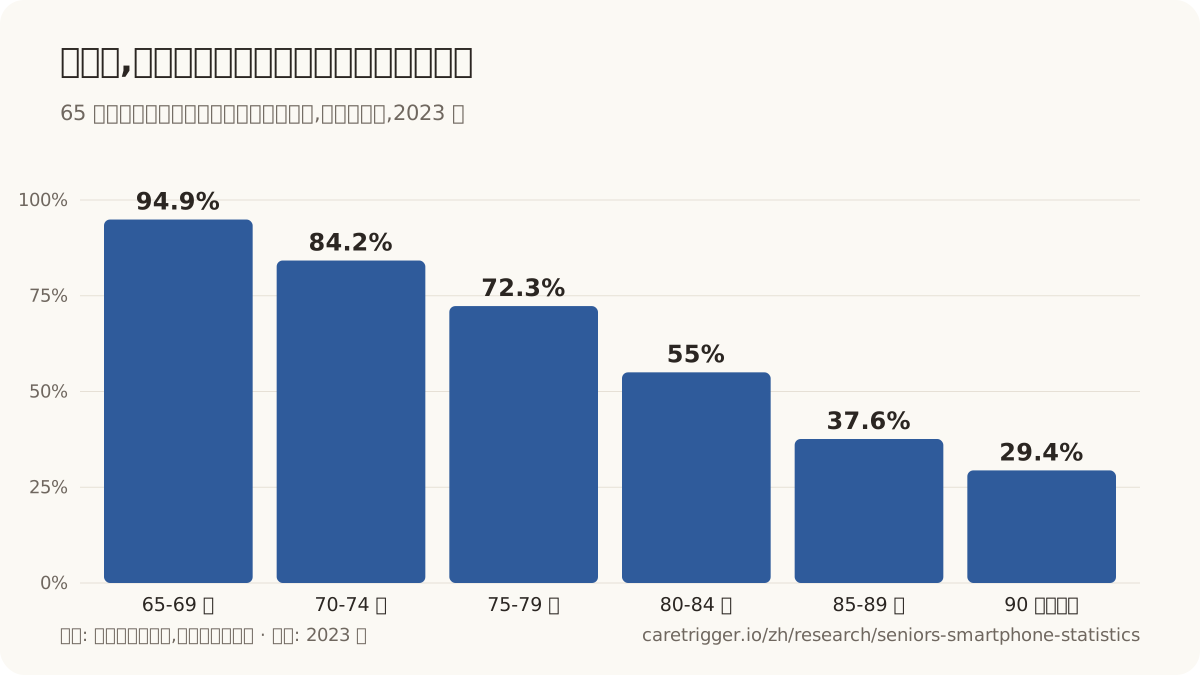
| 韩国:拥有智能手机,90 岁及以上(2023 年) | 29.4% | 韩国 90 岁及以上人口,拥有智能手机 · 韩国 · 2023 年 | [80] |
| 美国:过去一个月内上过网,90 岁及以上(2023 年) | 29.4% | 过去一个月内上过网(电子邮件或短信除外)、不住在护理院的 90 岁及以上美国联邦医疗保险受益人 · 美国 · 2023 年 | [81] |
| 西班牙:过去 3 个月内使用过互联网,85 岁及以上(2025 年) | 25.0% | 西班牙 85 岁及以上人口(估计 1,401,662 人);在过去 3 个月内使用过互联网 · 西班牙 · 2025 年 | [74] |
| 瑞典:过去 3 个月内使用过互联网,85 岁及以上(2026 年) | 68% | 瑞典 85 岁及以上人口;最近一次上网是在过去三个月内 · 瑞典 · 2026 年 | [75] |
| 丹麦:过去一年内使用过互联网,85-89 岁(2025 年) | 68% | 丹麦 85-89 岁人口;在过去 12 个月内使用过互联网(全国 IT 调查,15-89 岁) · 丹麦 · 2025 年(4 月至 7 月) | [76] |
| 芬兰:在使用智能手机,75-89 岁(2025 年) | 58% | 芬兰 75-89 岁人口;在使用触摸屏手机 · 芬兰 · 2025 年 | [16] |
| 欧盟 27 国:用手机上网,75-89 岁(2025 年) | 41.3% | 75-89 岁人口;在过去 3 个月内用手机或智能手机上网,占全部 75-89 岁人口的百分比 · 欧盟 27 国 · 2025 年 | [2] |
| 加拿大:使用互联网,75 岁及以上(2022 年) | 72% | 75 岁及以上的加拿大人,居住在 10 个省、不含机构全职住户;过去三个月内在任何地点出于个人目的使用互联网,不含工作和学业用途 · 加拿大(10 个省) · 2022 年 | [82] |
| 台湾地区:曾经上网,75 岁及以上(2025 年) | 41.4% | 曾经上网的 75 岁及以上台湾地区人口(个人曾上网) · 台湾地区 · 2025 年 5 月至 7 月 | [73] |
| 墨西哥:使用互联网,75 岁及以上(2025 年) | 30.3% | 私人住宅中使用互联网的 75 岁及以上人口(对比全部 6 岁及以上人口)(ENDUTIH) · 墨西哥 · 2025 年 | [83] |
| 日本(行业调查):拥有智能手机,80-84 岁(2026 年) | 69% | 日本 80-84 岁人口(60-84 岁人群调查),拥有智能手机 · 日本 · 2026 年 1 月 | [27] |
十年前的年龄阶梯
这些较早的调查是一些至今仍被当作最新数据引用的数字的出处;本页在展示时注明了它们的年份。
- 2016 年末,59% 的 65-69 岁美国成年人拥有智能手机,而全部 65 岁及以上成年人为 42%(Pew Research Center, 2017)。[84]
- 2016 年末,49% 的 70-74 岁美国成年人拥有智能手机,而全部 65 岁及以上成年人为 42%(Pew Research Center, 2017)。[84]
- 2016 年末,31% 的 75-79 岁美国成年人拥有智能手机,而全部 65 岁及以上成年人为 42%(Pew Research Center, 2017)。[84]
- 2016 年末,17% 的 80 岁及以上美国成年人拥有智能手机,而全部 65 岁及以上成年人为 42%(Pew Research Center, 2017)。[84]
- 2016 年,58% 的 80 岁及以上美国成年人拥有某种手机,而 65-69 岁者为 95%,70-74 岁者为 93%,75-79 岁者为 63%(Pew Research Center, 2017)。[85]
- 2016 年,44% 的 80 岁及以上美国成年人表示自己上网,而 65-69 岁者为 82%,70-74 岁者为 75%,75-79 岁者为 60%(Pew Research Center, 2017)。[85]
- 2016 年,28% 的 80 岁及以上美国成年人家中有宽带,而 65-69 岁者为 66%,70-74 岁者为 61%,75-79 岁者为 41%(Pew Research Center, 2017)。[85]
- 2013 年,5% 的 80 岁及以上美国成年人拥有智能手机,而 65-69 岁者为 29%,70-74 岁者为 21%,75-79 岁者为 10%(Pew Research Center, 2014)。[86]
- 2016 年 7 月,29% 的 70 岁及以上美国成年人拥有智能手机,而 50-59 岁者为 73%,60-69 岁者为 54%(AARP Research, 2016)。[87]
- 2017 年 11 月,55% 的 70 岁及以上美国成年人拥有智能手机,而 50-59 岁者为 78%,60-69 岁者为 73%(AARP Research, 2017)。[88]
- 2019 年年中,62% 的 70 岁及以上美国成年人拥有智能手机,而 50-59 岁者为 86%,60-69 岁者为 81%(AARP Research, 2020)。[34]
04 / 按国家
哪些国家的老年人联网程度最高?
2025 年,丹麦 65-74 岁的人中有 99.9% 在过去 3 个月内使用过互联网,而欧盟 27 国的平均值为 79.0%(欧盟统计局 ICT 调查,2026)。[32]
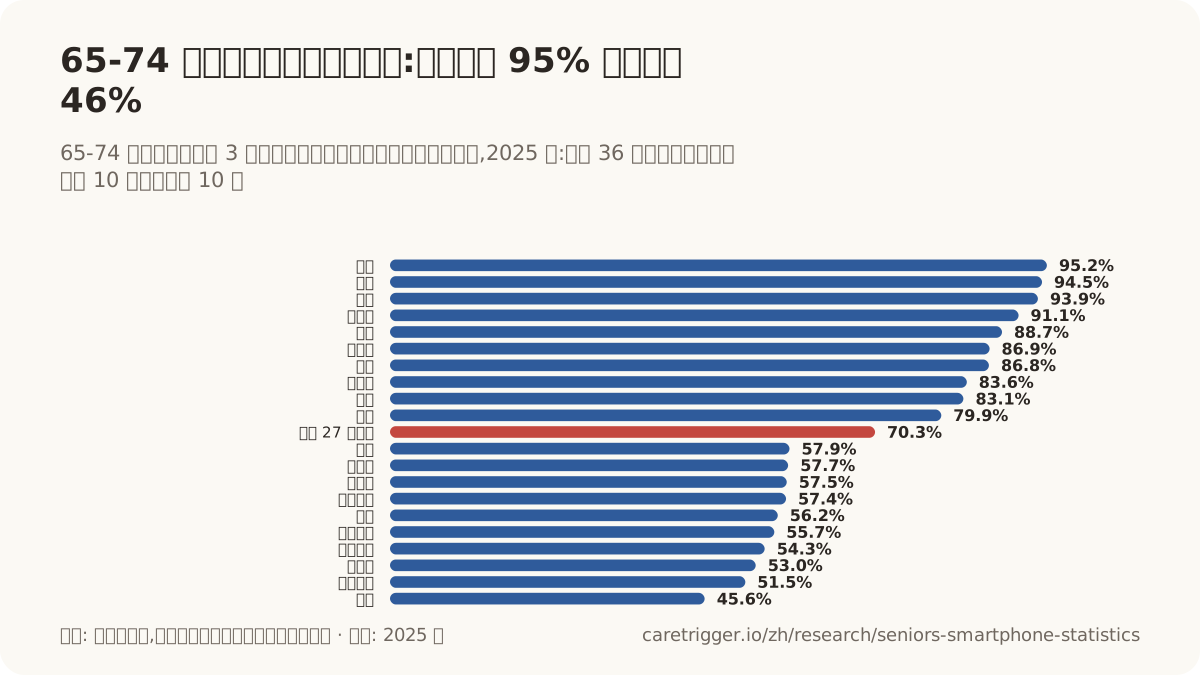
北欧遥遥领先;南欧和东欧、土耳其以及拉丁美洲的大部分地区落在后面,而且在最年长的人群中差距最大。表格注明了衡量指标,因为欧盟统计局统计的是上网,而不是拥有手机。
| 国家和地区 | 65-74 岁者中的比例 | 范围 | 来源 |
|---|---|---|---|
| 挪威 | 95.2% | 65-74 岁的个人;在过去 3 个月内用手机或智能手机上网,占全部 65-74 岁个人的百分比 · 2025 年 | [2] |
| 瑞士 | 94.5% | 65-74 岁的个人;在过去 3 个月内用手机或智能手机上网,占全部 65-74 岁个人的百分比 · 2025 年 | [2] |
| 荷兰 | 93.9% | 65-74 岁的个人;在过去 3 个月内用手机或智能手机上网,占全部 65-74 岁个人的百分比 · 2025 年 | [2] |
| 爱尔兰 | 91.1% | 65-74 岁的个人;在过去 3 个月内用手机或智能手机上网,占全部 65-74 岁个人的百分比 · 2025 年 | [2] |
| 瑞典 | 88.7% | 65-74 岁的个人;在过去 3 个月内用手机或智能手机上网,占全部 65-74 岁个人的百分比 · 2025 年 | [2] |
| 科索沃 | 86.9% | 65-74 岁的个人;在过去 3 个月内用手机或智能手机上网,占全部 65-74 岁个人的百分比 · 2025 年 | [2] |
| 丹麦 | 86.8% | 65-74 岁的个人;在过去 3 个月内用手机或智能手机上网,占全部 65-74 岁个人的百分比 · 2025 年 | [2] |
| 西班牙 | 83.6% | 65-74 岁的个人;在过去 3 个月内用手机或智能手机上网,占全部 65-74 岁个人的百分比 · 2025 年 | [2] |
| 黑山 | 83.1% | 65-74 岁的个人;在过去 3 个月内用手机或智能手机上网,占全部 65-74 岁个人的百分比 · 2025 年 | [2] |
| 芬兰 | 79.9% | 65-74 岁的个人;在过去 3 个月内用手机或智能手机上网,占全部 65-74 岁个人的百分比 · 2025 年 | [2] |
| 卢森堡 | 77.2% | 65-74 岁的个人;在过去 3 个月内用手机或智能手机上网,占全部 65-74 岁个人的百分比 · 2025 年 | [2] |
| 罗马尼亚 | 76.6% | 65-74 岁的个人;在过去 3 个月内用手机或智能手机上网,占全部 65-74 岁个人的百分比 · 2025 年 | [2] |
| 比利时 | 72.9% | 65-74 岁的个人;在过去 3 个月内用手机或智能手机上网,占全部 65-74 岁个人的百分比 · 2025 年 | [2] |
| 马耳他 | 72.5% | 65-74 岁的个人;在过去 3 个月内用手机或智能手机上网,占全部 65-74 岁个人的百分比 · 2025 年 | [2] |
| 奥地利 | 72.2% | 65-74 岁的个人;在过去 3 个月内用手机或智能手机上网,占全部 65-74 岁个人的百分比 · 2025 年 | [2] |
| 德国 | 71.3% | 65-74 岁的个人;在过去 3 个月内用手机或智能手机上网,占全部 65-74 岁个人的百分比 · 2025 年 | [2] |
| 法国 | 69.9% | 65-74 岁的个人;在过去 3 个月内用手机或智能手机上网,占全部 65-74 岁个人的百分比 · 2025 年 | [2] |
| 塞浦路斯 | 69.5% | 65-74 岁的个人;在过去 3 个月内用手机或智能手机上网,占全部 65-74 岁个人的百分比 · 2025 年 | [2] |
| 拉脱维亚 | 68.6% | 65-74 岁的个人;在过去 3 个月内用手机或智能手机上网,占全部 65-74 岁个人的百分比 · 2025 年 | [2] |
| 意大利 | 67.6% | 65-74 岁的个人;在过去 3 个月内用手机或智能手机上网,占全部 65-74 岁个人的百分比 · 2025 年 | [2] |
| 斯洛文尼亚 | 67.2% | 65-74 岁的个人;在过去 3 个月内用手机或智能手机上网,占全部 65-74 岁个人的百分比 · 2025 年 | [2] |
| 北马其顿 | 66.8% | 65-74 岁的个人;在过去 3 个月内用手机或智能手机上网,占全部 65-74 岁个人的百分比 · 2025 年 | [2] |
| 匈牙利 | 64.7% | 65-74 岁的个人;在过去 3 个月内用手机或智能手机上网,占全部 65-74 岁个人的百分比 · 2025 年 | [2] |
| 阿尔巴尼亚 | 64.1% | 65-74 岁的个人;在过去 3 个月内用手机或智能手机上网,占全部 65-74 岁个人的百分比 · 2025 年 | [2] |
| 塞尔维亚 | 61.3% | 65-74 岁的个人;在过去 3 个月内用手机或智能手机上网,占全部 65-74 岁个人的百分比 · 2025 年 | [2] |
| 波斯尼亚和黑塞哥维那 | 59.0% | 65-74 岁的个人;在过去 3 个月内用手机或智能手机上网,占全部 65-74 岁个人的百分比 · 2025 年 | [2] |
| 捷克 | 57.9% | 65-74 岁的个人;在过去 3 个月内用手机或智能手机上网,占全部 65-74 岁个人的百分比 · 2025 年 | [2] |
| 葡萄牙 | 57.7% | 65-74 岁的个人;在过去 3 个月内用手机或智能手机上网,占全部 65-74 岁个人的百分比 · 2025 年 | [2] |
| 立陶宛 | 57.5% | 65-74 岁的个人;在过去 3 个月内用手机或智能手机上网,占全部 65-74 岁个人的百分比 · 2025 年 | [2] |
| 保加利亚 | 57.4% | 65-74 岁的个人;在过去 3 个月内用手机或智能手机上网,占全部 65-74 岁个人的百分比 · 2025 年 | [2] |
| 波兰 | 56.2% | 65-74 岁的个人;在过去 3 个月内用手机或智能手机上网,占全部 65-74 岁个人的百分比 · 2025 年 | [2] |
| 斯洛伐克 | 55.7% | 65-74 岁的个人;在过去 3 个月内用手机或智能手机上网,占全部 65-74 岁个人的百分比 · 2025 年 | [2] |
| 爱沙尼亚 | 54.3% | 65-74 岁的个人;在过去 3 个月内用手机或智能手机上网,占全部 65-74 岁个人的百分比 · 2025 年 | [2] |
| 土耳其 | 53.0% | 65-74 岁的个人;在过去 3 个月内用手机或智能手机上网,占全部 65-74 岁个人的百分比 · 2025 年 | [2] |
| 克罗地亚 | 51.5% | 65-74 岁的个人;在过去 3 个月内用手机或智能手机上网,占全部 65-74 岁个人的百分比 · 2025 年 | [2] |
| 希腊 | 45.6% | 65-74 岁的个人;在过去 3 个月内用手机或智能手机上网,占全部 65-74 岁个人的百分比 · 2025 年 | [2] |
| 国家和地区 | 65-74 岁者中的比例 | 范围 | 来源 |
|---|---|---|---|
| 挪威 | 99.3% | 私人住户中 65-74 岁的个人;在过去 3 个月内使用过互联网 · 2025 年 | [32] |
| 荷兰 | 98.6% | 私人住户中 65-74 岁的个人;在过去 3 个月内使用过互联网 · 2025 年 | [32] |
| 爱尔兰 | 98.0% | 私人住户中 65-74 岁的个人;在过去 3 个月内使用过互联网 · 2025 年 | [32] |
| 瑞士 | 96.3% | 私人住户中 65-74 岁的个人;在过去 3 个月内使用过互联网 · 2025 年 | [32] |
| 瑞典 | 95.5% | 私人住户中 65-74 岁的个人;在过去 3 个月内使用过互联网 · 2025 年 | [32] |
| 卢森堡 | 93.5% | 私人住户中 65-74 岁的个人;在过去 3 个月内使用过互联网 · 2025 年 | [32] |
| 芬兰 | 90.8% | 私人住户中 65-74 岁的个人;在过去 3 个月内使用过互联网 · 2025 年 | [32] |
| 科索沃 | 87.8% | 私人住户中 65-74 岁的个人;在过去 3 个月内使用过互联网 · 2025 年 | [32] |
| 比利时 | 87.7% | 私人住户中 65-74 岁的个人;在过去 3 个月内使用过互联网 · 2025 年 | [32] |
| 德国 | 86.5% | 私人住户中 65-74 岁的个人;在过去 3 个月内使用过互联网 · 2025 年 | [32] |
| 西班牙 | 85.6% | 私人住户中 65-74 岁的个人;在过去 3 个月内使用过互联网 · 2025 年 | [32] |
| 黑山 | 83.8% | 私人住户中 65-74 岁的个人;在过去 3 个月内使用过互联网 · 2025 年 | [32] |
| 法国 | 83.5% | 私人住户中 65-74 岁的个人;在过去 3 个月内使用过互联网 · 2025 年 | [32] |
| 奥地利 | 82.0% | 私人住户中 65-74 岁的个人;在过去 3 个月内使用过互联网 · 2025 年 | [32] |
| 拉脱维亚 | 80.6% | 私人住户中 65-74 岁的个人;在过去 3 个月内使用过互联网 · 2025 年 | [32] |
| 罗马尼亚 | 78.4% | 私人住户中 65-74 岁的个人;在过去 3 个月内使用过互联网 · 2025 年 | [32] |
| 马耳他 | 77.0% | 私人住户中 65-74 岁的个人;在过去 3 个月内使用过互联网 · 2025 年 | [32] |
| 爱沙尼亚 | 75.9% | 私人住户中 65-74 岁的个人;在过去 3 个月内使用过互联网 · 2025 年 | [32] |
| 捷克 | 75.2% | 私人住户中 65-74 岁的个人;在过去 3 个月内使用过互联网 · 2025 年 | [32] |
| 匈牙利 | 75.1% | 私人住户中 65-74 岁的个人;在过去 3 个月内使用过互联网 · 2025 年 | [32] |
| 斯洛伐克 | 72.9% | 私人住户中 65-74 岁的个人;在过去 3 个月内使用过互联网 · 2025 年 | [32] |
| 意大利 | 72.5% | 私人住户中 65-74 岁的个人;在过去 3 个月内使用过互联网 · 2025 年 | [32] |
| 斯洛文尼亚 | 71.5% | 私人住户中 65-74 岁的个人;在过去 3 个月内使用过互联网 · 2025 年 | [32] |
| 塞浦路斯 | 71.1% | 私人住户中 65-74 岁的个人;在过去 3 个月内使用过互联网 · 2025 年 | [32] |
| 波斯尼亚和黑塞哥维那 | 71.1% | 私人住户中 65-74 岁的个人;在过去 3 个月内使用过互联网 · 2025 年 | [32] |
| 北马其顿 | 68.0% | 私人住户中 65-74 岁的个人;在过去 3 个月内使用过互联网 · 2025 年 | [32] |
| 塞尔维亚 | 65.5% | 私人住户中 65-74 岁的个人;在过去 3 个月内使用过互联网 · 2025 年 | [32] |
| 立陶宛 | 65.2% | 私人住户中 65-74 岁的个人;在过去 3 个月内使用过互联网 · 2025 年 | [32] |
| 阿尔巴尼亚 | 64.4% | 私人住户中 65-74 岁的个人;在过去 3 个月内使用过互联网 · 2025 年 | [32] |
| 葡萄牙 | 60.7% | 私人住户中 65-74 岁的个人;在过去 3 个月内使用过互联网 · 2025 年 | [32] |
| 保加利亚 | 60.6% | 私人住户中 65-74 岁的个人;在过去 3 个月内使用过互联网 · 2025 年 | [32] |
| 波兰 | 60.6% | 私人住户中 65-74 岁的个人;在过去 3 个月内使用过互联网 · 2025 年 | [32] |
| 克罗地亚 | 54.3% | 私人住户中 65-74 岁的个人;在过去 3 个月内使用过互联网 · 2025 年 | [32] |
| 土耳其 | 53.2% | 私人住户中 65-74 岁的个人;在过去 3 个月内使用过互联网 · 2025 年 | [32] |
| 希腊 | 51.9% | 私人住户中 65-74 岁的个人;在过去 3 个月内使用过互联网 · 2025 年 | [32] |
75 岁及以上
| 国家和地区 | 75-89 岁者中的比例 | 范围 | 来源 |
|---|---|---|---|
| 荷兰 | 83.9% | 75-89 岁人口;在过去 3 个月内使用过互联网(2025 年可选模块) · 2025 年 | [32] |
| 瑞典 | 83.4% | 75-89 岁人口;在过去 3 个月内使用过互联网(2025 年可选模块) · 2025 年 | [32] |
| 拉脱维亚 | 78.5% | 75-89 岁人口;在过去 3 个月内使用过互联网(2025 年可选模块) · 2025 年 | [32] |
| 芬兰 | 67.3% | 75-89 岁人口;在过去 3 个月内使用过互联网(2025 年可选模块) · 2025 年 | [32] |
| 比利时 | 66.1% | 75-89 岁人口;在过去 3 个月内使用过互联网(2025 年可选模块) · 2025 年 | [32] |
| 奥地利 | 62.6% | 75-89 岁人口;在过去 3 个月内使用过互联网(2025 年可选模块) · 2025 年 | [32] |
| 法国 | 55.6% | 75-89 岁人口;在过去 3 个月内使用过互联网(2025 年可选模块) · 2025 年 | [32] |
| 西班牙 | 49.2% | 75-89 岁人口;在过去 3 个月内使用过互联网(2025 年可选模块) · 2025 年 | [32] |
| 匈牙利 | 49.0% | 75-89 岁人口;在过去 3 个月内使用过互联网(2025 年可选模块) · 2025 年 | [32] |
| 捷克 | 42.4% | 75-89 岁人口;在过去 3 个月内使用过互联网(2025 年可选模块) · 2025 年 | [32] |
| 塞浦路斯 | 41.1% | 75-89 岁人口;在过去 3 个月内使用过互联网(2025 年可选模块) · 2025 年 | [32] |
| 斯洛文尼亚 | 40.1% | 75-89 岁人口;在过去 3 个月内使用过互联网(2025 年可选模块) · 2025 年 | [32] |
| 斯洛伐克 | 39.2% | 75-89 岁人口;在过去 3 个月内使用过互联网(2025 年可选模块) · 2025 年 | [32] |
| 意大利 | 39.1% | 75-89 岁人口;在过去 3 个月内使用过互联网(2025 年可选模块) · 2025 年 | [32] |
| 波兰 | 29.1% | 75-89 岁人口;在过去 3 个月内使用过互联网(2025 年可选模块) · 2025 年 | [32] |
| 保加利亚 | 26.3% | 75-89 岁人口;在过去 3 个月内使用过互联网(2025 年可选模块) · 2025 年 | [32] |
| 国家和地区 | 75 岁及以上者中的比例 | 范围 | 来源 |
|---|---|---|---|
| 挪威 | 95.2% | 在过去 3 个月内使用过互联网的 75 岁及以上个人(经合组织汇编的各国 ICT 住户调查) · 2024 年 | [89] |
| 瑞士 | 83.0% | 在过去 3 个月内使用过互联网的 75 岁及以上个人(经合组织汇编的各国 ICT 住户调查) · 2025 年 | [89] |
| 加拿大 | 72.0% | 在过去 3 个月内使用过互联网的 75 岁及以上个人(经合组织汇编的各国 ICT 住户调查) · 2022 年 | [89] |
| 美国 | 69.1% | 在过去 3 个月内使用过互联网的 75 岁及以上个人(经合组织汇编的各国 ICT 住户调查) · 2023 年 | [89] |
| 智利 | 61.6% | 在过去 3 个月内使用过互联网的 75 岁及以上个人(经合组织汇编的各国 ICT 住户调查) · 2024 年 | [89] |
| 比利时 | 59.6% | 在过去 3 个月内使用过互联网的 75 岁及以上个人(经合组织汇编的各国 ICT 住户调查) · 2024 年 | [89] |
| 韩国 | 58.1% | 在过去 3 个月内使用过互联网的 75 岁及以上个人(经合组织汇编的各国 ICT 住户调查) · 2024 年 | [89] |
| 拉脱维亚 | 57.4% | 在过去 3 个月内使用过互联网的 75 岁及以上个人(经合组织汇编的各国 ICT 住户调查) · 2023 年 | [89] |
| 奥地利 | 53.8% | 在过去 3 个月内使用过互联网的 75 岁及以上个人(经合组织汇编的各国 ICT 住户调查) · 2023 年 | [89] |
| 爱尔兰 | 52.9% | 在过去 3 个月内使用过互联网的 75 岁及以上个人(经合组织汇编的各国 ICT 住户调查) · 2024 年 | [89] |
| 克罗地亚 | 51.7% | 在过去 3 个月内使用过互联网的 75 岁及以上个人(经合组织汇编的各国 ICT 住户调查) · 2023 年 | [89] |
| 哥斯达黎加 | 46.3% | 在过去 3 个月内使用过互联网的 75 岁及以上个人(经合组织汇编的各国 ICT 住户调查) · 2024 年 | [89] |
| 西班牙 | 44.6% | 在过去 3 个月内使用过互联网的 75 岁及以上个人(经合组织汇编的各国 ICT 住户调查) · 2024 年 | [89] |
| 巴西 | 32.8% | 在过去 3 个月内使用过互联网的 75 岁及以上个人(经合组织汇编的各国 ICT 住户调查) · 2024 年 | [89] |
| 意大利 | 31.4% | 在过去 3 个月内使用过互联网的 75 岁及以上个人(经合组织汇编的各国 ICT 住户调查) · 2024 年 | [89] |
| 墨西哥 | 23.3% | 在过去 3 个月内使用过互联网的 75 岁及以上个人(经合组织汇编的各国 ICT 住户调查) · 2024 年 | [89] |
| 埃及 | 19.4% | 在过去 3 个月内使用过互联网的 75 岁及以上个人(经合组织汇编的各国 ICT 住户调查) · 2022 年 | [89] |
| 以色列 | 61.0% | 在过去 3 个月内使用过互联网的 75 岁及以上个人(经合组织汇编的以色列中央统计局数据;定义有所不同) · 2021 年 | [89] |
| 国家和地区 | 55-74 岁者中的比例 | 范围 | 来源 |
|---|---|---|---|
| 韩国 | 94.9% | 在过去 3 个月内使用过互联网的 55-74 岁个人(经合组织汇编的各国 ICT 住户调查) · 2024 年 | [89] |
| 加拿大 | 92.7% | 在过去 3 个月内使用过互联网的 55-74 岁个人(经合组织汇编的各国 ICT 住户调查) · 2022 年 | [89] |
| 智利 | 90.7% | 在过去 3 个月内使用过互联网的 55-74 岁个人(经合组织汇编的各国 ICT 住户调查) · 2024 年 | [89] |
| 经合组织 | 86.7% | 在过去 3 个月内使用过互联网的 55-74 岁个人(经合组织汇编的各国 ICT 住户调查) · 2025 年 | [89] |
| 欧盟(27 国) | 86.2% | 在过去 3 个月内使用过互联网的 55-74 岁个人(经合组织汇编的各国 ICT 住户调查) · 2025 年 | [89] |
| 以色列 | 86.1% | 在过去 3 个月内使用过互联网的 55-74 岁个人(经合组织汇编的各国 ICT 住户调查) · 2021 年 | [89] |
| 哥斯达黎加 | 85.4% | 在过去 3 个月内使用过互联网的 55-74 岁个人(经合组织汇编的各国 ICT 住户调查) · 2024 年 | [89] |
| 美国 | 83.8% | 在过去 3 个月内使用过互联网的 55-74 岁个人(经合组织汇编的各国 ICT 住户调查) · 2023 年 | [89] |
| 巴西 | 69.4% | 在过去 3 个月内使用过互联网的 55-74 岁个人(经合组织汇编的各国 ICT 住户调查) · 2024 年 | [89] |
| 土耳其 | 68.4% | 在过去 3 个月内使用过互联网的 55-74 岁个人(经合组织汇编的各国 ICT 住户调查) · 2025 年 | [89] |
| 墨西哥 | 63.2% | 在过去 3 个月内使用过互联网的 55-74 岁个人(经合组织汇编的各国 ICT 住户调查) · 2024 年 | [89] |
| 埃及 | 42.8% | 在过去 3 个月内使用过互联网的 55-74 岁个人(经合组织汇编的各国 ICT 住户调查) · 2022 年 | [89] |
比较各国数据。爱尔兰:欧盟统计局给出的 75-89 岁数字远高于爱尔兰统计机构自己给出的 75 岁及以上数字,因此图表中未纳入爱尔兰(两个数字都列在「为什么各项数字不一致」一节中)。挪威的调查只覆盖到 79 岁,因此未列出其 75-89 岁的数值。奥地利的调查只覆盖到 84 岁,因此经合组织给出的奥地利「75 岁及以上」数字实际覆盖的是 75-84 岁。经合组织的表格混合了 2021 年至 2025 年的不同年份。
各国调查与世界其他地区
| 国家和地区、衡量指标与年龄(年份) | 比例 | 范围 | 来源 |
|---|---|---|---|
| 中国:使用互联网,60 岁及以上(2025 年 6 月) | 52.0% | 过去半年内使用过互联网的 60 岁及以上中国居民 · 中国 · 2025 年 6 月 | [90] |
| 韩国:过去一个月内使用过互联网,70 岁及以上(2025 年) | 70.2% | 在过去一个月内至少使用过一次互联网(有线或无线)的 70 岁及以上韩国人口 · 韩国 · 2025 年 7 月(过去一个月内) | [60] |
| 香港:过去一年内使用过互联网,65 岁及以上(2025 年) | 87.1% | 在统计前 12 个月内使用过互联网的 65 岁及以上香港人士 · 香港特别行政区 · 2025 年调查前 12 个月 | [14] |
| 新加坡:过去 3 个月内使用过互联网,60 岁及以上(2025 年) | 85% | 在过去 3 个月内使用过互联网的 60 岁及以上新加坡居民 · 新加坡 · 2025 年调查前 3 个月 | [15] |
| 台湾地区:曾经上网,65 岁及以上(2025 年) | 63.3% | 曾经上网的 65 岁及以上台湾地区人口(个人上网率) · 台湾地区 · 2025 年(当地纪年 114 年) | [73] |
| 日本:过去一年内使用过互联网,65 岁及以上(2025 年) | 62.9% | 日本私人住户中过去一年内至少使用过一次互联网的 65 岁及以上人口(任何设备、任何用途;不含未作答者) · 日本 · 截至 2025 年 8 月底的 12 个月 | [91] |
| 澳大利亚:过去 6 个月内使用过互联网,75 岁及以上(2025 年) | 98.6% | 在过去 6 个月内用任何设备上过网的 75 岁及以上澳大利亚成年人 · 澳大利亚 · 截至 2025 年 6 月的 6 个月 | [20] |
| 加拿大:过去 3 个月内使用过互联网,65 岁及以上(2022 年) | 82.6% | 65 岁及以上的加拿大人(对比全部 15 岁及以上人口),居住在 10 个省、不含机构全职住户;过去三个月内在任何地点出于个人目的使用互联网,不含工作和学业用途 · 加拿大(10 个省) · 2022 年 | [92] |
| 阿根廷(城市):使用互联网,65 岁及以上(2024 年末) | 74.2% | 31 个城市聚居区私人住户中使用互联网的 65 岁及以上人口(对比全部 4 岁及以上人口) · 阿根廷(31 个城市聚居区) · 2024 年第四季度 | [93] |
| 哥伦比亚:使用互联网,55 岁及以上(2025 年) | 63.2% | 在任何地点用任何设备使用互联网的 55 岁及以上人口(对比全部 5 岁及以上人口)(ECV TIC 模块) · 哥伦比亚 · 2025 年 | [94] |
| 秘鲁:使用互联网,60 岁及以上(2025 年末) | 52.4% | 使用互联网的 60 岁及以上人口(对比全部 6 岁及以上人口),2025 年第四季度(初步数据) · 秘鲁 · 2025 年第四季度 | [95] |
| 乌拉圭:过去 3 个月内使用过互联网,65 岁及以上(2022 年) | 58% | 在过去三个月内使用过互联网的 65 岁及以上人口(对比全部 14 岁及以上人口) · 乌拉圭 · 2022 年 | [96] |
| 墨西哥:使用互联网,65 岁及以上(2024 年) | 42.1% | 私人住宅中使用互联网的 65 岁及以上人口(对比全部 6 岁及以上人口)(ENDUTIH 2024 年年龄分组) · 墨西哥 · 2024 年 | [97] |
| 瑞士:过去 3 个月内使用过互联网,60 岁及以上(2025 年) | 92.6% | 瑞士 60 岁及以上(至约 88 岁)人口;在过去 3 个月内使用过互联网 · 瑞士 · 2025 年 | [18] |
| 法国:过去 3 个月内使用过互联网,75 岁及以上(2025 年) | 51.1% | 法国住在普通住宅中的 75 岁及以上人口;在过去 3 个月内使用过互联网 · 法国 · 2025 年 | [98] |
| 荷兰:过去 3 个月内使用过互联网,75 岁及以上(2025 年) | 81.0% | 荷兰私人住户中 75 岁及以上人口;最近一次上网距今不到 3 个月 · 荷兰 · 2025 年 | [19] |
| 意大利:过去 3 个月内使用过互联网,75 岁及以上(2025 年) | 35.7% | 意大利 75 岁及以上人口(意大利国家统计局住户调查);在过去 3 个月内使用过互联网 · 意大利 · 2025 年 | [99] |
| 西班牙:过去 3 个月内使用过互联网,75 岁及以上(2025 年) | 45.0% | 西班牙 75 岁及以上人口(估计 4,924,872 人);在过去 3 个月内使用过互联网 · 西班牙 · 2025 年 | [74] |
| 英国:过去 3 个月内使用过互联网,75 岁及以上(2020 年,最后一期) | 54.0% | 英国私人住户中 75 岁及以上的成年人;近期互联网用户(过去 3 个月内使用过),LFS · 英国 · 2020 年(1 月至 3 月) | [100] |
| 肯尼亚:使用过互联网,75 岁及以上(2019 年人口普查) | 4.2% | 人口普查中使用过互联网的 75 岁及以上人口 · 肯尼亚 · 2019 年 | [79] |
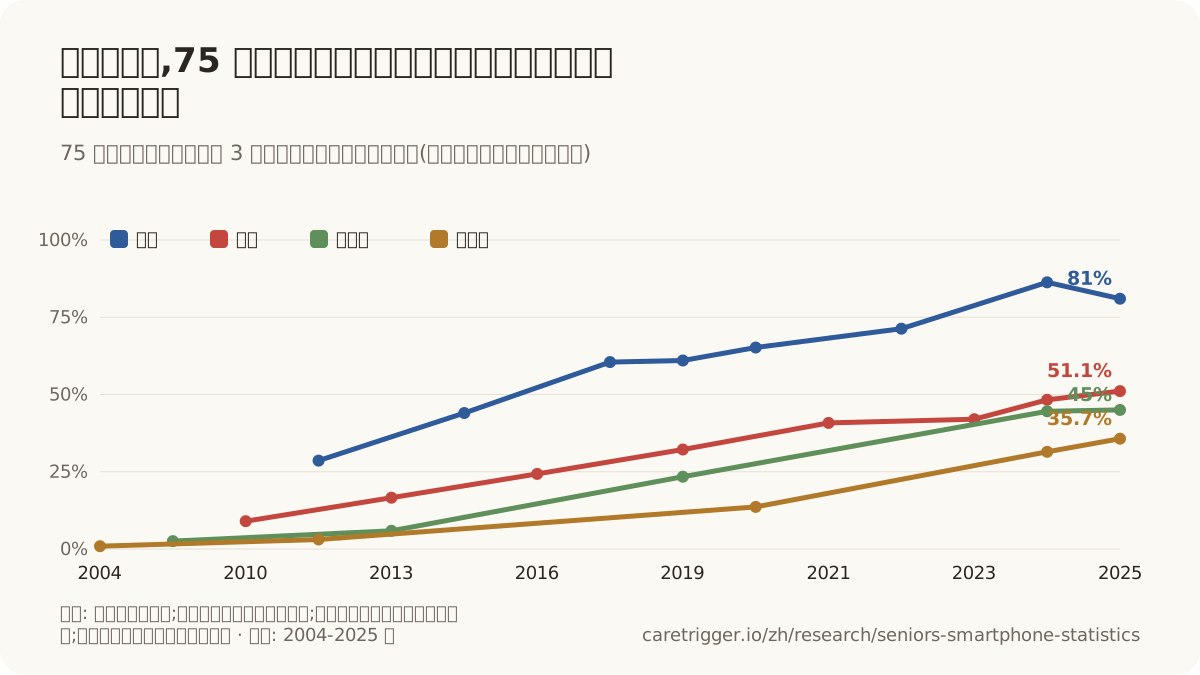
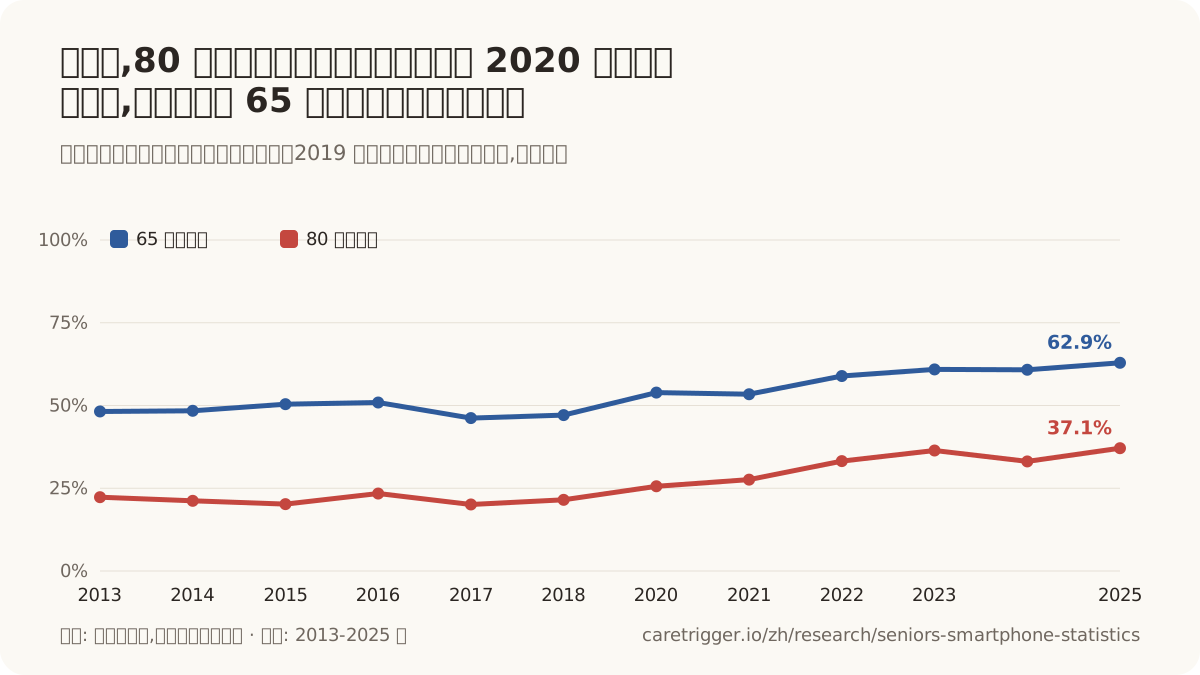
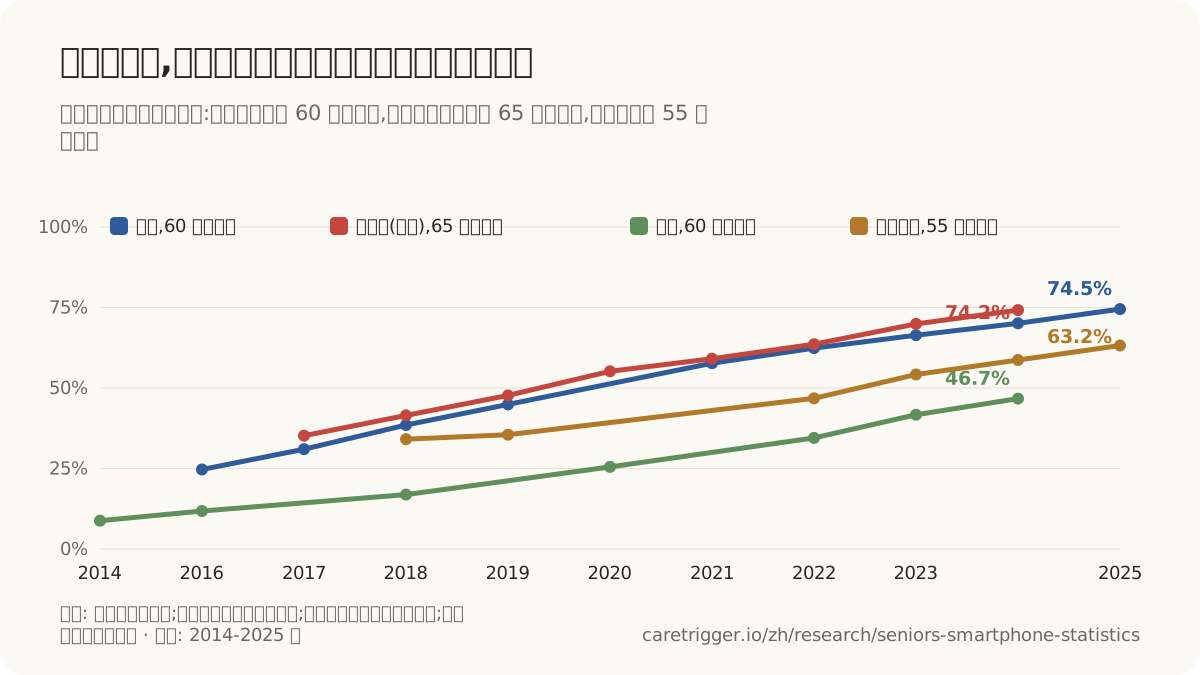
- 截至 2025 年 6 月,中国 60 岁及以上的网民达 1 亿 6,100 万人,该年龄段的互联网普及率为 52.0%,比「十四五」(第 14 个五年规划)开局时提高了 8.7 个百分点(中国互联网络信息中心,2025)。[90]
- 截至 2025 年 12 月,中国 60 岁及以上的网民约有 1 亿 7,300 万人,占 11 亿 2,500 万网民的 15.4%(中国互联网络信息中心,2026;本页推算)。[101]
- 截至 2021 年 12 月,中国 60 岁及以上的网民达 1 亿 1,900 万人,占全部网民的 11.5%;60 岁及以上人群的互联网普及率为 43.2%(中国互联网络信息中心,2022)。[102]
- 截至 2024 年 12 月,中国 60 岁及以上人群的互联网普及率为 52.5%,而全体人口为 78.6%(中国互联网络信息中心,2025)。[103]
- 截至 2021 年 12 月,中国 60 岁及以上人群的互联网普及率为 43.2%(中国互联网络信息中心,2022)。[102]
- 2025 年 7 月,韩国 60 岁及以上使用互联网的人有 1,229 万,占该年龄段的 83.8%(韩国科学技术信息通信部、韩国智能信息社会振兴院,2026)。[60]
- 2025 年,55 岁及以上的韩国人中有 94.4% 拥有智能手机,而一般民众为 98.8%;在 70 岁及以上者中,86.8% 拥有移动智能设备(韩国科学技术信息通信部、韩国智能信息社会振兴院,2026)。[104]
- 2025 年,香港有 1,559,200 名 65 岁及以上人士拥有智能手机,占 10 岁及以上全部智能手机持有人的 24.2%(香港政府统计处,2026)。[14]
- 2025 年,台湾地区 70 岁及以上的人中有 53.8% 使用互联网,高于 2024 年的 50.2%(60-69 岁:85.0%)(台湾网络信息中心,2025)。[105]
- 2024 年,台湾地区 70 岁及以上的人中有 50.2% 使用互联网(台湾网络信息中心,2025)。[105]
- 2022 年,在台湾地区八个网络连接程度较低的县,60 岁及以上的人中每 100 人有 56 人拥有智能手机,55.6% 曾经上网(台湾地区数字事务主管部门,2023)。[106]
- 2025 年,60 岁及以上的巴西人中有 80.3% 拥有个人使用的手机,而 10 岁及以上的全体人口为 89.8%(巴西地理统计局,PNAD Contínua ICT 模块 2025)。[108]
- 2025 年,60 岁及以上的巴西人中有 74% 拥有手机,而 10 岁及以上人口为 89%(Cetic.br, TIC Domicílios 2025)。[109]
- 2024 年第四季度,阿根廷城市地区 65 岁及以上的人中有 85.1% 使用手机,而 4 岁及以上的城市人口为 90.5%(阿根廷国家统计与普查局,EPH-MAUTIC 2024)。[93]
- 2025 年第四季度,60 岁及以上的秘鲁人中有 83.3% 使用手机,而 6 岁及以上人口为 91.0%(秘鲁国家统计与信息研究所,ENAHO,初步数据)。[95]
- 2025 年,55 岁及以上的哥伦比亚人中有 86.1% 拥有手机,91.5% 使用过手机(哥伦比亚国家统计局,ECV ICT 模块 2025)。[94]
- 2018 年,55 岁及以上的哥伦比亚人中有 78.3% 拥有手机(哥伦比亚国家统计局,ECV ICT 模块 2018)。[110]
- 2025 年,65-74 岁的墨西哥人中有 57.8% 使用互联网,而 6 岁及以上人口为 86.1%(墨西哥国家统计和地理研究所,ENDUTIH 2025;2026 年发布)。[83]
- 2017-18 年,有 45 岁及以上成员的印度家庭中有 87.1% 拥有手机(城市 93.6%,农村 84.1%)(印度国际人口科学研究所,LASI 第 1 轮,2020)。[111]
- 按 34 个国家的平均值计算,2019/2021 年 60 岁以上的非洲人中有 78% 拥有手机,但只有 21% 拥有可上网的手机;18-30 岁者分别为 84% 和 53%(非洲晴雨表第 8 轮;Dispatch 582, 2022)。[112]
- 2022 年,72% 的 50 岁及以上加拿大人拥有智能手机,高于 2015 年的 46%,而年轻成年人的拥有率几乎没有变化(Pew Research Center, Spring 2022 Global Attitudes Survey)。[113]
- 2022 年,90% 的 50 岁及以上加拿大人使用互联网或拥有智能手机,而 18-29 岁者为 100%(Pew Research Center, Spring 2022 Global Attitudes Survey)。[113]
- 2022 年,85% 的 50 岁及以上以色列人使用互联网或拥有智能手机,而 18-29 岁者为 93%(Pew Research Center, Spring 2022 Global Attitudes Survey)。[113]
- 2022 年,波兰 50 岁及以上的成年人中有 57% 使用互联网或拥有智能手机,在接受调查的 18 个发达经济体中最低,而匈牙利为 63%,荷兰为 93%,韩国为 98%(Pew Research Center, Spring 2022 Global Attitudes Survey)。[113]
- 2020 年,65 岁及以上的加拿大人中有 76.3% 在过去三个月内出于个人目的使用过互联网,而 15 岁及以上的全体加拿大人为 92.3%(加拿大统计局,Canadian Internet Use Survey 2020)。[92]
- 2018 年,65 岁及以上的加拿大人中有 71.2% 在过去三个月内出于个人目的使用过互联网,而 15 岁及以上的全体加拿大人为 91.3%(加拿大统计局,Canadian Internet Use Survey 2018)。[92]
- 2020 年,75 岁及以上的加拿大人中有 62% 使用过互联网(原文为「约 62%」),而全国平均水平为 92%(加拿大统计局,Canadian Internet Use Survey 2020)。[114]
- 2018 年,65 岁及以上的加拿大人中有 42.8% 拥有个人使用的智能手机,而 15 岁及以上的全体加拿大人为 80.3%(加拿大统计局,Canadian Internet Use Survey 2018)。[12]
- 2016 年,65 岁及以上的加拿大人中有 68.2% 是互联网用户(General Social Survey;加拿大统计局,2019)。[78]
- 2013 年,65 岁及以上的加拿大人中有 52.4% 是互联网用户(General Social Survey;加拿大统计局,2019)。[78]
- 2010 年,65 岁及以上的加拿大人中有 46.0% 是互联网用户(General Social Survey;加拿大统计局,2019)。[78]
- 2007 年,65 岁及以上的加拿大人中有 32.2% 是互联网用户(General Social Survey;加拿大统计局,2019)。[78]
- 2013 年,80 岁及以上的加拿大人中有 28.5% 是互联网用户,而 65-69 岁者为 69.5%(General Social Survey;加拿大统计局,2019)。[78]
- 2010 年,80 岁及以上的加拿大人中有 23.1% 是互联网用户,而 65-69 岁者为 66.2%(General Social Survey;加拿大统计局,2019)。[78]
- 2007 年,80 岁及以上的加拿大人中有 15.5% 是互联网用户,而 65-69 岁者为 47.0%(General Social Survey;加拿大统计局,2019)。[78]
- 2019 年,65 岁及以上的乌拉圭人中有 49% 在过去三个月内使用过互联网,而 14 岁及以上的全体人口为 87%(乌拉圭 AGESIC 和国家统计局,EUTIC 2019,据 EUTIC 2022 报告)。[96]
- 2020 年,英国 65-74 岁的成年人中有 85.5% 在过去 3 个月内使用过互联网(英国国家统计局 Internet users, 2021)。[115]
- 2013 年,英国 65-74 岁的成年人中有 61.1% 在过去 3 个月内使用过互联网(英国国家统计局 Internet users, 2021)。[115]
- 2020 年,英国 16 岁及以上的全体成年人中有 92.1% 在过去 3 个月内使用过互联网(英国国家统计局 Internet users, 2021)。[115]
- 2025 年,法国 60-74 岁的人中有 86.9% 在过去 3 个月内使用过互联网(法国国家统计与经济研究所,2026)。[116]
- 2025 年,法国 15 岁及以上的全体人口中有 89.6% 在过去 3 个月内使用过互联网(法国国家统计与经济研究所,2026)。[117]
- 2026 年,瑞典 65-74 岁的人中有 96% 在过去 3 个月内使用过互联网(瑞典统计局,2026)。[75]
- 2026 年,瑞典 16 岁及以上的全体人口中有 97% 在过去 3 个月内使用过互联网(瑞典统计局,2026)。[75]
- 2024 年,爱尔兰 75 岁及以上的人中有 54% 在过去 3 个月内使用过互联网(爱尔兰中央统计局,2025)。[118]
- 2025 年,奥地利 75-84 岁的人中有 65.1% 在过去 3 个月内使用过互联网,高于 2023 年的 53.8%(奥地利统计局,2025)。[119]
- 2023 年,奥地利 75-84 岁的人中有 53.8% 在过去 3 个月内使用过互联网(奥地利统计局,2025)。[119]
- 2014 年,瑞士 60 岁及以上的人中有 51.7% 在过去 3 个月内使用过互联网(瑞士联邦统计局)。[18]
- 2026 年,丹麦 60-74 岁的人中有 99% 在过去 3 个月内使用过互联网,高于 2008 年的 54%(丹麦统计局,2026)。[120]
- 2008 年,丹麦 60-74 岁的人中有 54% 在过去 3 个月内使用过互联网(丹麦统计局)。[120]
- 2026 年,挪威 75-79 岁的人中有 99% 在过去 3 个月内使用过互联网,高于 2006 年的 16%(挪威统计局,2026)。[121]
- 2006 年,挪威 75-79 岁的人中有 16% 在过去 3 个月内使用过互联网(挪威统计局)。[121]
- 2025 年,芬兰 75-89 岁的人中有 67% 在过去 3 个月内使用过互联网(芬兰统计局)。[16]
- 2013 年,芬兰 75-89 岁的人中有 27% 在过去 3 个月内使用过互联网(芬兰统计局)。[16]
- 2013 年,芬兰 65-74 岁的人中有 15% 在使用触摸屏手机(智能手机)(芬兰统计局)。[16]
- 2020 年,荷兰 75 岁及以上的人中有 37.4% 用手机或智能手机上网(荷兰中央统计局)。[19]
- 2024 年,瑞典 85 岁及以上的人中有 60% 在过去 3 个月内使用过互联网(瑞典统计局)。[75]
- 2025 年,瑞典 85 岁及以上的人中有 57% 在过去 3 个月内使用过互联网(瑞典统计局)。[75]
- 2022 年,瑞典 75-84 岁的人中有 79% 在过去 3 个月内使用过互联网(瑞典统计局)。[75]
| 时期 | 65 岁及以上者中的比例 | 范围 | 来源 |
|---|---|---|---|
| 2014 年调查前 12 个月 | 24.0% | 在统计前 12 个月内使用过互联网的 65 岁及以上香港人士 · 香港特别行政区 | [123] |
| 2016 年调查前 12 个月 | 44.0% | 在统计前 12 个月内使用过互联网的 65 岁及以上香港人士 · 香港特别行政区 | [123] |
| 2017 年调查前 12 个月 | 51.2% | 在统计前 12 个月内使用过互联网的 65 岁及以上香港人士 · 香港特别行政区 | [124] |
| 2018 年调查前 12 个月 | 56.3% | 在统计前 12 个月内使用过互联网的 65 岁及以上香港人士 · 香港特别行政区 | [125] |
| 2019 年调查前 12 个月 | 62.2% | 在统计前 12 个月内使用过互联网的 65 岁及以上香港人士 · 香港特别行政区 | [126] |
| 2020 年调查前 12 个月 | 65.9% | 在统计前 12 个月内使用过互联网的 65 岁及以上香港人士 · 香港特别行政区 | [127] |
| 2021 年调查前 12 个月 | 70.0% | 在统计前 12 个月内使用过互联网的 65 岁及以上香港人士 · 香港特别行政区 | [128] |
| 2022 年调查前 12 个月 | 81.8% | 在统计前 12 个月内使用过互联网的 65 岁及以上香港人士 · 香港特别行政区 | [129] |
| 2023 年调查前 12 个月 | 84.2% | 在统计前 12 个月内使用过互联网的 65 岁及以上香港人士 · 香港特别行政区 | [130] |
| 2024 年调查前 12 个月 | 84.0% | 在统计前 12 个月内使用过互联网的 65 岁及以上香港人士 · 香港特别行政区 | [14] |
| 时期 | 70 岁及以上者中的比例 | 范围 | 来源 |
|---|---|---|---|
| 2021 年 7 月(过去一个月内) | 49.7% | 在过去一个月内至少使用过一次互联网(有线或无线)的 70 岁及以上韩国人口 · 韩国 | [131] |
| 2022 年 7 月(过去一个月内) | 54.7% | 在过去一个月内至少使用过一次互联网(有线或无线)的 70 岁及以上韩国人口 · 韩国 | [132] |
| 2023 年 7 月(过去一个月内) | 64.4% | 在过去一个月内至少使用过一次互联网(有线或无线)的 70 岁及以上韩国人口 · 韩国 | [133] |
| 2024 年 7 月(过去一个月内) | 68.0% | 在过去一个月内至少使用过一次互联网(有线或无线)的 70 岁及以上韩国人口 · 韩国 | [134] |
| 时期 | 60 岁及以上者中的比例 | 范围 | 来源 |
|---|---|---|---|
| 2020 年调查前 3 个月 | 73% | 在过去 3 个月内使用过互联网的 60 岁及以上新加坡居民 · 新加坡 | [15] |
| 2021 年调查前 3 个月 | 81% | 在过去 3 个月内使用过互联网的 60 岁及以上新加坡居民 · 新加坡 | [15] |
| 2022 年调查前 3 个月 | 78% | 在过去 3 个月内使用过互联网的 60 岁及以上新加坡居民 · 新加坡 | [15] |
| 2023 年调查前 3 个月 | 76% | 在过去 3 个月内使用过互联网的 60 岁及以上新加坡居民 · 新加坡 | [15] |
| 2024 年调查前 3 个月 | 77% | 在过去 3 个月内使用过互联网的 60 岁及以上新加坡居民 · 新加坡 | [15] |
| 时期 | 65 岁及以上者中的比例 | 范围 | 来源 |
|---|---|---|---|
| 2020 年(当地纪年 109 年) | 46.8% | 曾经上网的 65 岁及以上台湾地区人口(个人上网率) · 台湾地区 | [73] |
| 2022 年(当地纪年 111 年) | 50.6% | 曾经上网的 65 岁及以上台湾地区人口(个人上网率) · 台湾地区 | [73] |
| 2023 年(当地纪年 112 年) | 51.6% | 曾经上网的 65 岁及以上台湾地区人口(个人上网率) · 台湾地区 | [73] |
| 2024 年(当地纪年 113 年) | 51.5% | 曾经上网的 65 岁及以上台湾地区人口(个人上网率) · 台湾地区 | [73] |
| 时期 | 占网民的比例 | 范围 | 来源 |
|---|---|---|---|
| 2020 年 3 月 | 6.7% | 中国 6 岁及以上全部网民中 60 岁及以上者所占的比例 · 中国 | [135] |
| 2020 年 12 月 | 11.2% | 中国 6 岁及以上全部网民中 60 岁及以上者所占的比例 · 中国 | [136] |
| 2021 年 12 月 | 11.5% | 中国 6 岁及以上全部网民中 60 岁及以上者所占的比例 · 中国 | [102] |
| 2024 年 12 月 | 14.1% | 中国 6 岁及以上全部网民中 60 岁及以上者所占的比例 · 中国 | [103] |
| 2025 年 6 月 | 14.4% | 中国 6 岁及以上全部网民中 60 岁及以上者所占的比例 · 中国 | [90] |
| 2025 年 12 月 | 15.4% | 中国 6 岁及以上全部网民中 60 岁及以上者所占的比例 · 中国 | [101] |
| 时期 | 75 岁及以上者中的比例 | 范围 | 来源 |
|---|---|---|---|
| 截至 2020 年 6 月的 6 个月 | 60.7% | 在过去 6 个月内用手机上网的 75 岁及以上澳大利亚成年人(以全部 75 岁及以上成年人为基数) · 澳大利亚 | [20] |
| 截至 2021 年 6 月的 6 个月 | 70.6% | 在过去 6 个月内用手机上网的 75 岁及以上澳大利亚成年人(以全部 75 岁及以上成年人为基数) · 澳大利亚 | [20] |
| 截至 2022 年 6 月的 6 个月 | 72.2% | 在过去 6 个月内用手机上网的 75 岁及以上澳大利亚成年人(以全部 75 岁及以上成年人为基数) · 澳大利亚 | [20] |
| 截至 2023 年 6 月的 6 个月 | 77.4% | 在过去 6 个月内用手机上网的 75 岁及以上澳大利亚成年人(以全部 75 岁及以上成年人为基数) · 澳大利亚 | [20] |
| 截至 2024 年 6 月的 6 个月 | 83.9% | 在过去 6 个月内用手机上网的 75 岁及以上澳大利亚成年人(以全部 75 岁及以上成年人为基数) · 澳大利亚 | [20] |
| 截至 2017 年 6 月的 6 个月 | 18.3% | 在过去 6 个月内用手机上网的 75 岁及以上澳大利亚成年人(以全部 75 岁及以上成年人为基数) · 澳大利亚 | [20] |
| 截至 2018 年 6 月的 6 个月 | 23.7% | 在过去 6 个月内用手机上网的 75 岁及以上澳大利亚成年人(以全部 75 岁及以上成年人为基数) · 澳大利亚 | [20] |
| 截至 2019 年 6 月的 6 个月 | 29.6% | 在过去 6 个月内用手机上网的 75 岁及以上澳大利亚成年人(以全部 75 岁及以上成年人为基数) · 澳大利亚 | [20] |
| 时期 | 75 岁及以上者中的比例 | 范围 | 来源 |
|---|---|---|---|
| 截至 2020 年 6 月的 6 个月 | 89.9% | 在过去 6 个月内用任何设备上过网的 75 岁及以上澳大利亚成年人 · 澳大利亚 | [20] |
| 截至 2021 年 6 月的 6 个月 | 93.9% | 在过去 6 个月内用任何设备上过网的 75 岁及以上澳大利亚成年人 · 澳大利亚 | [20] |
| 截至 2022 年 6 月的 6 个月 | 94.4% | 在过去 6 个月内用任何设备上过网的 75 岁及以上澳大利亚成年人 · 澳大利亚 | [20] |
| 截至 2023 年 6 月的 6 个月 | 95.3% | 在过去 6 个月内用任何设备上过网的 75 岁及以上澳大利亚成年人 · 澳大利亚 | [20] |
| 截至 2024 年 6 月的 6 个月 | 97.3% | 在过去 6 个月内用任何设备上过网的 75 岁及以上澳大利亚成年人 · 澳大利亚 | [20] |
| 截至 2017 年 6 月的 6 个月 | 55.1% | 在过去 6 个月内用任何设备上过网的 75 岁及以上澳大利亚成年人 · 澳大利亚 | [20] |
| 截至 2018 年 6 月的 6 个月 | 45.4% | 在过去 6 个月内用任何设备上过网的 75 岁及以上澳大利亚成年人 · 澳大利亚 | [20] |
| 截至 2019 年 6 月的 6 个月 | 51.8% | 在过去 6 个月内用任何设备上过网的 75 岁及以上澳大利亚成年人 · 澳大利亚 | [20] |
| 时期 | 60 岁及以上者中的比例 | 范围 | 来源 |
|---|---|---|---|
| 2016 年 | 60.7% | 拥有个人用手机的 60 岁及以上人口(对比全部 10 岁及以上人口)(任何类型;PNAD 不单独统计智能手机) · 巴西 | [108] |
| 2017 年 | 63.1% | 拥有个人用手机的 60 岁及以上人口(对比全部 10 岁及以上人口)(任何类型;PNAD 不单独统计智能手机) · 巴西 | [108] |
| 2018 年 | 63.8% | 拥有个人用手机的 60 岁及以上人口(对比全部 10 岁及以上人口)(任何类型;PNAD 不单独统计智能手机) · 巴西 | [108] |
| 2019 年 | 66.7% | 拥有个人用手机的 60 岁及以上人口(对比全部 10 岁及以上人口)(任何类型;PNAD 不单独统计智能手机) · 巴西 | [108] |
| 2021 年 | 71.3% | 拥有个人用手机的 60 岁及以上人口(对比全部 10 岁及以上人口)(任何类型;PNAD 不单独统计智能手机) · 巴西 | [108] |
| 2022 年 | 74.0% | 拥有个人用手机的 60 岁及以上人口(对比全部 10 岁及以上人口)(任何类型;PNAD 不单独统计智能手机) · 巴西 | [108] |
| 2023 年 | 76.3% | 拥有个人用手机的 60 岁及以上人口(对比全部 10 岁及以上人口)(任何类型;PNAD 不单独统计智能手机) · 巴西 | [108] |
| 2024 年 | 78.3% | 拥有个人用手机的 60 岁及以上人口(对比全部 10 岁及以上人口)(任何类型;PNAD 不单独统计智能手机) · 巴西 | [108] |
| 时期 | 65 岁及以上者中的比例 | 范围 | 来源 |
|---|---|---|---|
| 2017 年第四季度 | 59.2% | 31 个城市聚居区私人住户中使用手机(任何类型)的 65 岁及以上人口(对比全部 4 岁及以上人口) · 阿根廷(31 个城市聚居区) | [137] |
| 2018 年第四季度 | 64.6% | 31 个城市聚居区私人住户中使用手机(任何类型)的 65 岁及以上人口(对比全部 4 岁及以上人口) · 阿根廷(31 个城市聚居区) | [138] |
| 2019 年第四季度 | 67.7% | 31 个城市聚居区私人住户中使用手机(任何类型)的 65 岁及以上人口(对比全部 4 岁及以上人口) · 阿根廷(31 个城市聚居区) | [139] |
| 2020 年第四季度 | 71.0% | 31 个城市聚居区私人住户中使用手机(任何类型)的 65 岁及以上人口(对比全部 4 岁及以上人口) · 阿根廷(31 个城市聚居区) | [140] |
| 2021 年第四季度 | 74.7% | 31 个城市聚居区私人住户中使用手机(任何类型)的 65 岁及以上人口(对比全部 4 岁及以上人口) · 阿根廷(31 个城市聚居区) | [141] |
| 2022 年第四季度 | 78.1% | 31 个城市聚居区私人住户中使用手机(任何类型)的 65 岁及以上人口(对比全部 4 岁及以上人口) · 阿根廷(31 个城市聚居区) | [142] |
| 2023 年第四季度 | 81.0% | 31 个城市聚居区私人住户中使用手机(任何类型)的 65 岁及以上人口(对比全部 4 岁及以上人口) · 阿根廷(31 个城市聚居区) | [143] |
| 人群 | 比例 | 范围 | 来源 |
|---|---|---|---|
| 私人住宅中使用互联网的 65-74 岁人口(对比全部 6 岁及以上人口)(ENDUTIH) | 11.2% | 私人住宅中使用互联网的 65-74 岁人口(对比全部 6 岁及以上人口)(ENDUTIH) · 墨西哥 · 2015 年 | [83] |
| 私人住宅中使用互联网的 65-74 岁人口(对比全部 6 岁及以上人口)(ENDUTIH) | 40.7% | 私人住宅中使用互联网的 65-74 岁人口(对比全部 6 岁及以上人口)(ENDUTIH) · 墨西哥 · 2022 年 | [83] |
| 私人住宅中使用互联网的 65-74 岁人口(对比全部 6 岁及以上人口)(ENDUTIH) | 47.4% | 私人住宅中使用互联网的 65-74 岁人口(对比全部 6 岁及以上人口)(ENDUTIH) · 墨西哥 · 2023 年 | [83] |
| 私人住宅中使用互联网的 65-74 岁人口(对比全部 6 岁及以上人口)(ENDUTIH) | 51.0% | 私人住宅中使用互联网的 65-74 岁人口(对比全部 6 岁及以上人口)(ENDUTIH) · 墨西哥 · 2024 年 | [83] |
| 私人住宅中使用互联网的 75 岁及以上人口(对比全部 6 岁及以上人口)(ENDUTIH) | 3.0% | 私人住宅中使用互联网的 75 岁及以上人口(对比全部 6 岁及以上人口)(ENDUTIH) · 墨西哥 · 2015 年 | [83] |
| 私人住宅中使用互联网的 75 岁及以上人口(对比全部 6 岁及以上人口)(ENDUTIH) | 18.3% | 私人住宅中使用互联网的 75 岁及以上人口(对比全部 6 岁及以上人口)(ENDUTIH) · 墨西哥 · 2022 年 | [83] |
| 私人住宅中使用互联网的 75 岁及以上人口(对比全部 6 岁及以上人口)(ENDUTIH) | 23.1% | 私人住宅中使用互联网的 75 岁及以上人口(对比全部 6 岁及以上人口)(ENDUTIH) · 墨西哥 · 2023 年 | [83] |
| 私人住宅中使用互联网的 75 岁及以上人口(对比全部 6 岁及以上人口)(ENDUTIH) | 23.3% | 私人住宅中使用互联网的 75 岁及以上人口(对比全部 6 岁及以上人口)(ENDUTIH) · 墨西哥 · 2024 年 | [83] |
| 时期 | 60 岁及以上者中的比例 | 范围 | 来源 |
|---|---|---|---|
| 2008 年 | 2% | 最近一次上网距访谈不到三个月的 60 岁及以上个人(对比全部 10 岁及以上人口) · 巴西 | [144] |
| 2015 年 | 16% | 最近一次上网距访谈不到三个月的 60 岁及以上个人(对比全部 10 岁及以上人口) · 巴西 | [145] |
| 2019 年 | 34% | 最近一次上网距访谈不到三个月的 60 岁及以上个人(对比全部 10 岁及以上人口) · 巴西 | [146] |
| 2024 年 | 59% | 最近一次上网距访谈不到三个月的 60 岁及以上个人(对比全部 10 岁及以上人口) · 巴西 | [147] |
| 时期 | 75 岁及以上者中的比例 | 范围 | 来源 |
|---|---|---|---|
| 2013 年(1 月至 3 月) | 29.1% | 英国私人住户中 75 岁及以上的成年人;近期互联网用户(过去 3 个月内使用过),LFS · 英国 | [115] |
| 2014 年(1 月至 3 月) | 31.9% | 英国私人住户中 75 岁及以上的成年人;近期互联网用户(过去 3 个月内使用过),LFS · 英国 | [115] |
| 2015 年(1 月至 3 月) | 33.0% | 英国私人住户中 75 岁及以上的成年人;近期互联网用户(过去 3 个月内使用过),LFS · 英国 | [115] |
| 2016 年(1 月至 3 月) | 38.7% | 英国私人住户中 75 岁及以上的成年人;近期互联网用户(过去 3 个月内使用过),LFS · 英国 | [115] |
| 2017 年(1 月至 3 月) | 40.5% | 英国私人住户中 75 岁及以上的成年人;近期互联网用户(过去 3 个月内使用过),LFS · 英国 | [115] |
| 2018 年(1 月至 3 月) | 43.6% | 英国私人住户中 75 岁及以上的成年人;近期互联网用户(过去 3 个月内使用过),LFS · 英国 | [115] |
| 2019 年(1 月至 3 月) | 46.8% | 英国私人住户中 75 岁及以上的成年人;近期互联网用户(过去 3 个月内使用过),LFS · 英国 | [115] |
| 国家和地区 | 50 岁及以上者中的比例 | 范围 | 来源 |
|---|---|---|---|
| 韩国 | 91% | 表示自己拥有智能手机的 50 岁及以上成年人(对比全部 18 岁及以上成年人)(调查自我报告) · 2018 年 | [148] |
| 以色列 | 80% | 表示自己拥有智能手机的 50 岁及以上成年人(对比全部 18 岁及以上成年人)(调查自我报告) · 2018 年 | [148] |
| 瑞典 | 77% | 表示自己拥有智能手机的 50 岁及以上成年人(对比全部 18 岁及以上成年人)(调查自我报告) · 2018 年 | [148] |
| 荷兰 | 74% | 表示自己拥有智能手机的 50 岁及以上成年人(对比全部 18 岁及以上成年人)(调查自我报告) · 2018 年 | [148] |
| 澳大利亚 | 68% | 表示自己拥有智能手机的 50 岁及以上成年人(对比全部 18 岁及以上成年人)(调查自我报告) · 2018 年 | [148] |
| 美国 | 67% | 表示自己拥有智能手机的 50 岁及以上成年人(对比全部 18 岁及以上成年人)(调查自我报告) · 2018 年 | [148] |
| 德国 | 64% | 表示自己拥有智能手机的 50 岁及以上成年人(对比全部 18 岁及以上成年人)(调查自我报告) · 2018 年 | [148] |
| 西班牙 | 60% | 表示自己拥有智能手机的 50 岁及以上成年人(对比全部 18 岁及以上成年人)(调查自我报告) · 2018 年 | [148] |
| 英国 | 60% | 表示自己拥有智能手机的 50 岁及以上成年人(对比全部 18 岁及以上成年人)(调查自我报告) · 2018 年 | [148] |
| 法国 | 53% | 表示自己拥有智能手机的 50 岁及以上成年人(对比全部 18 岁及以上成年人)(调查自我报告) · 2018 年 | [148] |
| 意大利 | 48% | 表示自己拥有智能手机的 50 岁及以上成年人(对比全部 18 岁及以上成年人)(调查自我报告) · 2018 年 | [148] |
| 日本 | 44% | 表示自己拥有智能手机的 50 岁及以上成年人(对比全部 18 岁及以上成年人)(调查自我报告) · 2018 年 | [148] |
| 加拿大 | 43% | 表示自己拥有智能手机的 50 岁及以上成年人(对比全部 18 岁及以上成年人)(调查自我报告) · 2018 年 | [148] |
| 阿根廷 | 42% | 表示自己拥有智能手机的 50 岁及以上成年人(对比全部 18 岁及以上成年人)(调查自我报告) · 2018 年 | [148] |
| 匈牙利 | 35% | 表示自己拥有智能手机的 50 岁及以上成年人(对比全部 18 岁及以上成年人)(调查自我报告) · 2018 年 | [148] |
| 波兰 | 35% | 表示自己拥有智能手机的 50 岁及以上成年人(对比全部 18 岁及以上成年人)(调查自我报告) · 2018 年 | [148] |
| 南非 | 35% | 表示自己拥有智能手机的 50 岁及以上成年人(对比全部 18 岁及以上成年人)(调查自我报告) · 2018 年 | [148] |
| 巴西 | 32% | 表示自己拥有智能手机的 50 岁及以上成年人(对比全部 18 岁及以上成年人)(调查自我报告) · 2018 年 | [148] |
| 墨西哥 | 30% | 表示自己拥有智能手机的 50 岁及以上成年人(对比全部 18 岁及以上成年人)(调查自我报告) · 2018 年 | [148] |
| 希腊 | 29% | 表示自己拥有智能手机的 50 岁及以上成年人(对比全部 18 岁及以上成年人)(调查自我报告) · 2018 年 | [148] |
| 菲律宾 | 27% | 表示自己拥有智能手机的 50 岁及以上成年人(对比全部 18 岁及以上成年人)(调查自我报告) · 2018 年 | [148] |
| 俄罗斯 | 26% | 表示自己拥有智能手机的 50 岁及以上成年人(对比全部 18 岁及以上成年人)(调查自我报告) · 2018 年 | [148] |
| 尼日利亚 | 20% | 表示自己拥有智能手机的 50 岁及以上成年人(对比全部 18 岁及以上成年人)(调查自我报告) · 2018 年 | [148] |
| 突尼斯 | 18% | 表示自己拥有智能手机的 50 岁及以上成年人(对比全部 18 岁及以上成年人)(调查自我报告) · 2018 年 | [148] |
| 肯尼亚 | 18% | 表示自己拥有智能手机的 50 岁及以上成年人(对比全部 18 岁及以上成年人)(调查自我报告) · 2018 年 | [148] |
| 印度尼西亚 | 13% | 表示自己拥有智能手机的 50 岁及以上成年人(对比全部 18 岁及以上成年人)(调查自我报告) · 2018 年 | [148] |
| 印度 | 8% | 表示自己拥有智能手机的 50 岁及以上成年人(对比全部 18 岁及以上成年人)(调查自我报告) · 2018 年 | [148] |
05 / 被落下的人
哪些老年人最不可能拥有智能手机?
2023 年,韩国没有受过正规教育的 65 岁及以上的人中有 33.1% 拥有智能手机,而受过大学教育者为 95.2%(韩国保健福祉部,2024)。[80]
教育和收入对老年人的区隔比年龄本身更明显,独自生活也是如此。在每个有数据的国家,都能看到同样的规律。
独自生活
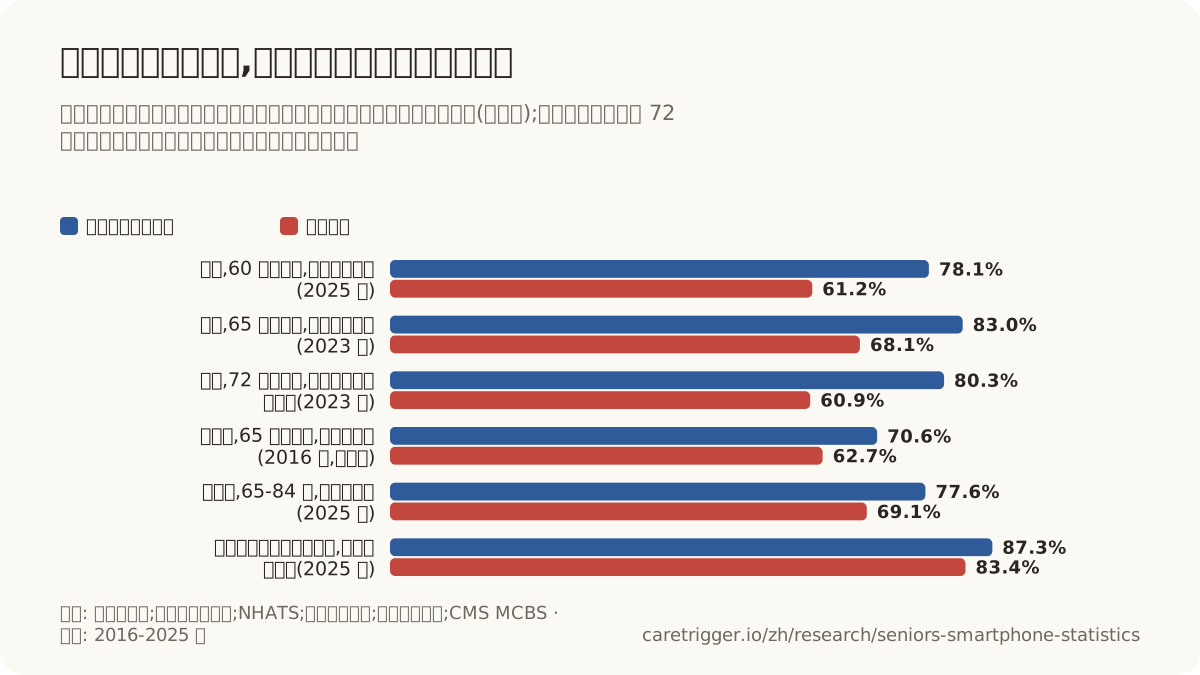
- 2023 年,韩国独自生活的 65 岁及以上的人中有 68.1% 拥有智能手机,而老年夫妇家庭中的老人为 83.0%,与子女同住者为 68.3%(韩国保健福祉部,2024)。[80]
- 2023 年,韩国 65 岁及以上的人中有 68.1% 使用智能手机,低于拥有智能手机的 76.6%;在独自生活者中,使用智能手机的比例为 57.3%(韩国保健福祉部,2024)。[80]
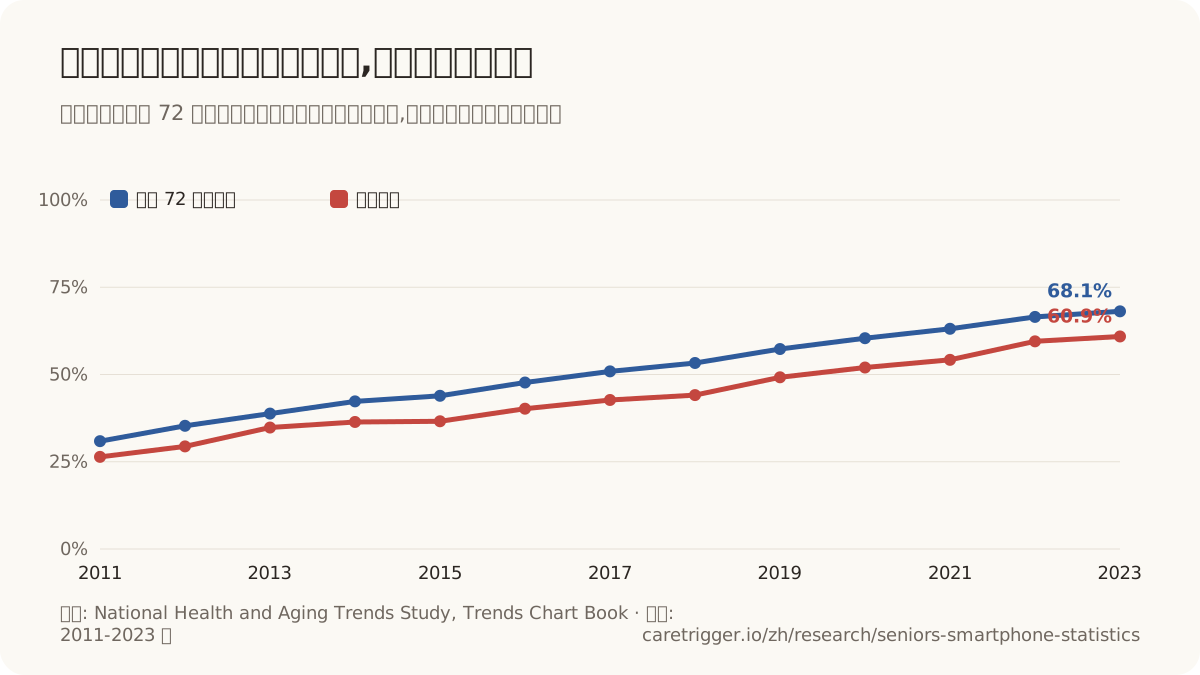
- 2023 年,独自生活的 72 岁及以上美国联邦医疗保险受益人中有 60.9% 在过去一个月内上过网,高于 2011 年的 26.4%,而仅与配偶同住者为 80.3%(NHATS Trends Chart Book, 2026)。[81]
- 2025 年,居住在社区、独自生活的美国联邦医疗保险受益人中有 83.4% 拥有智能手机,而与他人同住者为 87.3%(CMS Medicare Current Beneficiary Survey, 2026)。[69]
- 2025 年,居住在社区、独自生活的美国联邦医疗保险受益人中有 87.3% 能够接入互联网,而与他人同住者为 93.5%(CMS Medicare Current Beneficiary Survey, 2026)。[69]
- 2016 年,在对年龄、性别、就业、教育、农村居住和健康状况进行调整后,独自生活的加拿大老年人使用互联网的预测概率为 62.7%,而与他人同住的老年人为 70.6%(General Social Survey;加拿大统计局,2019)。[78]
- 2025 年,奥地利独自生活(单人户)的 65-84 岁的人中有 69.1% 在过去 3 个月内使用过互联网,高于 2023 年的 57.2%(奥地利统计局,2025)。[119]
- 2025 年,奥地利与他人同住(多人户)的 65-84 岁的人中有 77.6% 在过去 3 个月内使用过互联网,高于 2023 年的 73.5%(奥地利统计局,2025)。[119]
- 2025 年,奥地利 65-84 岁的人中有 75.0% 在过去 3 个月内使用过互联网,高于 2023 年的 68.5%(奥地利统计局,2025)。[119]
- 2025 年,西班牙独自生活的 75 岁及以上的人中有 43.5% 在过去 3 个月内使用过互联网,与夫妻同住、无子女同住者的 44.2% 相近(西班牙国家统计局,2025)。[74]
- 2025 年,西班牙夫妻同住、无子女同住的 75 岁及以上的人中有 44.2% 在过去 3 个月内使用过互联网(西班牙国家统计局,2025)。[74]
- 2022 年,独自生活的智利老年人中有 71% 家中接通了互联网,而有老年成员的全部家庭为 88%(CASEN 2022;Observatorio del Envejecimiento UC-Confuturo, 2024)。[22]
- 2025 年,全部成员均为 65 岁及以上的意大利家庭中有 63.9% 家中可以上网,比 2024 年提高 3.3 个百分点(意大利国家统计局,2026)。[99]
- 2024 年,仅由老年人组成的智利家庭中有 82.9% 可以上网,在所有家庭类型中最低,而有儿童的家庭为 95.6% 至 99.4%(智利电信事务副部,XI Encuesta de Acceso y Uso de Internet, 2024)。[150]
- 2.7 倍:这是 62 岁及以上的单身成年人家中没有互联网服务的几率与参照组之比,来自一项基于 2011 年 National Social Life, Health, and Aging Project 的分析(OATS 和 Humana 基金会,2021)。[152]
| 时期 | 比例 | 范围 | 来源 |
|---|---|---|---|
| 2018 年(2018 年 9 月底调查) | 28.4% | 日本纯老年人家庭(所有成员均为 65 岁及以上,包括独居老人和老年夫妇)中拥有智能手机的家庭成员(6 岁及以上);未作答者保留在基数中 · 日本 | [45] |
| 2019 年(2019 年 9 月底调查) | 34.1% | 日本纯老年人家庭(所有成员均为 65 岁及以上,包括独居老人和老年夫妇)中拥有智能手机的家庭成员(6 岁及以上);未作答者保留在基数中 · 日本 | [46] |
| 2021 年(2021 年 8 月底调查) | 49.5% | 日本纯老年人家庭(所有成员均为 65 岁及以上,包括独居老人和老年夫妇)中拥有智能手机的家庭成员(6 岁及以上);未作答者保留在基数中 · 日本 | [47] |
| 2022 年(2022 年 8 月底调查) | 56.5% | 日本纯老年人家庭(所有成员均为 65 岁及以上,包括独居老人和老年夫妇)中拥有智能手机的家庭成员(6 岁及以上);未作答者保留在基数中 · 日本 | [48] |
| 2023 年(2023 年 8 月底调查) | 58.9% | 日本纯老年人家庭(所有成员均为 65 岁及以上,包括独居老人和老年夫妇)中拥有智能手机的家庭成员(6 岁及以上);未作答者保留在基数中 · 日本 | [49] |
| 2024 年(2024 年 8 月底调查) | 60.0% | 日本纯老年人家庭(所有成员均为 65 岁及以上,包括独居老人和老年夫妇)中拥有智能手机的家庭成员(6 岁及以上);未作答者保留在基数中 · 日本 | [50] |
各国有多少老年人独自生活,请见我们的独居老人统计数据页面。
收入与教育
- 2023 年,韩国收入最低的五分之一家庭中 65 岁及以上的人有 59.8% 拥有智能手机,而收入最高的五分之一家庭为 91.5%(韩国保健福祉部,2024)。[80]
- 2025 年,居住在社区、收入低于 25,000 美元的美国联邦医疗保险受益人中有 74.0% 拥有智能手机,而收入在 25,000 美元及以上者为 90.8%(CMS Medicare Current Beneficiary Survey, 2026)。[69]
- 2025 年,居住在社区、没有高中文凭的美国联邦医疗保险受益人中有 67.9% 拥有智能手机,而拥有研究生或专业学位者为 95.2%(CMS Medicare Current Beneficiary Survey, 2026)。[69]
- 2023 年,没有高中文凭的 72 岁及以上美国联邦医疗保险受益人中有 24.9% 在过去一个月内上过网,而拥有研究生学位者为 89.3%(NHATS Trends Chart Book, 2026)。[81]
- 2022 年,家庭收入处于最低四分位的 65 岁及以上加拿大人中有 65.9% 在家中使用互联网,而最高四分位者为 91.4%(加拿大统计局,Canadian Internet Use Survey 2022)。[153]
- 2022 年,受教育程度为高中及以下的 65 岁及以上加拿大人中有 71.0% 使用互联网,而读过学院、职业学校或上过部分大学课程者为 87.1%,拥有学士及以上学位者为 95.8%(加拿大统计局,Canadian Internet Use Survey 2022)。[154]
- 2016 年,家庭收入低于 20,000 加元的加拿大老年人使用互联网的预测概率为 54.1%,而收入在 100,000 加元及以上者为 79.4%(与税务数据关联的 General Social Survey;加拿大统计局,2019)。[78]
- 2024 年末,阿根廷城市地区没有上过学的 65 岁及以上的人中有 26.0% 使用互联网,而小学未毕业者为 55.7%,完成高等教育者为 92.7%(阿根廷国家统计与普查局,EPH-MAUTIC 2024)。[155]
- 2025 年,西班牙家庭月净收入低于 1,400 欧元的 75 岁及以上的人中有 41.0% 在过去 3 个月内使用过互联网(西班牙国家统计局,2025)。[156]
- 2025 年,西班牙家庭月净收入在 4,400 欧元及以上的 75 岁及以上的人中有 64.9% 在过去 3 个月内使用过互联网(西班牙国家统计局,2025)。[156]
- 2025 年,西班牙受教育程度低于小学的 75 岁及以上的人中有 21.5% 在过去 3 个月内使用过互联网(西班牙国家统计局,2025)。[156]
- 2025 年,西班牙拥有大学学位(licenciatura、硕士或同等学历)的 75 岁及以上的人中有 78.9% 在过去 3 个月内使用过互联网(西班牙国家统计局,2025)。[156]
- 2025 年,欧盟 27 国未受过正规教育或正规教育程度低的 75-89 岁的人中有 36.0% 在过去 3 个月内使用过互联网(欧盟统计局 ICT 调查,2026)。[32]
- 2025 年,欧盟 27 国正规教育程度中等的 75-89 岁的人中有 57.8% 在过去 3 个月内使用过互联网(欧盟统计局 ICT 调查,2026)。[32]
- 2025 年,欧盟 27 国正规教育程度高的 75-89 岁的人中有 83.3% 在过去 3 个月内使用过互联网(欧盟统计局 ICT 调查,2026)。[32]
- 2025 年,欧盟 27 国正规教育程度低的 55-74 岁的人中有 72.7% 在过去 3 个月内使用过互联网(欧盟统计局 ICT 调查,2026)。[32]
- 2025 年,欧盟 27 国正规教育程度高的 55-74 岁的人中有 97.7% 在过去 3 个月内使用过互联网(欧盟统计局 ICT 调查,2026)。[32]
- 2025 年,奥地利最高学历为义务教育的 65-84 岁的人中有 58.4% 在过去 3 个月内使用过互联网,高于 2023 年的 46.7%(奥地利统计局,2025)。[119]
- 2025 年,奥地利拥有大学学位的 65-84 岁的人中有 96.4% 在过去 3 个月内使用过互联网,高于 2023 年的 92.3%(奥地利统计局,2025)。[119]
- 2016 年,在家庭年收入低于 30,000 美元的 65 岁及以上美国成年人中,有 27% 拥有智能手机,而家庭年收入在 75,000 美元及以上者为 81%(Pew Research Center, 2017)。[84]
- 2016 年,受教育程度为高中及以下的 65 岁及以上美国成年人中有 27% 拥有智能手机,而拥有学士及以上学位者为 65%(Pew Research Center, 2017)。[84]
- 2016 年,在家庭年收入低于 30,000 美元的 65 岁及以上美国成年人中,有 27% 家中有宽带,而年收入在 75,000 美元及以上者为 87%(Pew Research Center, 2017)。[157]
女性与男性
- 2023 年,韩国 65 岁及以上的女性中有 70.8% 拥有智能手机,而男性为 83.9%(韩国保健福祉部,2024)。[80]
- 在 2025 年 7 月调查前的一个月里,韩国 70 岁及以上的女性中有 67.6% 使用过互联网,而男性为 73.8%;智能手机拥有率女性为 91.0%,男性为 94.7%(韩国科学技术信息通信部、韩国智能信息社会振兴院,2026)。[60]
- 2025 年,香港 65 岁及以上的女性中有 86.7% 拥有智能手机,而男性为 93.0%;互联网使用率女性为 83.5%,男性为 91.1%(香港政府统计处,2026)。[14]
- 2025 年,台湾地区 70 岁及以上男性的互联网使用率比同龄女性高 13 至 15.6 个百分点;70 岁以下男女的使用率大致相当(台湾地区数字事务主管部门,2026)。[73]
- 2020 年,65 岁及以上的加拿大女性中有 50.3% 拥有个人使用的智能手机,而 65 岁及以上男性为 58.4%(加拿大统计局,Canadian Internet Use Survey 2020)。[12]
- 2022 年,65 岁及以上的加拿大女性中有 81.0% 使用互联网,而 65 岁及以上男性为 84.4%(加拿大统计局,Canadian Internet Use Survey 2022)。[154]
- 2025 年,60 岁及以上的巴西女性中有 75.6% 使用互联网,而 60 岁及以上男性为 73.0%(巴西地理统计局,PNAD Contínua ICT 模块 2025)。[29]
- 2025 年,60 岁及以上的巴西女性中有 81.8% 拥有个人使用的手机,而 60 岁及以上男性为 78.4%(巴西地理统计局,PNAD Contínua ICT 模块 2025)。[108]
- 2025 年,欧盟 27 国 75-89 岁的男性中有 56.9% 在过去 3 个月内使用过互联网(欧盟统计局 ICT 调查,2026)。[32]
- 2025 年,欧盟 27 国 75-89 岁的女性中有 45.4% 在过去 3 个月内使用过互联网(欧盟统计局 ICT 调查,2026)。[32]
- 2025 年,欧盟 27 国 65-74 岁的男性中有 79.6% 在过去 3 个月内使用过互联网(欧盟统计局 ICT 调查,2026)。[32]
- 2025 年,欧盟 27 国 65-74 岁的女性中有 78.6% 在过去 3 个月内使用过互联网(欧盟统计局 ICT 调查,2026)。[32]
- 2025 年,意大利 75 岁及以上的男性中有 43.0% 在过去 3 个月内使用过互联网(意大利国家统计局,2026)。[99]
- 2025 年,意大利 75 岁及以上的女性中有 30.5% 在过去 3 个月内使用过互联网(意大利国家统计局,2026)。[99]
- 2025 年,西班牙 75 岁及以上的男性中有 47.9% 在过去 3 个月内使用过互联网(西班牙国家统计局,2025)。[74]
- 2025 年,西班牙 75 岁及以上的女性中有 43.0% 在过去 3 个月内使用过互联网(西班牙国家统计局,2025)。[74]
- 2025 年,奥地利 65-84 岁的男性中有 79.2% 在过去 3 个月内使用过互联网,高于 2023 年的 77.0%(奥地利统计局,2025)。[119]
- 2025 年,奥地利 65-84 岁的女性中有 71.5% 在过去 3 个月内使用过互联网,高于 2023 年的 61.5%(奥地利统计局,2025)。[119]
- 2026 年,瑞典 85 岁及以上的男性中有 74% 在过去 3 个月内使用过互联网(瑞典统计局,2026)。[75]
- 2026 年,瑞典 85 岁及以上的女性中有 64% 在过去 3 个月内使用过互联网(瑞典统计局,2026)。[75]
- 2025 年,芬兰 75-89 岁的男性中有 62% 在使用触摸屏手机(智能手机)(芬兰统计局)。[16]
- 2025 年,芬兰 75-89 岁的女性中有 56% 在使用触摸屏手机(智能手机)(芬兰统计局)。[16]
- 2020 年,英国 75 岁及以上的男性中有 59.4% 在过去 3 个月内使用过互联网(英国国家统计局 Internet users, 2021)。[115]
- 2020 年,英国 75 岁及以上的女性中有 49.8% 在过去 3 个月内使用过互联网(英国国家统计局 Internet users, 2021)。[115]
- 2023 年,参加美国联邦医疗保险的 72 岁及以上女性中有 67.3% 在过去一个月内上过网,而男性为 69.2%(NHATS Trends Chart Book, 2026)。[81]
- 2013 年,22% 的 65 岁及以上美国男性拥有智能手机,而同龄女性为 15%(Pew Research Center, 2014)。[86]
- 2016 年 7 月,59% 的 50 岁及以上美国男性拥有智能手机,而 50 岁及以上女性为 51%(AARP Research, 2016)。[87]
居住地、健康与种族
- 2023 年,韩国农村地区(邑、面)65 岁及以上的人中有 70.2% 拥有智能手机,而城市地区(洞)为 78.8%(韩国保健福祉部,2024)。[80]
- 2025 年,居住在大都市区以外的美国联邦医疗保险受益人中有 82.0% 拥有智能手机,而大都市区内者为 87.1%(CMS Medicare Current Beneficiary Survey, 2026)。[69]
- 2023 年,居住在大都市区以外的 72 岁及以上美国联邦医疗保险受益人中有 64.0% 在过去一个月内上过网,而大都市区内者为 68.9%(NHATS Trends Chart Book, 2026)。[81]
- 2025 年,哥伦比亚农村地区 55 岁及以上的人中有 41.5% 使用互联网,而城市市镇中心为 69.1%(哥伦比亚国家统计局,ECV ICT 模块 2025)。[94]
- 2025 年,西班牙居住在人口 10 万及以上的城市或省会的 75 岁及以上的人中有 50.9% 在过去 3 个月内使用过互联网(西班牙国家统计局,2025)。[74]
- 2025 年,西班牙居住在人口不足 1 万的市镇的 75 岁及以上的人中有 33.5% 在过去 3 个月内使用过互联网(西班牙国家统计局,2025)。[74]
- 2025 年,奥地利居住在城市的 65-84 岁的人中有 82.3% 在过去 3 个月内使用过互联网,高于 2023 年的 70.7%(奥地利统计局,2025)。[119]
- 2025 年,奥地利居住在农村地区的 65-84 岁的人中有 68.6% 在过去 3 个月内使用过互联网,高于 2023 年的 66.6%(奥地利统计局,2025)。[119]
- 2013 年,12% 的 65 岁及以上美国农村成年人拥有智能手机,而城市和郊区的同龄人为 20%(Pew Research Center, 2014)。[86]
- 2022 年,不列颠哥伦比亚省 65 岁及以上的人中有 89.6% 使用互联网,在各省中最高,而新不伦瑞克省为 73.4%(安大略省 85.4%,艾伯塔省 84.3%,纽芬兰与拉布拉多省 79.2%,爱德华王子岛省 77.8%,萨斯喀彻温省 77.0%,魁北克省 76.9%,曼尼托巴省 76.6%,新斯科舍省 76.5%)(加拿大统计局,Canadian Internet Use Survey 2022)。[92]
- 2025 年,居住在社区、有两种或以上残障的美国联邦医疗保险受益人中有 72.6% 拥有智能手机,而没有残障者为 91.5%(CMS Medicare Current Beneficiary Survey, 2026)。[69]
- 2023 年,韩国日常功能受限的 65 岁及以上的人中有 53.0% 拥有智能手机,而没有功能受限者为 81.9%(韩国保健福祉部,2024)。[80]
- 2025 年,居住在社区的非西班牙裔黑人美国联邦医疗保险受益人中有 76.0% 拥有智能手机,而西班牙裔受益人为 80.0%,非西班牙裔白人受益人为 88.3%(CMS Medicare Current Beneficiary Survey, 2026)。[69]
- 2023 年,72 岁及以上的非西班牙裔黑人美国联邦医疗保险受益人中有 43.9% 在过去一个月内上过网,而西班牙裔受益人为 38.5%,非西班牙裔白人受益人为 74.2%(NHATS Trends Chart Book, 2026)。[81]
06 / 仍未上网
有多少老年人仍未上网?
2025 年,欧盟 27 国 75-89 岁的人中有 42.9% 从未使用过互联网(欧盟统计局 ICT 调查,2026)。[32]
如今,从未上过网的人大多是老年人;在一些国家,最年长的人占全部不上网者的绝大多数。
| 国家与年龄(年份) | 从未使用 | 范围 | 来源 |
|---|---|---|---|
| 西班牙,75 岁及以上(2025 年) | 49.5% | 西班牙 75 岁及以上人口;从未使用过互联网(100 减去「曾经使用过」) · 西班牙 · 2025 年 | [74] |
| 英国,75 岁及以上(2020 年) | 38.8% | 英国私人住户中 75 岁及以上的成年人;从未使用过互联网,LFS · 英国 · 2020 年(1 月至 3 月) | [115] |
| 巴西,60 岁及以上(2025 年) | 38% | 从未上过网的 60 岁及以上个人(对比全部 10 岁及以上人口) · 巴西 · 2025 年 | [30] |
| 爱尔兰,75 岁及以上(2025 年) | 34% | 爱尔兰 75 岁及以上人口;从未使用过互联网 · 爱尔兰 · 2025 年(上半年) | [118] |
| 瑞典,85 岁及以上(2026 年) | 23% | 瑞典 85 岁及以上人口;从未使用过互联网 · 瑞典 · 2026 年 | [75] |
| 欧盟 27 国,65-74 岁(2025 年) | 16.4% | 欧盟 27 国私人住户中 65-74 岁的个人;从未使用过互联网 · 欧盟 27 国 · 2025 年 | [32] |
| 荷兰,75 岁及以上(2025 年) | 15.6% | 荷兰私人住户中 75 岁及以上人口;从未使用过互联网 · 荷兰 · 2025 年 | [19] |
| 德国,65-74 岁(2025 年) | 10% | 德国 65-74 岁人口;从未使用过互联网(「Offliner」,即离线者);调查覆盖 16-74 岁 · 德国 · 2025 年 | [158] |
- 2025 年秋季,英国 75 岁及以上的成年人中有 32% 家中无法上网,而全体成年人为 6%(Ofcom Adults' Media Literacy Tracker, 2026)。[28]
- 2025 年,英国 75 岁及以上的成年人中有 20%(五分之一)家中无法上网,是 2019 年水平的一半(Ofcom Technology Tracker 分析,2025)。[160]
- 英国有 390 万名 65 岁以上的人(占该年龄段的 31%)不在家中使用互联网,而 35-44 岁者为 32 万人(4%)(英国上议院通信与数字委员会,2023,采用 Ofcom 数据)。[161]
- 在英国 240 万完全不具备基本数字技能的成年人中,一半以上是 75 岁以上的人(英国上议院通信与数字委员会,2023,引用 Lloyds Bank Consumer Digital Index 2022)。[161]
- 2026 年,76 岁及以上的瑞典人中有 23% 不使用互联网,低于 2021 年的 32%(瑞典互联网基金会,2026)。[163]
- 2021 年,76 岁及以上的瑞典人中有 32% 不使用互联网(瑞典互联网基金会,2026)。[163]
- 2024 年,美国住户中 65 岁及以上的人有 6.3% 生活在没有电脑、智能手机或平板电脑的家庭中,而全部住户人口为 2.2%(美国人口普查局,American Community Survey, 2025)。[39]
- 2022 年,社区居住的 65 岁及以上美国联邦医疗保险受益人中有 2.7%(超过 130 万人)既不使用电脑,也不使用手机或平板电脑(Innovation in Aging, 2024)。[164]
- 2018 年,美国有 2,180 万名 65 岁及以上的成年人(42%)家中没有有线宽带;58% 家中有有线宽带,而 18-64 岁成年人为 73%(OATS 和 Humana 基金会,2021)。[152]
- 2025 年,75 岁及以上的澳大利亚人中有 66.5% 处于数字排斥或高度数字排斥状态,而全体澳大利亚人为 20.6%(Australian Digital Inclusion Index, 2025)。[165]
- 2018 年前后,七个拉美国家 65 岁及以上的人中有 54% 家中没有接通互联网,而 25 岁以下者为 42%(拉加经委会,Envejecimiento en América Latina y el Caribe, 2022)。[166]
- 根据英国政府引用的英国社会正义中心(Centre for Social Justice)2023 年的一项估算,不上网的消费者在家庭保险、火车出行和食品等方面平均可能要多付 25%(英国科学、创新和技术部,Digital Inclusion Action Plan, 2025)。[167]
- 2013 年,英国 75 岁及以上的成年人中有 65.5% 从未使用过互联网(英国国家统计局 Internet users, 2021)。[115]
| 时期 | 65-74 岁者中的比例 | 范围 | 来源 |
|---|---|---|---|
| 2007 年 | 82.8% | 欧盟 27 国私人住户中 65-74 岁的个人;从未使用过互联网 · 欧盟 27 国 | [32] |
| 2010 年 | 71.0% | 欧盟 27 国私人住户中 65-74 岁的个人;从未使用过互联网 · 欧盟 27 国 | [32] |
| 2013 年 | 60.9% | 欧盟 27 国私人住户中 65-74 岁的个人;从未使用过互联网 · 欧盟 27 国 | [32] |
| 2016 年 | 48.7% | 欧盟 27 国私人住户中 65-74 岁的个人;从未使用过互联网 · 欧盟 27 国 | [32] |
| 2019 年 | 35.6% | 欧盟 27 国私人住户中 65-74 岁的个人;从未使用过互联网 · 欧盟 27 国 | [32] |
| 2022 年 | 25.7% | 欧盟 27 国私人住户中 65-74 岁的个人;从未使用过互联网 · 欧盟 27 国 | [32] |
| 时期 | 占非网民的比例 | 范围 | 来源 |
|---|---|---|---|
| 2021 年 12 月 | 40.8% | 中国非网民中 60 岁及以上者所占的比例(自 2025 年起,以 6 岁及以上非网民为基数) · 中国 | [102] |
| 2022 年 12 月 | 37.4% | 中国非网民中 60 岁及以上者所占的比例(自 2025 年起,以 6 岁及以上非网民为基数) · 中国 | [168] |
| 2023 年 12 月 | 39.8% | 中国非网民中 60 岁及以上者所占的比例(自 2025 年起,以 6 岁及以上非网民为基数) · 中国 | [169] |
| 2024 年 12 月 | 46.8% | 中国非网民中 60 岁及以上者所占的比例(自 2025 年起,以 6 岁及以上非网民为基数) · 中国 | [103] |
| 2025 年 6 月 | 52.1% | 中国非网民中 60 岁及以上者所占的比例(自 2025 年起,以 6 岁及以上非网民为基数) · 中国 | [90] |
07 / 上网做什么
老年人用智能手机做什么?
2023 年 11 月,美国 65 岁及以上的互联网用户中有 86.7% 使用短信或即时通讯,而全体成年互联网用户为 95.1%;这一比例高于 2015 年 7 月的 57.1%(NTIA, 2024)。[26]
发消息和打电话排在首位,其次是看新闻、网上银行和健康相关事务。老年用户在网上做这些事的可能性都低于年轻用户,但在发消息和视频通话方面,差距缩小得最快。
| 活动 | 65-74 岁者中的比例 | 范围 | 来源 |
|---|---|---|---|
| 即时通讯(WhatsApp、Messenger、Viber) | 58.9% | 欧盟 27 国 65-74 岁的个人,占该年龄段全部个人(不仅是互联网用户)的比例:互联网用途:即时通讯,即通过 Skype、Messenger、WhatsApp、Viber 等收发消息(过去 3 个月) · 欧盟 27 国 · 2025 年 | [170] |
| 收发电子邮件 | 58.2% | 欧盟 27 国 65-74 岁的个人,占该年龄段全部个人(不仅是互联网用户)的比例:互联网用途:收发电子邮件(过去 3 个月) · 欧盟 27 国 · 2025 年 | [171] |
| 网络通话或视频通话 | 52.3% | 欧盟 27 国 65-74 岁的个人,占该年龄段全部个人(不仅是互联网用户)的比例:互联网用途:网络通话或视频通话(过去 3 个月) · 欧盟 27 国 · 2025 年 | [172] |
| 在线阅读新闻 | 51.9% | 欧盟 27 国 65-74 岁的个人,占该年龄段全部个人(不仅是互联网用户)的比例:互联网用途:阅读新闻网站/报纸/新闻杂志(过去 3 个月) · 欧盟 27 国 · 2025 年 | [173] |
| 网上银行 | 48.0% | 欧盟 27 国 65-74 岁的个人,占该年龄段全部个人(不仅是互联网用户)的比例:互联网用途:网上银行(过去 3 个月) · 欧盟 27 国 · 2025 年 | [174] |
| 查找健康信息 | 46.8% | 欧盟 27 国 65-74 岁的个人,占该年龄段全部个人(不仅是互联网用户)的比例:互联网用途:查找健康信息(过去 3 个月) · 欧盟 27 国 · 2025 年 | [175] |
| 网上购物(过去 12 个月) | 44.4% | 欧盟 27 国最近一次网购在过去 12 个月内的 65-74 岁个人,占该年龄段全部个人的比例 · 欧盟 27 国 · 2025 年 | [176] |
| 使用公共机构的网站或应用(过去 12 个月) | 41.4% | 欧盟 27 国通过网站或应用与公共机构打过交道的 65-74 岁个人(过去 12 个月),占该年龄段全部个人的比例 · 欧盟 27 国 · 2025 年 | [177] |
| 参与社交网络 | 34.1% | 欧盟 27 国 65-74 岁的个人,占该年龄段全部个人(不仅是互联网用户)的比例:互联网用途:参与社交网络(创建用户资料,在 Facebook、Twitter 等平台发布消息或其他内容)(过去 3 个月) · 欧盟 27 国 · 2025 年 | [178] |
| 在 YouTube 等分享平台上观看视频(2024 年) | 29.4% | 欧盟 27 国 65-74 岁的个人,占该年龄段全部个人(不仅是互联网用户)的比例:互联网用途:在分享平台上观看视频内容(过去 3 个月) · 欧盟 27 国 · 2024 年 | [179] |
| 在线预约医生(2024 年) | 28.2% | 欧盟 27 国 65-74 岁的个人,占该年龄段全部个人(不仅是互联网用户)的比例:互联网用途:通过网站预约医生(过去 3 个月) · 欧盟 27 国 · 2024 年 | [180] |
| 在线查阅个人健康记录(2024 年) | 19.2% | 欧盟 27 国 65-74 岁的个人,占该年龄段全部个人(不仅是互联网用户)的比例:互联网用途:在线查阅个人健康记录(过去 3 个月) · 欧盟 27 国 · 2024 年 | [181] |
- 2020 年,欧盟 27 国 65-74 岁的人中有 32.6% 在过去 3 个月内通过互联网打过电话或进行过视频通话,而 16-74 岁的全体人口为 62.6%(欧盟统计局,2026)。[182]
- 2019 年,欧盟 27 国 65-74 岁的人中有 24.2% 在过去 3 个月内通过互联网打过电话或进行过视频通话,而 16-74 岁的全体人口为 51.9%(欧盟统计局,2026)。[183]
- 2008 年,欧盟 27 国 65-74 岁的人中有 3.1% 在过去 3 个月内通过互联网打过电话或进行过视频通话,而 16-74 岁的全体人口为 16.6%(欧盟统计局,2026)。[184]
- 2025 年,丹麦 65-74 岁的人中有 97.0% 在过去 3 个月内使用过网上银行,为欧盟最高,而丹麦 16-74 岁的全体人口为 97.6%(欧盟统计局,2026)。[185]
- 2025 年,保加利亚 65-74 岁的人中有 6.7% 在过去 3 个月内使用过网上银行,为欧盟最低,而保加利亚 16-74 岁的全体人口为 31.1%(欧盟统计局,2026)。[186]
- 2023 年 11 月,美国 65 岁及以上的互联网用户中有 46.3% 参与过在线视频或语音通话或会议,而全体成年互联网用户为 66.1%;这一比例高于 2019 年 11 月的 28.6%(NTIA, 2024)。[26]
- 2023 年 11 月,美国 65 岁及以上的互联网用户中有 63.2% 使用过银行、投资或缴费等在线金融服务,而全体成年互联网用户为 76.1%(NTIA, 2024)。[26]
- 2015 年 7 月,美国 65 岁及以上的互联网用户中有 57.1% 使用短信或即时通讯,而全体成年互联网用户为 86.1%(NTIA, 2016)。[26]
- 2025 年,64% 的 65 岁及以上美国成年人表示自己使用 YouTube,而全体美国成年人为 84%(Pew Research Center, 2025)。[187]
- 2021 年,49% 的 65 岁及以上美国成年人表示自己使用 YouTube,高于 2019 年的 38%(Pew Research Center, 2022)。[25]
- 2025 年,57% 的 65 岁及以上美国成年人表示自己使用 Facebook,而全体美国成年人为 71%(Pew Research Center, 2025)。[187]
- 2025 年初,45% 的 65 岁及以上美国成年人每天至少访问一次 Facebook,而全体美国成年人为 52%(Pew Research Center, 2025)。[188]
- 2025 年初,27% 的 65 岁及以上美国成年人每天至少访问一次 YouTube,而全体美国成年人为 48%(Pew Research Center, 2025)。[188]
- 2025 年,20% 的 65 岁及以上美国成年人表示自己使用 WhatsApp,而全体美国成年人为 32%(Pew Research Center, 2025)。[187]
- 2025 年,19% 的 65 岁及以上美国成年人表示自己使用 Instagram,而全体美国成年人为 50%(Pew Research Center, 2025)。[187]
- 2025 年,12% 的 65 岁及以上美国成年人表示自己使用 TikTok,而全体美国成年人为 37%(Pew Research Center, 2025)。[187]
- 2026 年,23% 的 65 岁及以上美国成年人表示自己使用 ChatGPT、Gemini 或 Copilot 等 AI 聊天机器人,高于 2024 年的 12%,而全体美国成年人为 49%(Pew Research Center, 2026)。[189]
- 截至 2025 年,14% 的 80 岁及以上美国成年人使用过生成式 AI,而 70-79 岁者为 21%,50-59 岁者为 43%,全部 50 岁及以上成年人为 30%(AARP, 2025)。[37]
- 2025 年,94% 的 50 岁及以上美国成年人每月至少用短信与家人朋友联系一次,高于 2016 年的 79%;短信已超过电子邮件(77%),成为他们最主要的沟通方式(AARP, 2025)。[37]
- 2025 年,46% 的 50 岁及以上美国成年人每月至少与家人朋友视频聊天一次,高于 2016 年的 33%(AARP, 2025)。[37]
- 2025 年,63% 的 50 岁及以上美国成年人在过去 3 个月内使用过在线金融或银行服务,75% 使用过地图和导航(AARP, 2025)。[37]
- 2025 年,46% 的 50 岁及以上美国成年人在过去 3 个月内使用过医疗数字服务(例如 GoodRx、LifeAlert 或健康记录),高于 2024 年的 35%(AARP, 2025)。[37]
- 2022 年,65 岁及以上的加拿大人中有 50.9% 用即时通讯应用发过消息,而 15 岁及以上的全体加拿大人为 78.0%;老年人的这一比例高于 2018 年的 33.6%(加拿大统计局,2023)。[190]
- 2022 年,65 岁及以上的加拿大人中有 37.8% 打过网络语音或视频电话,而 15 岁及以上的全体加拿大人为 64.7%;老年人的这一比例高于 2018 年的 21.2%(加拿大统计局,2023)。[190]
- 2022 年,65 岁及以上的加拿大人中有 58.0% 使用网上银行,而 15 岁及以上的全体加拿大人为 77.6%;老年人的这一比例高于 2018 年的 43.9%(加拿大统计局,2023)。[190]
- 2022 年,65 岁及以上的加拿大人中有 55.4% 使用过政府在线服务,而 15 岁及以上的全体加拿大人为 76.3%;老年人的这一比例高于 2018 年的 41.0%(加拿大统计局,2023)。[190]
- 2022 年,65 岁及以上的加拿大人中有 40.7% 在网上预约过,而 15 岁及以上的全体加拿大人为 58.5%;老年人的这一比例高于 2018 年的 16.6%(加拿大统计局,2023)。[190]
- 在截至 2024 年 6 月的半年里,75 岁及以上的澳大利亚人中有 56% 使用过消息或通话应用,是 2019 年 17% 的三倍多,而全体成年人为 84%(澳大利亚通信与媒体管理局,2024)。[194]
- 在截至 2024 年 6 月的半年里,75 岁及以上的澳大利亚人中有 25% 进行过视频通话,低于任何更年轻的年龄组;64% 网购过,50% 使用过政府服务应用(澳大利亚通信与媒体管理局,2024)。[195]
08 / 用手机的时间
老年人花多少时间用手机?
每天 200 分钟(3 小时 20 分钟):这是 2025 年 5 月英国 65 岁及以上的互联网用户平均每天的上网时间,比 2024 年多 10 分钟,而全体成年用户为 4 小时 30 分钟(Ofcom, 2025)。[4]
老年用户花在手机上的时间比年轻成年人少,也远没有那么常觉得自己用得过多,但每天使用如今已是常态。
- 2026 年,9% 的 65 岁及以上美国成年人表示自己几乎一直在用智能手机,而全体美国成年人为 26%,18-29 岁者为 42%(Pew Research Center, 2026)。[196]
- 2025 年,14% 的 65 岁及以上美国成年人表示自己几乎一直在线,而全体美国成年人为 41%,18-29 岁者为 63%(Pew Research Center, 2026)。[197]
- 2021 年,8% 的 65 岁及以上美国成年人表示自己几乎一直在线,而全体美国成年人为 31%;Pew 发现,自 2015 年首次提出这一问题以来,该年龄段的这一比例没有增长(Pew Research Center, 2021)。[198]
- 2026 年,25% 的 65 岁及以上美国成年人表示自己花在智能手机上的时间太多,54% 表示差不多合适,而全体美国成年人分别为 53% 和 36%(Pew Research Center, 2026)。[196]
- 每天 166 分钟(2 小时 46 分钟):这是 2023 年 5 月英国 65 岁及以上的互联网用户平均每天的上网时间,而全体成年用户为 3 小时 41 分钟(Ofcom, 2023)。[199]
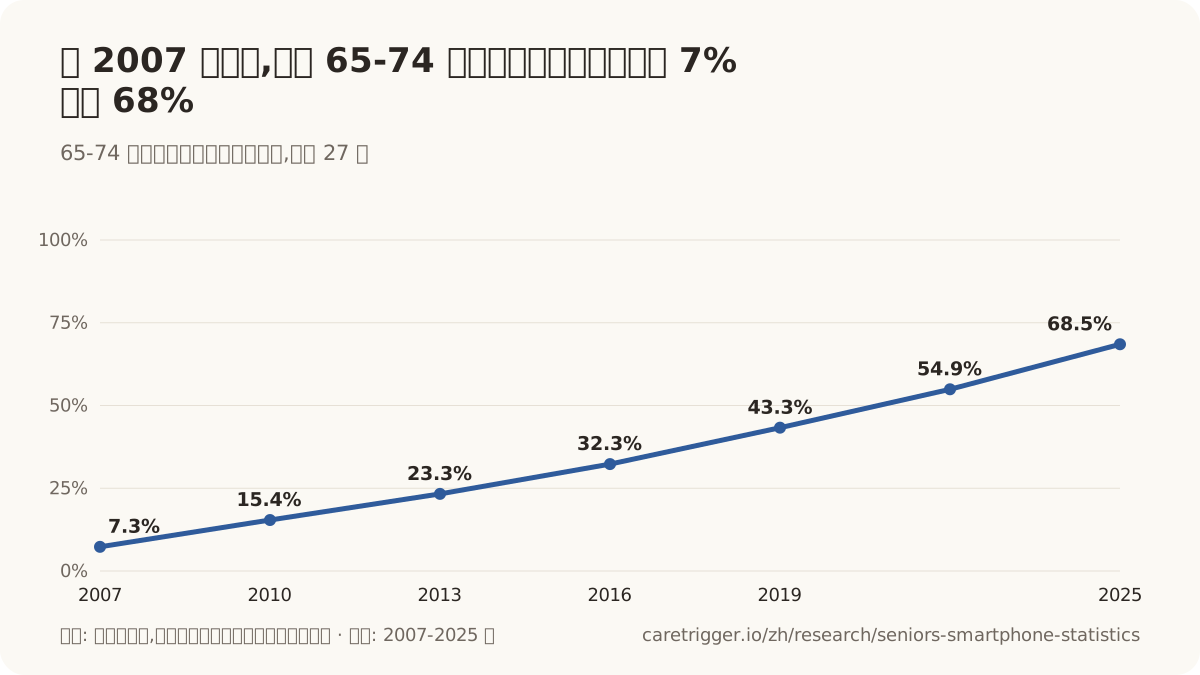
- 2025 年,欧盟 27 国 65-74 岁的人中有 68.5% 每天上网,而 16-74 岁的全体人口为 89.5%;这一比例高于 2007 年的 7.3%(欧盟统计局,2026)。[200]
- 2025 年,爱尔兰 65-74 岁的人中有 95.7% 每天上网,为欧盟最高,而爱尔兰 16-74 岁的全体人口为 99.3%(欧盟统计局,2026)。[201]
- 2025 年,希腊 65-74 岁的人中有 46.6% 每天上网,为欧盟最低,而希腊 16-74 岁的全体人口为 87.2%(欧盟统计局,2026)。[202]
- 2024 年,西班牙 75 岁及以上的人中有 34.7% 每天上网,而 65-74 岁者为 70.6%,16-74 岁的全体人口为 91.5%(欧盟统计局,2026)。[203]
- 2024 年,意大利 75 岁及以上的人中有 28.7% 每天上网,而 65-74 岁者为 64.4%,16-74 岁的全体人口为 87.4%(欧盟统计局,2026)。[204]
- 2024 年,60 岁及以上的智利人中有 84.0% 每天使用智能手机,而 16 岁及以上的全体人口为 94.8%,16-44 岁者为 98.8%(智利电信事务副部,XI Encuesta de Acceso y Uso de Internet, 2024)。[150]
- 2023 年,60 岁及以上的智利人中有 78.1% 表示自己经常使用智能手机,而 16 岁及以上的全体人口为 93%,较年轻的各年龄组为 95.6% 至 98.4%(智利电信事务副部,X Encuesta de Acceso y Uso de Internet, 2023)。[205]
- 2025 年,50 岁及以上的美国智能手机拥有者中有 98% 每天使用智能手机,高于 2016 年的 95%;而台式电脑拥有者每天使用台式电脑的比例从 89% 降至 58%(AARP, 2025)。[37]
- 在截至 2024 年 6 月的半年里,用手机上网的 75 岁及以上澳大利亚人中有 68% 每天多次用手机上网,在所有年龄组中最低,而全体成年人为 92%(澳大利亚通信与媒体管理局,2024)。[195]
- 2020 年,65 岁及以上的加拿大人中有 12.3% 在平常的一天里至少每 30 分钟查看一次智能手机,而 15 岁及以上的全体加拿大人为 43.4%;这一比例高于 2018 年的 9.0%(加拿大统计局,2021)。[12]
- 2018 年,65 岁及以上的加拿大人中有 9.0% 在平常的一天里至少每 30 分钟查看一次智能手机,而 15 岁及以上的全体加拿大人为 36.5%(加拿大统计局,2021)。[12]
- 2020 年,65 岁及以上的加拿大人中有 22.4% 表示醒来后做的第一件事是查看智能手机,而 15 岁及以上的全体加拿大人为 53.2%(加拿大统计局,2021)。[12]
- 2020 年,65 岁及以上的加拿大人中有 18.4% 表示睡前做的最后一件事是查看智能手机,而 15 岁及以上的全体加拿大人为 51.2%(加拿大统计局,2021)。[12]
- 2015 年,65 岁及以上的美国智能手机拥有者中有 21% 每小时查看手机几次或更频繁,3% 每隔几分钟就查看一次,而全体智能手机拥有者为 52%(盖洛普,2015)。[206]
- 2016 年,美国 65 岁及以上的互联网用户中有 76% 至少每天上网:8% 几乎一直在线,51% 每天上网数次,17% 大约每天一次(Pew Research Center, 2017)。[207]
- 2025 年,英国 75 岁及以上的成年人中有 10% 觉得自己大多数日子的屏幕使用时间过长,而全体成年人为 40%,16-24 岁者为 61%(Ofcom, 2026)。[159]
- 2025 年,韩国 60 多岁的智能手机用户中有 11.5% 存在智能手机过度依赖风险,为 20-59 岁成年人(22.3%)的一半,比 2024 年下降 0.4 个百分点(韩国科学技术信息通信部,2026)。[208]
- 按 39 个国家的平均值计算,2021/2023 年 56 岁及以上的非洲人中有 24% 每天或每周数次使用互联网(16% 每天使用),而 18-35 岁者为 52%(非洲晴雨表第 9 轮;Policy Paper 95, 2025)。[23]
09 / 阻碍因素
为什么有些老年人不用智能手机?
在日本很少或从不使用智能手机或平板电脑的 70 岁及以上的人中,有 49.4% 表示不知道怎么用(80 岁及以上:52.5%),这是 166 名不使用的老年人给出的首要原因(日本内阁府,2025)。[209]
不会用和觉得没必要,这两个原因都比费用更重要。技能是最大的障碍:在六十多岁后期到七十出头的欧洲人中,具备基本数字技能的不到一半。
- 在家中没有互联网、也不太可能接通的 65 岁及以上英国成年人中,有 81% 表示原因是缺乏兴趣或没有需要;24% 表示可以由别人替他们上网,12% 表示互联网太复杂(Ofcom, 2025)。[4]
- 在家中没有互联网的英国成年人中,有 68% 表示不感兴趣或觉得没有必要上网,38% 提到太复杂,25% 提到费用;这一群体中有三分之二是 75 岁及以上的人(Ofcom, 2026)。[159]
- 在家中没有互联网的英国成年人中,有 42% 曾请别人替自己在网上办事,最常见的是购物(56%)或在线健康服务(37%);但 82% 表示,没有什么能促使他们上网(Ofcom, 2026)。[159]
- 2023 年 11 月,在家中无人上网、户主为 65 岁及以上的美国家庭中,有 67.5% 把「不需要或不感兴趣」作为主要原因,而所有此类家庭中这一比例为 55.7%;10.5% 表示太贵(NTIA, 2024)。[26]
- 家中没有互联网的 75 岁及以上英国成年人中,有 69% 报告患有身体残障,而上网的 75 岁及以上者为 42%;视力(16% 对 4%)、行动能力(43% 对 21%)和手部灵活性(13% 对 6%)方面的问题都更为常见(Ofcom, 2026)。[159]
- 23% 的 65 岁及以上美国成年人有使阅读变得困难的身体或健康状况,29% 有妨碍其充分参与日常活动的残障或慢性病;39% 至少有其中一种情况(Pew Research Center, 2014)。[210]
- 经调整后,与没有视力障碍者相比,有视力障碍的 65 岁及以上美国联邦医疗保险受益人使用电子邮件或短信的流行率比(prevalence ratio)为 0.69(95% CI 0.58-0.82);听力障碍则没有影响(Gell et al., The Gerontologist, 2015;National Health and Aging Trends Study 2011)。[211]
技能与信心
- 2025 年,欧盟 27 国 65-74 岁的人中有 33% 至少具备基本的整体数字技能,而 16-74 岁的全体人口为 60.4%;这一比例高于 2021 年的 25.5%(欧盟统计局,2026)。[212]
- 2023 年,欧盟 27 国 65-74 岁的人中有 28.2% 至少具备基本的整体数字技能,而 16-74 岁的全体人口为 55.6%(欧盟统计局,2026)。[213]
- 2021 年,欧盟 27 国 65-74 岁的人中有 25.5% 至少具备基本的整体数字技能,而 16-74 岁的全体人口为 53.9%(欧盟统计局,2026)。[214]
- 2025 年,欧盟 27 国 65-74 岁的人中有 11.1% 具备高于基本水平的整体数字技能,而 16-74 岁的全体人口为 31.4%(欧盟统计局,2026)。[215]
- 2025 年,欧盟 27 国 65-74 岁的人中有 21.0% 因在此前 3 个月内没有使用过互联网而无法评估其数字技能,而 16-74 岁的全体人口为 6.2%(欧盟统计局,2026)。[216]
- 29.4%:这是 2025 年 70 岁及以上韩国人相对于一般民众的数字能力水平(一般民众 = 100),而 60 多岁者为 63.1%,55 岁及以上全体为 56.2%(韩国智能信息社会振兴院,2026)。[217]
- 71.8%:这是 2025 年 55 岁及以上韩国人相对于一般民众的整体数字化水平(接入、技能和使用),高于 2021 年的 69.1%,在所测量的四个弱势群体中最低(韩国智能信息社会振兴院,2026)。[217]
- 2025 年,70 岁及以上的韩国人中有 26.5% 表示能够自己在移动设备上安装和使用所需的应用,39.0% 表示能够更改基本设置,而 55 岁及以上全体分别为 52.2% 和 62.2%(韩国智能信息社会振兴院,2026)。[217]
- 2025 年,48% 的 80 岁及以上美国成年人同意自己具备充分利用网络所需的数字技能,而 70-79 岁者为 61%,50-59 岁者为 70%(AARP, 2025)。[37]
- 2025 年,66% 的 80 岁及以上美国成年人觉得科技产品在设计时没有考虑到他们这个年龄的人,而全部 50 岁及以上成年人为 60%,50-59 岁者为 54%(AARP, 2025)。[37]
- 2025 年,上网的 75 岁及以上英国成年人中有 34% 对管理谁能访问自己的个人信息没有信心,而全体上网成年人为 18%(Ofcom, 2026)。[159]
- 在没有开通患者门户的 65-80 岁美国成年人中,有 47% 表示自己用不惯科技产品,而 50-64 岁者为 30%;62% 表示不喜欢通过电脑沟通健康问题(密歇根大学 National Poll on Healthy Aging, 2018)。[218]
- 48% 的 65 岁及以上美国成年人表示,「我买了新的电子设备,通常需要别人帮我设置或教我怎么用」这句话非常符合自己的情况,25% 表示比较符合(Pew Research Center, 2017)。[207]
- 2015 年,美国 65 岁及以上的互联网用户中有 26% 对使用电脑、智能手机或其他设备在网上完成所需事务非常有信心;34% 只有一点信心(23%)或完全没有信心(11%)(Pew Research Center, 2017)。[207]
- 77% 的 65 岁及以上美国成年人表示,学习使用平板电脑或智能手机等新设备时需要有人帮忙,只有 18% 觉得自己学起来没问题(Pew Research Center, 2014)。[210]
| 国家和地区 | 65-74 岁者中的比例 | 范围 | 来源 |
|---|---|---|---|
| 爱尔兰 | 69.6% | 爱尔兰 65-74 岁、具备基本或高于基本水平整体数字技能的个人 · 2025 年 | [219] |
| 荷兰 | 68.5% | 荷兰 65-74 岁、具备基本或高于基本水平整体数字技能的个人 · 2025 年 | [220] |
| 法国 | 41.9% | 法国 65-74 岁、具备基本或高于基本水平整体数字技能的个人 · 2025 年 | [221] |
| 德国 | 41.2% | 德国 65-74 岁、具备基本或高于基本水平整体数字技能的个人 · 2025 年 | [222] |
| 西班牙 | 34.3% | 西班牙 65-74 岁、具备基本或高于基本水平整体数字技能的个人 · 2025 年 | [223] |
| 意大利 | 27.4% | 意大利 65-74 岁、具备基本或高于基本水平整体数字技能的个人 · 2025 年 | [224] |
| 波兰 | 12.3% | 波兰 65-74 岁、具备基本或高于基本水平整体数字技能的个人 · 2025 年 | [225] |
| 罗马尼亚 | 7.3% | 罗马尼亚 65-74 岁、具备基本或高于基本水平整体数字技能的个人 · 2025 年 | [226] |
10 / 设备
老年人使用哪些设备?他们家中还有固定电话吗?
2025 年 7 月至 12 月,63.4% 的 65 岁及以上美国成年人「仅用手机」(本人有手机,家中没有固定电话),而全体成年人为 79.2%;这一比例高于 2019 年 7 月至 12 月的 33.2%(NCHS, National Health Interview Survey, 2026)。[6]
手机已成为老年人上网的主要方式,而固定电话正在淡出。
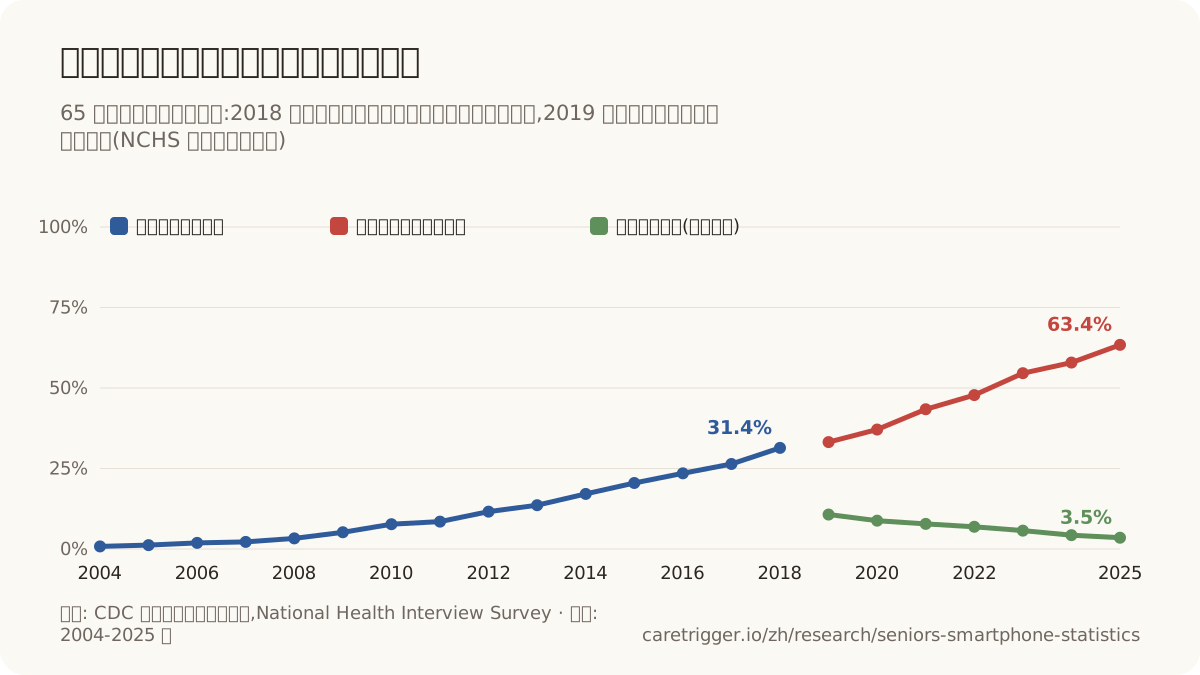
- 2025 年 7 月至 12 月,3.5% 的 65 岁及以上美国成年人「仅用固定电话」(本人没有手机),而全体成年人为 1.6%(NCHS, National Health Interview Survey, 2026)。[6]
- 2025 年 7 月至 12 月,35.2% 的 65 岁及以上美国成年人家中仍有固定电话(「主要用手机」16.7%,「两者并用」8.5%,「主要用固定电话」6.5%,「仅用固定电话」3.5%),而全体成年人为 19.5%(NCHS, 2026)。[6]
- 在截至 2024 年 6 月的半年里,75 岁及以上的澳大利亚人中有 45% 在家中用固定电话打过电话,低于一年前的 58%,而全体成年人为 15%(澳大利亚通信与媒体管理局,2024)。[194]
- 2025 年,欧盟 27 国 65-74 岁的互联网用户中有 88.9% 在过去 3 个月内用手机或智能手机上过网,而 16-74 岁的全体互联网用户为 95.8%;这一比例高于 2016 年的 47.8%(欧盟统计局,2026)。[227]
- 2025 年,欧盟 27 国 65-74 岁的互联网用户中有 7.3% 在过去 3 个月内只用台式电脑或笔记本电脑上网(不用手机或平板电脑),而 16-74 岁的全体互联网用户为 2.6%;这一比例低于 2016 年的 40.1%(欧盟统计局,2026)。[228]
- 2025 年,欧盟 27 国 65-74 岁的互联网用户中有 42.2% 在过去 3 个月内用笔记本电脑上过网,而 16-74 岁的全体互联网用户为 59.5%(欧盟统计局,2026)。[229]
- 2025 年,欧盟 27 国 65-74 岁的互联网用户中有 29.2% 在过去 3 个月内用平板电脑上过网,而 16-74 岁的全体互联网用户为 33.5%(欧盟统计局,2026)。[230]
- 2025 年,欧盟 27 国 65-74 岁的互联网用户中有 28.2% 在过去 3 个月内用台式电脑上过网,而 16-74 岁的全体互联网用户为 32.7%(欧盟统计局,2026)。[231]
- 2025 年,欧盟 27 国 65-74 岁的互联网用户中有 21.4% 在过去 3 个月内用其他设备(智能电视、智能音箱、游戏机、电子书阅读器或智能手表)上过网,而 16-74 岁的全体互联网用户为 41.2%(欧盟统计局,2026)。[232]
- 2024 年,丹麦 75-89 岁的互联网用户中有 66%(三分之二)用手机上网,43% 使用平板电脑(丹麦统计局,2024)。[77]
- 2025 年,70 岁及以上的韩国人中有 12.5% 用电脑上网,而用智能手机上网的为 70.1%,用平板电脑的为 2.2%;在 55 岁及以上全体中,28.0% 用电脑,85.9% 用智能手机(韩国智能信息社会振兴院,2026)。[217]
- 2025 年,17% 的 65 岁及以上美国成年人只靠智能手机上网(拥有智能手机,家中没有宽带),而全体美国成年人为 16%;这一比例高于 2013 年的 3%(Pew Research Center, 2025)。[38]
- 2025 年,70% 的 65 岁及以上美国成年人表示家中订购了宽带,高于 2001 年 3 月的 1%,而 50-64 岁成年人为 79%(Pew Research Center, 2025)。[38]
- 2021 年,户主为 65 岁及以上的美国家庭中有 80.7% 订购了宽带互联网服务,而全部家庭为 90.1%(美国人口普查局,2024)。[8]
- 2021 年,户主为 65 岁及以上的美国家庭中有 87.5% 至少拥有一台计算设备(台式电脑、笔记本电脑、平板电脑或智能手机),而全部家庭为 95.0%(美国人口普查局,2024)。[8]
- 2024 年,内华达州住户中 65 岁及以上的人有 92.6% 订购了宽带,为各州最高,其次是阿拉斯加州(92.1%)和新罕布什尔州(91.6%)(美国人口普查局,American Community Survey, 2025)。[233]
- 2024 年,密西西比州住户中 65 岁及以上的人有 80.3% 订购了宽带,为各州最低,其次是西弗吉尼亚州(81.3%)和北达科他州(82.5%)(美国人口普查局,American Community Survey, 2025)。[233]
- 2025 年,台湾地区 65 岁及以上的人中有 75.6% 生活在可以上网的家庭中,高于 2023 年的 63.3%,而本人上网的只有 63.3%(台湾地区数字事务主管部门,2026)。[73]
- 2025 年,台湾地区 70 岁及以上的人中有 51.8% 拥有可通过 4G 或 5G 上网的手机号码,而 60-69 岁者为 80.1%,18-29 岁者为 100%(台湾网络信息中心,2025)。[105]
- 2011 年,社区居住的 65 岁及以上美国联邦医疗保险受益人中有 75.9% 拥有手机(Gell et al., 2015)。[234]
- 2011 年,社区居住的 65 岁及以上美国联邦医疗保险受益人中有 63.2% 能够使用电脑(Gell et al., 2015)。[234]
| 时期 | 占网民的比例 | 范围 | 来源 |
|---|---|---|---|
| 2016 年 | 47.8% | 欧盟 27 国 65-74 岁的互联网用户(过去 3 个月)中用手机或智能手机上网者(单位:占互联网用户的百分比) · 欧盟 27 国 | [235] |
| 2018 年 | 61.6% | 欧盟 27 国 65-74 岁的互联网用户(过去 3 个月)中用手机或智能手机上网者(单位:占互联网用户的百分比) · 欧盟 27 国 | [236] |
| 2021 年 | 76.7% | 欧盟 27 国 65-74 岁的互联网用户(过去 3 个月)中用手机或智能手机上网者(单位:占互联网用户的百分比) · 欧盟 27 国 | [237] |
| 2023 年 | 84.3% | 欧盟 27 国 65-74 岁的互联网用户(过去 3 个月)中用手机或智能手机上网者(单位:占互联网用户的百分比) · 欧盟 27 国 | [238] |
| 时期 | 65 岁及以上者中的比例 | 范围 | 来源 |
|---|---|---|---|
| 2013 年 | 3% | 拥有智能手机但家中不使用宽带的 65 岁及以上美国成年人(「依赖智能手机上网」);当年各次调查的合并数据 · 美国 | [38] |
| 2016 年 | 7% | 拥有智能手机但家中不使用宽带的 65 岁及以上美国成年人(「依赖智能手机上网」);当年各次调查的合并数据 · 美国 | [38] |
| 2019 年 | 12% | 拥有智能手机但家中不使用宽带的 65 岁及以上美国成年人(「依赖智能手机上网」);当年各次调查的合并数据 · 美国 | [38] |
| 2021 年 | 12% | 拥有智能手机但家中不使用宽带的 65 岁及以上美国成年人(「依赖智能手机上网」);当年各次调查的合并数据 · 美国 | [38] |
| 2023 年 | 16% | 拥有智能手机但家中不使用宽带的 65 岁及以上美国成年人(「依赖智能手机上网」);当年各次调查的合并数据 · 美国 | [38] |
| 时期 | 65 岁及以上者中的比例 | 范围 | 来源 |
|---|---|---|---|
| 2015 年 | 67.0% | 居住在美国住户中(不含护理院等集体住所)、家中有电脑(含智能手机/平板电脑)并订购了任何类型宽带(含蜂窝数据套餐)的 65 岁及以上人口(ACS 1 年期估计值) · 美国 | [239] |
| 2016 年 | 71.1% | 居住在美国住户中(不含护理院等集体住所)、家中有电脑(含智能手机/平板电脑)并订购了任何类型宽带(含蜂窝数据套餐)的 65 岁及以上人口(ACS 1 年期估计值) · 美国 | [240] |
| 2017 年 | 74.0% | 居住在美国住户中(不含护理院等集体住所)、家中有电脑(含智能手机/平板电脑)并订购了任何类型宽带(含蜂窝数据套餐)的 65 岁及以上人口(ACS 1 年期估计值) · 美国 | [241] |
| 2018 年 | 76.1% | 居住在美国住户中(不含护理院等集体住所)、家中有电脑(含智能手机/平板电脑)并订购了任何类型宽带(含蜂窝数据套餐)的 65 岁及以上人口(ACS 1 年期估计值) · 美国 | [242] |
| 2019 年 | 78.0% | 居住在美国住户中(不含护理院等集体住所)、家中有电脑(含智能手机/平板电脑)并订购了任何类型宽带(含蜂窝数据套餐)的 65 岁及以上人口(ACS 1 年期估计值) · 美国 | [243] |
| 2021 年 | 83.1% | 居住在美国住户中(不含护理院等集体住所)、家中有电脑(含智能手机/平板电脑)并订购了任何类型宽带(含蜂窝数据套餐)的 65 岁及以上人口(ACS 1 年期估计值) · 美国 | [244] |
| 2022 年 | 84.8% | 居住在美国住户中(不含护理院等集体住所)、家中有电脑(含智能手机/平板电脑)并订购了任何类型宽带(含蜂窝数据套餐)的 65 岁及以上人口(ACS 1 年期估计值) · 美国 | [245] |
| 2023 年 | 86.5% | 居住在美国住户中(不含护理院等集体住所)、家中有电脑(含智能手机/平板电脑)并订购了任何类型宽带(含蜂窝数据套餐)的 65 岁及以上人口(ACS 1 年期估计值) · 美国 | [246] |
功能手机
- 2025 年秋季,英国 75 岁及以上的成年人中有 27% 使用的手机不是智能手机(Ofcom Adults' Media Literacy Tracker, 2026)。[28]
- 2025 年秋季,英国 75 岁及以上的成年人中有 17% 完全不使用手机(Ofcom Adults' Media Literacy Tracker, 2026)。[28]
- 2025 年秋季,英国 65-74 岁的成年人中有 84% 使用智能手机(Ofcom Adults' Media Literacy Tracker, 2026)。[28]
- 2026 年,英国 75 岁及以上的成年人中有 17% 使用手机但不使用智能手机(根据 Ofcom Technology Tracker 2026 年数据推算)。[11]
- 2026 年,英国 75 岁及以上的成年人中有 89% 本人使用某种手机(Ofcom Technology Tracker, 2026)。[11]
- 2025 年,英国 75 岁及以上的成年人中有 87% 本人使用某种手机(Ofcom Technology Tracker, 2025)。[51]
- 2025 年,16% 的 50 岁及以上美国成年人拥有普通(非智能)手机,低于 2016 年的 57%(AARP Research, 2025)。[37]
- 2017 年 11 月,34% 的 70 岁及以上美国成年人拥有普通手机(功能手机),而 50-59 岁者为 14%(AARP Research, 2017)。[88]
- 在 2019 年的访谈中,意大利三个地区贫困地带独自生活的体弱老人里,120 人中有 80 人以功能手机作为主要通信设备,21 人用智能手机,19 人只用固定电话;有几人在跌倒后够不着自己的电话(Socci et al., 2022)。[247]
平板电脑、智能手表和智能音箱
- 2021 年,44% 的 65 岁及以上美国成年人拥有平板电脑,而 30-49 岁成年人为 61%,50-64 岁者为 53%(Pew Research Center, 2022)。[25]
- 2026 年,24% 的 65 岁及以上美国成年人拥有 Apple Watch 或 Google Pixel Watch 等智能手表,而全体美国成年人为 37%(Pew Research Center, 2026)。[189]
- 2026 年,24% 的 65 岁及以上美国成年人拥有具备 AI 功能的智能音箱,而全体美国成年人为 35%(Pew Research Center, 2026)。[189]
- 36% 的 50 岁及以上美国成年人拥有穿戴设备(2025 年),高于 2016 年的 11%;穿戴设备是唯一仍以 18-49 岁成年人拥有比例更高的设备类别。[37]
- 2024 年,75 岁及以上的澳大利亚人中有 23% 拥有联网的穿戴设备,高于 2023 年的 13%,而全体成年人为 37%(澳大利亚通信与媒体管理局,2024)。[195]
- 2023 年 11 月,14.3% 的 65 岁及以上美国成年人使用智能手表或健身手环等联网穿戴设备,而 15 岁及以上的全体人群为 22.7%(NTIA, 2024)。[26]
- 36% 的美国婴儿潮一代(65-74 岁)拥有智能手表或联网健康设备(2024 年),千禧一代则为 66%。[248]
- 2025 年,英国 65 岁及以上的智能手机用户中有 57% 以 Android 手机作为主要手机,41% 用 iPhone;在 16 岁及以上的全体用户中,54% 使用 iPhone(Ofcom, 2025)。[4]
11 / 健康
使用智能手机对老年人的健康、记忆力或孤独感有好处吗?
在 50 岁以上的成年人中,使用数字技术与认知障碍相关的比值比为 0.42(95% CI 0.35-0.52),该结果来自一项涵盖 57 项观察性研究、411,430 人(基线平均年龄 68.7 岁)的荟萃分析(Benge 和 Scullin, Nature Human Behaviour, 2025)。[249]
大型研究发现,使用数字技术的老年人出现认知障碍、痴呆或抑郁的可能性较低,但这些只是关联:更健康、受教育程度更高的人本来也更可能上网。为老年人提供视频通话或其他数字工具的试验发现,这些措施对孤独感几乎没有影响。
- 在同一项涵盖 57 项研究的荟萃分析中,50 岁以上的成年人使用数字技术与随时间推移出现认知衰退相关的风险比为 0.74(95% CI 0.66-0.84)(Benge 和 Scullin, Nature Human Behaviour, 2025)。[249]
- 在 Health and Retirement Study 中,18,154 名基线时没有痴呆、年龄 50-64.9 岁的美国成年人接受了中位数为 7.9 年的随访,经常上网与痴呆相关的风险比为 0.57(95% CI 0.46-0.71),即风险约为一半(Cho et al., Journal of the American Geriatrics Society, 2023)。[250]
- 在 English Longitudinal Study of Ageing 中,8,238 名基线时没有痴呆的 50 岁及以上成年人里,上网与约十年间痴呆风险低 40% 相关(风险比 0.60,95% CI 0.42-0.85)(d'Orsi et al., Aging & Mental Health, 2018)。[251]
- 在西澳大利亚州 5,506 名社区居住、年龄 69-87 岁并接受了最长 8.5 年随访的男性中,使用电脑与确诊痴呆相关的风险比为 0.62(95% CI 0.47-0.81)(Almeida et al., PLOS ONE, 2012)。[252]
- 在 146,651 名 60 岁及以上、平均随访 11.9 年的 UK Biobank 参与者中,闲暇时使用电脑的时间与痴呆相关的风险比为 0.85(95% CI 0.81-0.90),而看电视的时间则与较高的风险相关(Raichlen et al., PNAS, 2022)。[253]
- 在来自中国、墨西哥、美国和欧洲的队列中的 104,422 名 50 岁及以上成年人里,与被排斥在数字世界之外的人相比,互联网用户死亡的亚分布风险比为 0.67(95% CI 0.52-0.86)(Ren et al., Globalization and Health, 2023)。[254]
- 一项针对 2014-2025 年发表的观察性研究的三水平荟萃分析发现,老年人使用数字智能设备与抑郁相关的比值比为 0.676(95% CI 0.613-0.745)(Gu et al., BMC Public Health, 2026)。[255]
- 在 23 个国家的 87,559 名 50 岁及以上成年人中,上网与抑郁症状的合并平均边际效应 -0.09(95% CI -0.12 至 -0.07)相关,同时还与更高的生活满意度和更好的自评健康相关(Luo、Yip 和 Zhang, Nature Human Behaviour, 2025)。[256]
- 在 Health and Retirement Study 中接受四轮随访(2002-2008 年)的 3,075 名已退休美国成年人里,上网与处于抑郁状态的概率低三分之一(约 33%)相关,其中独自生活者的降幅最大(Cotten et al., Journals of Gerontology Series B, 2014)。[257]
- 在 32 个国家的五个全国性队列中,不上网的 60 岁及以上成年人出现抑郁症状的比值比为 1.13 至 1.55(美国 1.13,英格兰 1.22,欧洲大陆 1.55,中国 1.49,墨西哥 1.48;129,847 人,2010-2020 年)(Yan et al., eClinicalMedicine, 2024)。[258]
- 合并约 111,784 名参与者的分析发现,处于社会隔离或数字排斥状态的老年人患抑郁的几率高 60%(合并比值比 1.60,95% CI 1.39-1.84)(Byeon, Medicine, 2026)。[259]
- 在合并的三个社区居住老年人纵向队列中,社会隔离或数字排斥与认知衰退之间的比值比为 1.03(95% CI 0.92-1.15),没有统计学意义(Byeon, Medicine, 2026)。[259]
- 在一个由 1,424 名成年人(平均年龄 64.8 岁)组成、具有全国代表性的美国队列中,使用视频聊天的老年人两年后有 6.9% 出现抑郁症状,约为不使用任何通信技术者(13.1%)的一半;电子邮件、社交媒体和即时通讯则没有显示出这种关联(Teo et al., American Journal of Geriatric Psychiatry, 2019)。[260]
- 每隔几个月或更久才与子女、其他家人和朋友见一次面的 50 岁及以上成年人,两年后有 11.5% 出现具有临床意义的抑郁症状,而每月见面者为 8.1%;打电话或写信的频率则不能预测抑郁(Teo et al., Journal of the American Geriatrics Society, 2015)。[261]
- 在美国 Health and Retirement Study(2006-2014 年)中,老年人上网与八年间孤独感得分在 0-2 分量表上低 0.060 分相关,其中 0.025 分是通过与家人朋友更多的联系实现的(Yu、Wu 和 Chi, Journals of Gerontology Series B, 2021)。[262]
- 在 20-80 分的 UCLA 孤独量表上,三个月时的平均差为 -0.44 分(95% CI -3.28 至 2.41):在三项涉及 201 名老年护理院住户的试验中,与常规照护相比,视频通话干预对孤独感几乎没有影响,而且证据非常不确定(Noone et al., Cochrane Database of Systematic Reviews, 2020)。[263]
- 合并平均年龄为 73-78 岁的老年人参与的试验后,三个月时的标准化平均差为 0.02(95% CI -0.36 至 0.40),显示与常规照护相比,数字技术干预对孤独感没有显著影响(Shah et al., Journal of Medical Internet Research, 2021)。[264]
是关联,而非证明。队列研究比较的是选择上网的人和不上网的人,并对能够测量的因素进行了调整。更健康、更富裕、受教育程度更高的人更可能使用科技产品,也更可能保持健康,因此这些研究无法证明智能手机能保护记忆力或情绪。能够说明因果关系的随机试验规模都很小,而且发现孤独感几乎没有变化。
远程医疗
- 2021 年,43.3% 的 65 岁及以上美国成年人在过去 12 个月内通过视频或电话看过医生,为各年龄组中最高(全体成年人 37.0%;18-29 岁 29.4%)(NCHS, National Health Interview Survey, 2022)。[265]
- 2022 年,30.6% 的 65 岁及以上美国成年人在过去 12 个月内使用过远程医疗(通过视频或电话看医生),低于 2021 年的 43.3%(全体成年人 30.1%)(NCHS, National Health Statistics Reports No. 205, 2024)。[266]
- 2025 年,有资格使用远程医疗的 85 岁及以上美国联邦医疗保险按服务付费受益人中有 22.9% 至少使用过一次远程医疗,低于 2020 年的 48.0%(65-74 岁:21.5%;75-84 岁:22.5%;全体受益人 23.3%)(CMS, Medicare Telehealth Trends, 2026)。[267]
- 2019 年,即疫情之前,4% 的 50-80 岁美国成年人报告在过去一年中有过远程医疗问诊(密歇根大学 National Poll on Healthy Aging;Innovation in Aging, 2024)。[268]
- 2020 年 3 月至 6 月间,26% 的 50-80 岁美国成年人有过远程医疗问诊,高于 2019 年报告在过去一年中有过远程问诊的 4%(密歇根大学 National Poll on Healthy Aging,2020 年 6 月,n=2,074;Innovation in Aging, 2021)。[269]
- 2018 年,38% 的 65 岁及以上美国成年人(约 1,300 万人)尚未准备好接受视频问诊,主要原因是缺乏使用技术的经验;即使有家人或朋友帮忙,仍有 32%(1,080 万人)无法做到(Lam et al., JAMA Internal Medicine, 2020)。[270]
- 2018 年,72% 的 85 岁及以上美国成年人尚未准备好接受视频问诊,而 75-84 岁者为 44%,65-74 岁者为 25%(Lam et al., JAMA Internal Medicine, 2020)。[270]
- 2018 年,20% 的 65 岁及以上美国成年人(约 670 万人)由于听力困难、沟通困难或痴呆,连电话问诊都无法进行(Lam et al., JAMA Internal Medicine, 2020)。[270]
- 2018 年 3 月,49% 的 65-80 岁美国成年人已在其医疗服务提供者处开通了患者门户,而 50-64 岁者为 52%(密歇根大学 National Poll on Healthy Aging, 2018)。[218]
| 时期 | 85 岁及以上者中的比例 | 范围 | 来源 |
|---|---|---|---|
| 2020 年 | 48.0% | 有资格使用远程医疗(参加 B 部分)的 85 岁及以上美国联邦医疗保险按服务付费受益人;在该日历年内至少使用过一次远程医疗服务者的比例 · 美国 | [267] |
| 2021 年 | 33.4% | 有资格使用远程医疗(参加 B 部分)的 85 岁及以上美国联邦医疗保险按服务付费受益人;在该日历年内至少使用过一次远程医疗服务者的比例 · 美国 | [267] |
| 2022 年 | 28.0% | 有资格使用远程医疗(参加 B 部分)的 85 岁及以上美国联邦医疗保险按服务付费受益人;在该日历年内至少使用过一次远程医疗服务者的比例 · 美国 | [267] |
| 2023 年 | 24.0% | 有资格使用远程医疗(参加 B 部分)的 85 岁及以上美国联邦医疗保险按服务付费受益人;在该日历年内至少使用过一次远程医疗服务者的比例 · 美国 | [267] |
| 2024 年 | 24.0% | 有资格使用远程医疗(参加 B 部分)的 85 岁及以上美国联邦医疗保险按服务付费受益人;在该日历年内至少使用过一次远程医疗服务者的比例 · 美国 | [267] |
保持联系
- 在 COVID-19 疫情期间,86.6% 的 70 岁及以上美国成年人每周至少与不同住的家人或朋友通一次电话,与疫情前的 89.2% 相比变化不大(National Health and Aging Trends Study;Freedman et al., Journals of Gerontology Series B, 2022)。[271]
- 在 COVID-19 疫情期间,26.0% 的 70 岁及以上美国成年人每周至少与不同住的家人或朋友视频通话一次,高于疫情前的 21.4%(National Health and Aging Trends Study;Freedman et al., Journals of Gerontology Series B, 2022)。[271]
- 在 COVID-19 疫情期间,39.0% 的 70 岁及以上美国成年人每周至少与不同住的家人或朋友见一次面,低于疫情前的 60.5%;在住宿型照护机构中,这一比例从 56% 降至 22%(Freedman et al., Journals of Gerontology Series B, 2022)。[271]
12 / 求助
老年人能用手机求助吗?
2025 年 7 月至 12 月,95.1% 的 65 岁及以上美国成年人本人有手机(「仅用手机」63.4%,「主要用手机」16.7%,「两者并用」8.5%,「主要用固定电话」6.5%),而全体成年人为 97.1%;另有 3.5%「仅用固定电话」,1.2% 完全没有电话(NCHS, 2026)。[6]
如今,几乎每位老年人都有自己的手机,远远多于拥有个人紧急呼叫器的人。但出事时手机是否就在手边,则是另一回事,这方面的证据很少。
- 2014 年,65 岁及以上的美国手机拥有者中有 81% 表示经常随身携带手机,在各年龄组中最低,而全体手机拥有者为 90%,30-49 岁者为 95%(Pew Research Center, 2015)。[272]
- 在意大利过去三年内遇到过健康紧急情况(主要是跌倒)的独居体弱老人中,88 人中有 40 人表示曾用手机求助,只有 3 人报告使用过远程呼叫器(IN-AGE 研究,2019 年访谈;Melchiorre et al., International Journal of Environmental Research and Public Health, 2022)。[273]
- 在 125 名在家中跌倒的 65 岁及以上老人中,没有一人在跌倒后用电话求助,尽管其中约一半人的家中装有电话;有一人之所以得到帮助,只是因为她恰好接到了一个打进来的电话(Wild、Nayak 和 Isaacs, BMJ, 1981;英国伯明翰)。[274]
- 在英格兰,有行动或日常生活困难的 65 岁及以上社区居住成年人中,只有 6% 报告在使用个人紧急呼叫器。[275]
- 9% 的 65 岁及以上美国成年人目前在使用医疗警报系统/PERS,与 2023 年同一调查的结果持平(行业在线样本调查)。[276]
- 2025 年,6% 的 50 岁及以上美国成年人拥有家用健康与安全设备,12% 拥有 GPS 定位器,而拥有智能手机的为 90%(AARP, 2025)。[37]
- 2025 年,26% 的 50 岁及以上美国照护者使用位置探测器(帮助掌握亲人行踪的 GPS 设备),另有 26% 表示有兴趣(AARP, 2026 Tech Trends and Adults 50-Plus)。[37]
- 2025 年,12% 的 50 岁及以上美国照护者使用紧急响应系统(通过按键或语音启动、用于呼叫紧急救护的系统),而 36% 表示有兴趣(AARP, 2026 Tech Trends and Adults 50-Plus)。[37]
- 2024/25 年度,苏格兰接受地方议会资助的科技辅助照护(社区呼叫器和/或远程照护)的 125,685 人中,有 86.9% 为 65 岁及以上,其中 37.9% 为 85 岁及以上(苏格兰公共卫生局,2026)。[277]
- 2022/23 年度,苏格兰 85 岁及以上的人中有 37% 接受了地方议会资助的科技辅助照护服务(社区呼叫器和/或远程照护)(苏格兰公共卫生局,2024)。[278]
- 英国约有 200 万人使用远程照护服务,这些服务依赖的电话线路将在 2027 年 1 月前从模拟信号转为数字信号(英国卫生和社会保障部与科学、创新和技术部,Telecare National Action Plan, 2025)。[279]
跌倒后够不着电话的人会经历什么,请见我们关于跌倒和长时间倒地的统计数据页面;独自在家中离世的人可能多久无人发现,请见我们关于独自在家中离世者的统计数据页面。
13 / 诈骗
老年人成为电话诈骗目标的频率有多高?
2025 年,60 岁及以上的人向 FBI 报告的网络犯罪和诈骗损失达 77 亿 4,800 万美元,比 2024 年增长 59%,涉及 201,266 宗投诉(增长 37%)(FBI 互联网犯罪投诉中心,《2025 年 IC3 年度报告》)。[7]
老年人报告的损失增长迅速,而以电话开始的诈骗仍然代价最高。不过,大多数诈骗企图都没有得逞:老年人提交的诈骗报告大多没有涉及损失;在英格兰和威尔士,最年长的成年人成为受害者的可能性低于平均水平。
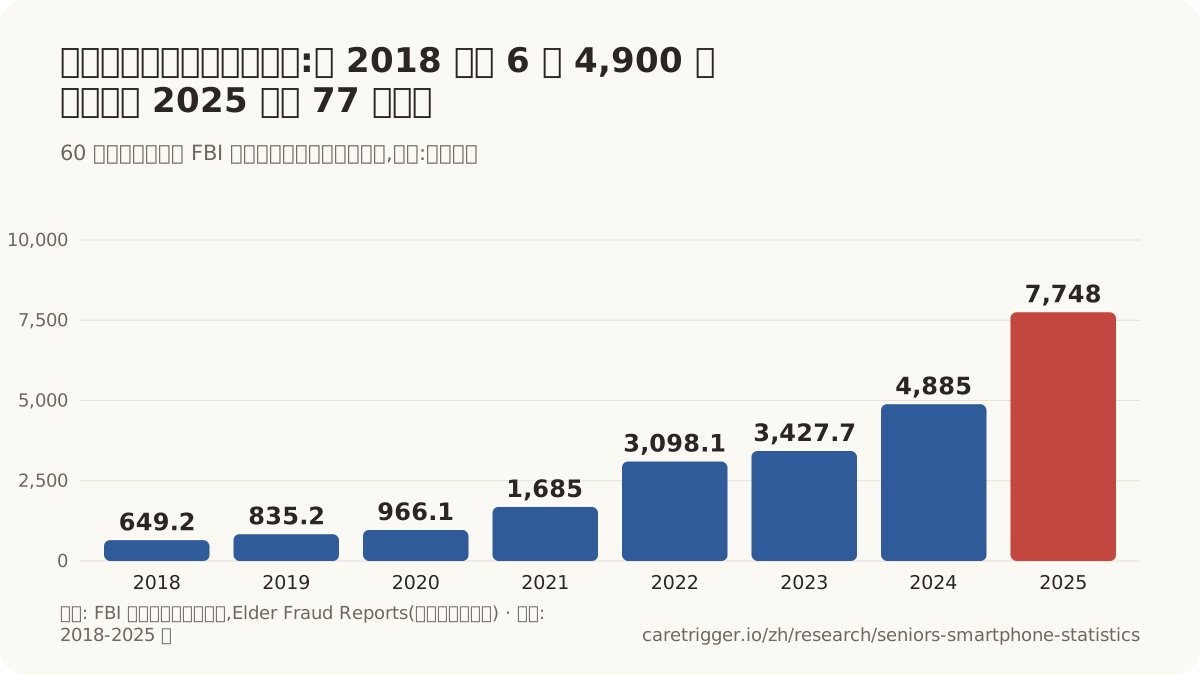
- 2024 年,因冒充企业或政府的诈骗损失 10,000 美元或以上的 60 岁及以上成年人中,有 41% 表示诈骗始于一通电话;15% 表示始于网络广告或弹窗,13% 表示始于电子邮件(FTC Data Spotlight, 2025)。[280]
- 2,210 美元:这是 2024 年 60 岁及以上的成年人报告的、始于电话的诈骗的损失中位数,而始于社交媒体的诈骗为 650 美元(美国联邦贸易委员会,2025)。[281]
- 2020 年至 2024 年间,60 岁及以上的成年人报告的、始于短信的诈骗损失增至原来的八倍多,始于社交媒体的诈骗损失增至近九倍(美国联邦贸易委员会,2025)。[281]
- 1,650 美元:这是 2024 年蒙受损失的 80 岁及以上人群报告的诈骗损失中位数,为各年龄段中最高(70-79 岁为 1,000 美元,60-69 岁为 691 美元,20-29 岁为 417 美元)(FTC Consumer Sentinel Network Data Book 2024)。[282]
- 2024 年,80 岁及以上的人向 FTC 报告的诈骗损失达 3 亿 1,900 万美元,约为 2018 年所报告的 7,850 万美元的四倍(51,713 份诈骗报告;损失中位数 1,650 美元)(FTC Consumer Sentinel Network Data Book 2024)。[282]
- 2024 年,有 8,269 名 60 岁及以上的成年人报告因冒充企业或政府的诈骗损失 10,000 美元或以上,是 2020 年(1,790 人)的四倍多(FTC Data Spotlight, 2025)。[280]
- 2024 年,60 岁及以上的成年人向 FTC 报告的诈骗损失达 24 亿美元,高于 2020 年的约 6 亿美元(美国联邦贸易委员会,Protecting Older Consumers 2024-2025, 2025)。[281]
- 据 FTC 估计,把未报告的案件计算在内,2024 年 60 岁及以上的美国人因诈骗损失的金额最高可达 815 亿美元;FTC 最保守的估计为 101 亿美元(美国联邦贸易委员会,Protecting Older Consumers 2024-2025, 2025)。[281]
- 据 FTC 估计,把未报告的案件计算在内,2023 年 60 岁及以上的美国人因诈骗损失的金额最高可达 615 亿美元;其保守估计为 71 亿美元(美国联邦贸易委员会,Protecting Older Consumers 2023-2024, 2024)。[283]
- 2024 年,60 岁及以上的成年人报告的诈骗损失中,有 68% 来自损失超过 100,000 美元的报告,而这类报告占他们损失报告的 5%;按人口规模调整后,老年人报告六位数损失的可能性几乎是年轻成年人的两倍(美国联邦贸易委员会,2025)。[281]
- 2024 年,有 5,125 名 60 岁及以上的成年人报告因诈骗损失超过 100,000 美元,比 2020 年的 1,136 人增长了 351%(美国联邦贸易委员会,Protecting Older Consumers 2024-2025, 2025)。[281]
- 2024 年,报告因冒充诈骗各自损失超过 100,000 美元的 60 岁及以上成年人,共计损失 4 亿 4,500 万美元,是 2020 年(5,500 万美元)的八倍(美国联邦贸易委员会,2025)。[284]
- 2024 年,因冒充企业或政府的诈骗损失 10,000 美元或以上的 60 岁及以上成年人中,有 33% 是用加密货币付款,其次是银行转账(20%)和现金(16%)(FTC Data Spotlight, 2025)。[280]
- 按人口规模调整后,2024 年 60 岁及以上的成年人报告因技术支持诈骗而损失钱财的可能性比年轻成年人高 400%(即五倍),报告因奖品、抽奖或彩票诈骗而损失钱财的可能性高 172%(近三倍)(美国联邦贸易委员会,2025)。[281]
- 2024 年,60-69 岁的人向 FTC 报告的诈骗损失达 11 亿 8,000 万美元,超过其他任何年龄段;70-79 岁者报告的损失为 8 亿 8,700 万美元,80 岁及以上者为 3 亿 1,900 万美元(FTC Consumer Sentinel Network Data Book 2024)。[282]
- 2024 年,80 岁及以上的人提交的诈骗报告中有 21% 涉及金钱损失,而 70-79 岁者为 24%,60-69 岁者为 29%,20-29 岁者为 44%(FTC Consumer Sentinel Network Data Book 2024)。[282]
- 2024 年,涉及 80 岁及以上人群的诈骗报告中有 15.8% 是由成年子女、配偶或照护者等他人代为提交的,远高于其他任何年龄组(70-79 岁为 5.7%,60-69 岁为 3.7%)(美国联邦贸易委员会,2025)。[281]
- 2024 年,60 岁及以上的成年人提交的诈骗报告中有 74% 没有涉及金钱损失:这些是人们识破诈骗后所做的报告(美国联邦贸易委员会,2025)。[281]
- 2025 年向 FBI 投诉的、通过加密货币 ATM 或自助终端造成的 3 亿 8,900 万美元损失中,约三分之二(66%)是由 60 岁及以上的人报告的(13,460 宗投诉中的 6,188 宗,损失 2 亿 5,750 万美元)(FBI 互联网犯罪投诉中心,《2025 年 IC3 年度报告》;比例为推算值)。[7]
- 2025 年,有 12,444 名 60 岁及以上的人在向 FBI 的投诉中报告各自损失超过 100,000 美元,该年龄组每宗投诉的平均损失为 38,500 美元(FBI 互联网犯罪投诉中心,《2025 年 IC3 年度报告》)。[7]
- 2025 年,60 岁及以上的人向 FBI 提交的投诉中有 48,064 宗涉及网络钓鱼或身份仿冒,是最常见的类型,其次是技术支持或客服诈骗(21,333 宗)和投资诈骗(16,926 宗)(FBI 互联网犯罪投诉中心,《2025 年 IC3 年度报告》)。[7]
- 2025 年,60 岁及以上的人向 FBI 报告的损失中,有 35 亿 2,000 万美元来自投资诈骗,其次是技术支持或客服诈骗(10 亿 4,000 万美元)和信任或情感诈骗(5 亿 8,400 万美元)(FBI 互联网犯罪投诉中心,《2025 年 IC3 年度报告》)。[7]
- 2022 年 6 月至 2023 年 6 月间,美国金融机构在 155,415 份报告中申报了与老年人金融剥削相关的可疑活动,涉及金额 270 亿美元(包括未遂交易);其中约 80% 的申报活动属于诈骗(美国金融犯罪执法网络 FinCEN,2024)。[285]
- 在不完全信任 AI 的 50 岁及以上美国成年人中,有 57% 表示担心 AI 诈骗,例如听起来像真实家人的虚假电话(AARP, 2026 Tech Trends and Adults 50-Plus)。[37]
| 时期 | 报告的损失 | 范围 | 来源 |
|---|---|---|---|
| 2018 年 | 7,850 万美元 | 80 岁及以上人群提交的 Consumer Sentinel 诈骗报告(注明年龄的报告) · 美国 | [286] |
| 2019 年 | 7,200 万美元 | 80 岁及以上人群提交的 Consumer Sentinel 诈骗报告(注明年龄的报告) · 美国 | [287] |
| 2020 年 | 1 亿 500 万美元 | 80 岁及以上人群提交的 Consumer Sentinel 诈骗报告(注明年龄的报告) · 美国 | [288] |
| 2021 年 | 1 亿 4,900 万美元 | 80 岁及以上人群提交的 Consumer Sentinel 诈骗报告(注明年龄的报告) · 美国 | [289] |
| 2022 年 | 2 亿 600 万美元 | 80 岁及以上人群提交的 Consumer Sentinel 诈骗报告(注明年龄的报告) · 美国 | [290] |
| 2023 年 | 2 亿 4,400 万美元 | 80 岁及以上人群提交的 Consumer Sentinel 诈骗报告(注明年龄的报告) · 美国 | [291] |
| 时期 | 报告数 | 范围 | 来源 |
|---|---|---|---|
| 2020 年 | 1,790 份报告 | 60 岁及以上人群向 Consumer Sentinel 提交的、被冒充企业或政府者骗走 10,000 美元及以上的报告 · 美国 | [280] |
| 2021 年 | 3,516 份报告 | 60 岁及以上人群向 Consumer Sentinel 提交的、被冒充企业或政府者骗走 10,000 美元及以上的报告 · 美国 | [280] |
| 2022 年 | 5,559 份报告 | 60 岁及以上人群向 Consumer Sentinel 提交的、被冒充企业或政府者骗走 10,000 美元及以上的报告 · 美国 | [280] |
| 2023 年 | 7,091 份报告 | 60 岁及以上人群向 Consumer Sentinel 提交的、被冒充企业或政府者骗走 10,000 美元及以上的报告 · 美国 | [280] |
| 国家与衡量指标(年份) | 数字 | 范围 | 来源 |
|---|---|---|---|
| 日本:65 岁及以上受害人的特殊诈骗损失(2025 年) | 841 亿 1,000 万日元 | 受害人为 65 岁及以上的已认定特殊诈骗案件(警方记录) · 日本 · 2025 年 | [292] |
| 日本:受害人为 65 岁及以上的特殊诈骗案件所占比例(2025 年) | 51.3% | 已认定的特殊诈骗案件中受害人为 65 岁及以上者所占的比例(分母不含法人受害者) · 日本 · 2025 年 | [292] |
| 韩国:60 岁及以上人群承受的电话诈骗损失所占比例(2023 年) | 36.4% | 按受害人年龄划分的电话诈骗损失,依据损害救济申请(第一账户),仅限个人 · 韩国 · 2023 年 | [293] |
| 澳大利亚:65 岁及以上人群报告的诈骗损失(2025 年) | 8,880 万澳元 | 65 岁及以上人群向 Scamwatch 提交的报告 · 澳大利亚 · 2025 年 | [294] |
| 澳大利亚:65 岁及以上人群的诈骗损失中位数(2025 年) | 716 澳元 | 65 岁及以上人群向 Scamwatch 提交的有损失的报告 · 澳大利亚 · 2025 年 | [294] |
| 加拿大:60 岁及以上人群在报告的诈骗损失中所占比例(2024 年) | 27.9% | CAFC 处理的诈骗报告中 60 岁及以上受害人的损失 · 加拿大 · 2024 年 | [295] |
| 英格兰和威尔士:过去一年内的诈骗受害者,75 岁及以上(截至 2025 年 3 月) | 5.4% | 75 岁及以上的成年人(住户调查;CSEW,经认证的官方统计) · 英格兰和威尔士 · 截至 2025 年 3 月的一年 | [296] |
- 2023 年,韩国 60 岁及以上的电话诈骗受害者中有 75.6%(3,000 人)是通过即时通讯诈骗(messenger phishing)上当的,即骗子冒充家人或熟人发消息(韩国金融监督院,2024)。[293]
- 2024 年,65 岁及以上的澳大利亚人报告的诈骗损失为 9,960 万澳元,在各年龄组中最多,占 Scamwatch 全部损失的 31.3%(澳大利亚国家反诈骗中心,2025)。[300]
- 2023 年,65 岁及以上的澳大利亚人报告的诈骗损失为 1 亿 2,100 万澳元(澳大利亚国家反诈骗中心,2025)。[300]
- 在截至 2025 年 3 月的一年里,英格兰和威尔士 75 岁及以上的成年人中有 28.1% 在受访前一个月内收到过可能是网络钓鱼的消息,而全体成年人为 47.2%;收到消息的老年人中有 2.3% 回复或点击了链接,而总体为 1.8%(英国国家统计局,2026)。[296]
- 与较年轻的人相比,75 岁及以上的互联网用户因网络犯罪蒙受经济损失的比值比为 4.25,尽管他们报告遭遇任何网络犯罪的可能性更低(p = 0.037;35,069 名受访者,Crime Survey for England and Wales 2019/20)(Havers et al., PLOS ONE, 2024)。[301]
14 / 数据
下载数据集
本页的每一项统计数据,连同来源原文引述、出处定位、人群、时期和核实状态,都汇集在一个文件中。每张图表的 CSV 文件链接位于图表下方。
下载全部统计数据(CSV,英文) 下载全部统计数据(JSON,英文)
本页的图表和数据可以再次使用,请以指向 https://caretrigger.io/zh/research/seniors-smartphone-statistics 的链接注明来源。每张图表的 CSV 文件就发布在图表旁边。
15 / 研究方法
研究方法
收录范围。关于 50 岁及以上人群拥有和使用智能手机、手机和互联网情况的已发表数据,每个数字都注明了年龄段和衡量指标:拥有智能手机、使用智能手机、用手机上网、拥有任何手机、家庭接入,或使用互联网。优先采用官方统计(各国国家统计机构、通信监管机构、卫生和社会事务部门)以及公开其方法的大型调查;健康方面采用经同行评审的研究;诈骗方面采用官方机构的数据。只有在没有更好来源的情况下才收录行业调查,并在数据集中加以标注。伪队列比较和少数年龄段之间的差距,是根据同一调查中已发表的数字推算得出的,并会注明这一点。
每个数字如何核实。每条记录都附有来源中的原句或表格单元格(quote)及其所在位置(locator)。研究人员逐一对照来源文件进行了确认,通过发布方自己的数据服务读取统计表,并下载 PDF 和电子表格,而不是阅读网上对它们的摘要;随后,一个脚本在页面顶部所示的日期重新抓取了每个来源(在网页阻止自动访问时,改用发布方的 API 和 PDF 文本),并检查引文是否存在。脚本无法确认的记录,只有在研究人员已完成核查的情况下才会保留,并在数据集中标记为待人工复核。同一数字被采集两次时,保留其中一条记录,另一条标记为已被取代。
未收录的内容。无法追溯到具体文件的数字、相互引用而非引用原始来源的汇总页面,以及第一节「我们不会发布的数字」说明中列出的那些被广泛转载的说法。问题发生过变化的统计序列不会跨越变化前后进行衔接:日本 2019 年的互联网数据和 2020 年的智能手机数据,以及澳大利亚 2020 年前后的数据,均单独列出。
取整与推算。数字均按原文发表的形式呈现;统计机构公布两位小数时,陈述中保留一位,数据集中两种都保留。推算得出的数字(两个年龄段之间的差距、伪队列的变化、由两个已发表的计数算出的比例)会在陈述中注明,并列出输入数据。每条陈述中的粗体数字只是阅读辅助,并非改动。
更新。我们每季度重新核查来源并补充新数据,时间与相关数据的发布节奏同步:Pew 的概况说明(年末)、AARP 的技术趋势报告(年初前后)、欧盟统计局的调查(十二月)、Ofcom(春季)、日本的通信利用动向调查(五月下旬)以及美国的 National Health Interview Survey(每年两次)。下一次计划更新在 2027 年 1 月。欢迎通过支持页面提交更正。
引用本页
CareTrigger. "老年人智能手机使用统计数据:有多少人在用、按年龄和国家如何分布、谁仍未上网." https://caretrigger.io/zh/research/seniors-smartphone-statistics. 最后更新:2026-10-12.
16 / 常见问题
常见问题
有多大比例的老年人拥有智能手机?
在美国,65 岁及以上的成年人中有 78% 拥有智能手机,95% 拥有某种手机(Pew Research Center, 2025)。拥有率随年龄增长而下降:在居住在社区的美国联邦医疗保险(Medicare)受益人中,65-74 岁者有 91.3% 拥有智能手机,75-84 岁者为 84.2%,85 岁及以上者为 61.8%(2025 年)。常被引用的 90% 是 AARP 针对 50 岁及以上成年人的数字。[1][1][69][69][69][24]
老年人使用智能手机的比例在增长吗?
是的。65 岁及以上美国人的智能手机拥有率从 2011 年的 11% 升至 2025 年的 78%;在欧盟,65-74 岁人群中用手机上网的比例从 2016 年的 21.7% 升至 2025 年的 70.3%。推动增长的因素有两个:现在年满 65 岁的那一代人本来就拥有智能手机(50-64 岁的美国人中有 90% 拥有),而且人们在 60 岁以后仍在不断开始使用。在日本,2015 年时 60 多岁的那一代人,到 70 多岁时智能手机拥有率从 28.4% 升至 68.1%。[302][1][2][1][3]
80 岁以上的人中有多少拥有智能手机?
远少于较年轻的老年人。在日本,2025 年 80 岁及以上的人中有 33.0% 拥有智能手机,21.0% 没有任何手机。在韩国,2023 年 80-84 岁的人中有 55.0% 拥有智能手机,90 岁及以上者为 29.4%。在美国,2025 年 85 岁及以上的美国联邦医疗保险受益人中有 61.8% 拥有智能手机。Pew 常被引用的「80 岁及以上美国人中有 17% 拥有智能手机」是 2016 年的数字。[3][3][80][80][69][84]
为什么 AARP 和 Pew 给出的老年人智能手机数字不一样?
因为它们衡量的是不同的年龄组。AARP 的 90%(2025 年)涵盖 50 岁及以上的成年人;Pew 的 78% 涵盖 65 岁及以上的成年人,而 Pew 发现 50-64 岁者的这一比例为 90%。各项调查的差异还在于:问的是拥有还是使用手机,如何接触受访者(Pew 在 2023 年从电话调查改为网络和邮寄调查),以及由谁来做调查:日本政府的调查发现 70 多岁的人中有 68.1% 拥有智能手机,一项行业调查则为 86%。[24][1][1][3][27]
哪些国家的老年人上网最多?
在欧洲 65-74 岁的人中,2025 年丹麦有 99.9% 在过去三个月内使用过互联网,希腊为 51.9%,欧盟平均为 79.0%。这个年龄段用手机上网的比例从挪威的 95.2% 到希腊的 45.6% 不等。在 75 岁及以上的人中,经合组织的最新数字从挪威的 95.2% 到埃及的 19.4% 不等。[32][32][32][2][2][89][89]
独自生活的老年人有智能手机吗?
比与他人同住的老年人少。在日本,2025 年独自生活的 60 岁及以上的人中有 61.2% 拥有智能手机,而与配偶同住者为 78.1%。在韩国,2023 年独自生活的 65 岁及以上的人中有 68.1% 拥有智能手机,而老年夫妇家庭中为 83.0%。在美国,2023 年独自生活的 72 岁及以上的人中有 60.9% 上网,而仅与配偶同住者为 80.3%。[5][80][81]
有多少老年人仍在使用功能手机或翻盖手机?
在美国,65 岁及以上的成年人中有 16% 拥有的手机不是智能手机(Pew Research Center, 2025)。在日本,2025 年 80 岁及以上的人中有 26.5% 持有功能手机,几乎与持有智能手机的 33.0% 一样多。在英国,2025 年秋季 75 岁及以上的成年人中有 27% 使用功能手机,17% 完全不使用手机。[1][192][28][28]
引用老年人智能手机统计数据时,应该引用哪些来源?
美国方面:65 岁及以上成年人的逐年数据引用 Pew Research Center;直到 85 岁及以上的各年龄段引用 CMS Medicare Current Beneficiary Survey;72 岁至 90 岁及以上的各年龄以及独自生活的人引用 National Health and Aging Trends Study。欧洲方面:欧盟统计局的 ICT 调查(65-74 岁,部分国家还有 75-89 岁),英国则引用英国通信管理局(Ofcom)。亚洲方面:日本总务省和韩国科学技术信息通信部。引用每个数字时,请注明年龄段和衡量指标(拥有、使用,还是用手机上网)。[1][69][81][32][11][3][60]
17 / 来源
来源
按首次出现的顺序编号。每个条目都列出了它所支持的记录 ID;数据集中附有每条记录的原文引述。
- [1]Pew Research Center. Mobile Fact Sheet (Demographics of Mobile Device Ownership and Adoption in the United States); also short read 'Internet use, smartphone ownership, digital divides in the US: What we know' (McClain C, Bishop W, 2026-01-08). 发布:2025-11-20。 访问:2026-10-08。用于: pew-2025-smartphone-ownership-65plus-78pct, us-pew-2025-smartphone-50-64, pew-2025-cellphone-any-kind-65plus-95pct, us-pew-2025-cellphone-not-smartphone-65plus
- [2]Eurostat. Individuals - devices used to access the internet (isoc_ci_dev_i), Eurostat survey on ICT usage in households and by individuals. 发布:2026-04-17。 访问:2026-10-11。用于: eu-eurostat-2025-mobile-phone-internet-65-74, eu-eurostat-2025-mobile-phone-internet-55-64, eu-eurostat-2025-mobile-phone-internet-16-74, eu-eurostat-2025-mobile-phone-internet-75-89, no-eurostat-2025-mobile-phone-internet-65-74, ch-eurostat-2025-mobile-phone-internet-65-74, nl-eurostat-2025-mobile-phone-internet-65-74, ie-eurostat-2025-mobile-phone-internet-65-74, se-eurostat-2025-mobile-phone-internet-65-74, xk-eurostat-2025-mobile-phone-internet-65-74, dk-eurostat-2025-mobile-phone-internet-65-74, es-eurostat-2025-mobile-phone-internet-65-74, me-eurostat-2025-mobile-phone-internet-65-74, fi-eurostat-2025-mobile-phone-internet-65-74, lu-eurostat-2025-mobile-phone-internet-65-74, ro-eurostat-2025-mobile-phone-internet-65-74, be-eurostat-2025-mobile-phone-internet-65-74, mt-eurostat-2025-mobile-phone-internet-65-74, at-eurostat-2025-mobile-phone-internet-65-74, de-eurostat-2025-mobile-phone-internet-65-74, fr-eurostat-2025-mobile-phone-internet-65-74, cy-eurostat-2025-mobile-phone-internet-65-74, lv-eurostat-2025-mobile-phone-internet-65-74, it-eurostat-2025-mobile-phone-internet-65-74, si-eurostat-2025-mobile-phone-internet-65-74, mk-eurostat-2025-mobile-phone-internet-65-74, hu-eurostat-2025-mobile-phone-internet-65-74, al-eurostat-2025-mobile-phone-internet-65-74, rs-eurostat-2025-mobile-phone-internet-65-74, ba-eurostat-2025-mobile-phone-internet-65-74, cz-eurostat-2025-mobile-phone-internet-65-74, pt-eurostat-2025-mobile-phone-internet-65-74, lt-eurostat-2025-mobile-phone-internet-65-74, bg-eurostat-2025-mobile-phone-internet-65-74, pl-eurostat-2025-mobile-phone-internet-65-74, sk-eurostat-2025-mobile-phone-internet-65-74, ee-eurostat-2025-mobile-phone-internet-65-74, tr-eurostat-2025-mobile-phone-internet-65-74, hr-eurostat-2025-mobile-phone-internet-65-74, gr-eurostat-2025-mobile-phone-internet-65-74, eu-eurostat-2016-mobile-phone-internet-65-74, eu-eurostat-2018-mobile-phone-internet-65-74, eu-eurostat-2021-mobile-phone-internet-65-74, eu-eurostat-2023-mobile-phone-internet-65-74, eu-eurostat-2016-mobile-phone-internet-16-74, eu-eurostat-2016-mobile-phone-internet-55-64, eu-eurostat-2018-mobile-phone-internet-55-64, eu-eurostat-2021-mobile-phone-internet-55-64, eu-eurostat-2023-mobile-phone-internet-55-64
- [3]Ministry of Internal Affairs and Communications, Japan (総務省). 令和7年通信利用動向調査 世帯構成員編 表番号24 問7(1) 保有するモバイル端末. 发布:2026-05-29。 访问:2026-10-11。用于: jp-mic-2025-smartphone-ownership-70-79, jp-mic-2025-smartphone-ownership-65plus, jp-mic-2025-smartphone-ownership-50-59, jp-mic-2025-smartphone-ownership-60-69, jp-mic-2015-2025-pseudo-cohort-smartphone-60-69-to-70-79, jp-mic-2015-2025-pseudo-cohort-smartphone-50-59-to-60-69, jp-mic-2025-smartphone-ownership-80plus, jp-mic-2025-smartphone-ownership-elderly-only-households, jp-mic-2025-smartphone-ownership-65plus-by-sex, jp-mic-2025-no-mobile-phone-80plus
- [4]Ofcom. Online Nation 2025 report (published 10 December 2025). 发布:2025-12-10。 访问:2026-10-11。用于: uk-ofcom-2025-daily-time-online-65plus, uk-ofcom-2025-no-internet-reason-no-need-65plus, uk-ofcom-2025-android-main-phone-65plus
- [5]Cabinet Office, Japan (内閣府). 令和7年度 高齢社会対策総合調査(高齢者の生活と意識に関する国際比較調査)(第10回) 第5章 クロス集計表(基本軸クロス)日本 Q33. 发布:2026。 访问:2026-10-11。用于: jp-cao-2025-smartphone-ownership-60plus-living-alone, jp-cao-2025-smartphone-ownership-65plus-75plus, jp-cao-2025-smartphone-ownership-living-alone-by-sex
- [6]National Center for Health Statistics (CDC/NCHS). Wireless Substitution: Early Release of Estimates from the National Health Interview Survey, July-December 2025. 发布:2026-09-17。 访问:2026-10-11。用于: us-nchs-2025-wireless-only-adults-65plus, us-nchs-2025-landline-only-adults-65plus, us-nchs-2025-household-landline-65plus-derived, us-nchs-2025-own-wireless-phone-65plus-derived
- [7]Federal Bureau of Investigation, Internet Crime Complaint Center (IC3). 2025 IC3 Annual Report. 发布:2026-04。 访问:2026-10-11。用于: us-fbi-ic3-2025-elder-fraud-losses-60plus, us-fbi-ic3-2025-crypto-atm-losses-60plus-two-thirds, us-fbi-ic3-2025-60plus-lost-over-100k-12444, us-fbi-ic3-2025-60plus-share-of-all-reported-losses-37pct, us-fbi-ic3-2025-60plus-complaints-phishing-spoofing-48064, us-fbi-ic3-2025-60plus-investment-fraud-losses-3-52-billion
- [8]US Census Bureau. Computer and Internet Use in the United States: 2021 (American Community Survey Reports ACS-56). 发布:2024-06-18。 访问:2026-10-11。用于: us-census-acs-2021-household-smartphone-householder-65plus, us-census-acs-2021-household-broadband-householder-65plus, us-census-acs-2021-household-computer-householder-65plus
- [9]US Census Bureau. Computer and Internet Use in the United States: 2018 (American Community Survey Reports ACS-49). 发布:2021-04-01。 访问:2026-10-11。用于: us-census-acs-2018-household-smartphone-householder-65plus
- [10]US Census Bureau. Computer and Internet Use in the United States: 2016 (American Community Survey Reports ACS-39). 发布:2018-08-01。 访问:2026-10-11。用于: us-census-acs-2016-household-smartphone-householder-65plus
- [11]Ofcom (fieldwork by Ipsos). Ofcom Technology Tracker 2026: data tables (core). 发布:2026-08-11。 访问:2026-10-11。用于: uk-ofcom-2026-smartphone-personal-use-65plus, uk-ofcom-2026-smartphone-personal-use-75plus, uk-ofcom-2026-smartphone-personal-use-65-74, uk-ofcom-2026-basic-mobile-only-75plus-derived, uk-ofcom-2026-mobile-phone-personal-use-75plus
- [12]Statistics Canada. Statistics Canada, Table 22-10-0143-01, Smartphone personal use and selected smartphone habits by gender and age group (Canadian Internet Use Survey). 发布:2021-06-22。 访问:2026-10-11。用于: ca-statcan-2020-smartphone-personal-use-65plus, ca-statcan-2018-smartphone-personal-use-65plus, ca-statcan-2020-smartphone-personal-use-65plus-by-gender, ca-statcan-2020-check-smartphone-every-30-min-65plus, ca-statcan-2018-check-smartphone-every-30-min-65plus, ca-statcan-2020-smartphone-first-thing-on-waking-65plus, ca-statcan-2020-smartphone-last-thing-before-sleep-65plus
- [13]Ministry of Health and Welfare, Korea (보건복지부) / Korea Institute for Health and Social Affairs. 2023년 노인실태조사 결과 발표 (보도자료, 2024-10-17). 发布:2024-10-17。 访问:2026-10-11。用于: kr-mohw-2023-smartphone-ownership-65plus
- [14]Census and Statistics Department, Hong Kong SAR. Thematic Household Survey Report No. 86: Internet and Personal Computer Penetration. 发布:2026-06-25。 访问:2026-10-11。用于: hk-csd-2025-smartphone-ownership-65plus, hk-csd-2025-smartphone-ownership-55-64, hk-csd-2025-internet-use-65plus, hk-csd-2025-smartphone-owners-65plus-count, hk-csd-2024-internet-use-65plus, hk-csd-2025-smartphone-ownership-65plus-by-sex, hk-csd-2023-smartphone-ownership-65plus, hk-csd-2024-smartphone-ownership-65plus, hk-csd-2023-smartphone-ownership-55-64, hk-csd-2024-smartphone-ownership-55-64
- [15]Infocomm Media Development Authority, Singapore (IMDA). Digital Society statistics: Individuals Smartphone Ownership by Age Group, 2020 - 2025 (chart image). 发布:2026-05-25。 访问:2026-10-11。用于: sg-imda-2025-smartphone-ownership-60plus, sg-imda-2025-smartphone-ownership-40-59, sg-imda-2025-internet-use-60plus, sg-imda-2020-internet-use-60plus, sg-imda-2021-internet-use-60plus, sg-imda-2022-internet-use-60plus, sg-imda-2023-internet-use-60plus, sg-imda-2024-internet-use-60plus, sg-imda-2023-smartphone-ownership-60plus, sg-imda-2024-smartphone-ownership-60plus, sg-imda-2020-smartphone-ownership-40-59, sg-imda-2021-smartphone-ownership-40-59, sg-imda-2022-smartphone-ownership-40-59, sg-imda-2023-smartphone-ownership-40-59, sg-imda-2024-smartphone-ownership-40-59
- [16]Statistics Finland. Statistics Finland table 13ud: Use of information and communications technology by individuals by gender and age group, 2013-2025. 发布:2025-11-12。 访问:2026-10-11。用于: fi-statfin-2025-smartphone-65-74, fi-statfin-2025-smartphone-16-89, fi-statfin-2025-smartphone-75-89, fi-statfin-2025-internet-use-75-89, fi-statfin-2013-internet-use-75-89, fi-statfin-2013-smartphone-65-74, fi-statfin-2025-smartphone-75-89-men, fi-statfin-2025-smartphone-75-89-women, fi-statfin-2017-smartphone-75-89, fi-statfin-2018-smartphone-75-89, fi-statfin-2019-smartphone-75-89, fi-statfin-2020-smartphone-75-89, fi-statfin-2021-smartphone-75-89, fi-statfin-2022-smartphone-75-89, fi-statfin-2023-smartphone-75-89, fi-statfin-2024-smartphone-75-89
- [17]Statistics Sweden (SCB). SCB LE0108T14N2: Access to the Internet by type of device, sex and study domain, 2021-2025. 发布:2025-10-17。 访问:2026-10-11。用于: se-scb-2025-mobile-phone-internet-65-74, se-scb-2025-mobile-phone-internet-75-84, se-scb-2025-mobile-phone-internet-85plus
- [18]Swiss Federal Statistical Office (FSO/BFS). Internetnutzungsmodalitäten und Kompetenzen (FSO PxWeb px-x-1604000000_106). 发布:2026。 访问:2026-10-11。用于: ch-bfs-2025-smartphone-internet-60plus, ch-bfs-2025-internet-use-60plus, ch-bfs-2014-internet-use-60plus
- [19]Statistics Netherlands (CBS). CBS StatLine 84888NED. 发布:2025-11-25。 访问:2026-10-11。用于: nl-cbs-2025-mobile-phone-internet-75plus, nl-cbs-2025-internet-use-75plus, nl-cbs-2020-mobile-phone-internet-75plus, nl-cbs-2025-never-used-internet-75plus, nl-cbs-2020-internet-use-75plus, nl-cbs-2022-internet-use-75plus, nl-cbs-2024-internet-use-75plus
- [20]Australian Communications and Media Authority (ACMA). Communications and media in Australia: How we use the internet (data tables), sheet QD5 Devices by PBI BANNER. 发布:2026-02-19。 访问:2026-10-11。用于: au-acma-2025-mobile-phone-internet-75plus, au-acma-2025-internet-use-75plus, au-acma-2020-mobile-phone-internet-75plus, au-acma-2021-mobile-phone-internet-75plus, au-acma-2022-mobile-phone-internet-75plus, au-acma-2023-mobile-phone-internet-75plus, au-acma-2024-mobile-phone-internet-75plus, au-acma-2017-mobile-phone-internet-75plus, au-acma-2018-mobile-phone-internet-75plus, au-acma-2019-mobile-phone-internet-75plus, au-acma-2020-internet-use-75plus, au-acma-2021-internet-use-75plus, au-acma-2022-internet-use-75plus, au-acma-2023-internet-use-75plus, au-acma-2024-internet-use-75plus, au-acma-2017-internet-use-75plus, au-acma-2018-internet-use-75plus, au-acma-2019-internet-use-75plus
- [21]Cetic.br / NIC.br (Comitê Gestor da Internet no Brasil). TIC Domicílios 2025, tabelas de indivíduos (proporção), indicator J5 - Indivíduos que usaram a Internet no telefone celular nos últimos três meses. 发布:2025-12-09。 访问:2026-10-11。用于: br-cetic-2025-internet-on-mobile-phone-60plus
- [22]Observatorio del Envejecimiento, Pontificia Universidad Católica de Chile (UC) and Confuturo. Observatorio del Envejecimiento UC-Confuturo, 'Población mayor: ¿Hacia la superación de la brecha digital?' (Año 5, v 30, 2024). 发布:2024-06。 访问:2026-10-11。用于: cl-ucobs-2022-smartphone-ownership-60plus, cl-ucobs-2022-internet-use-60plus-by-age, cl-ucobs-2022-home-internet-older-living-alone
- [23]Afrobarometer. Afrobarometer Policy Paper No. 95, 'Africa's digital divide is closing, but participation in digitalised economy still uneven' (2025), Figure 5. 发布:2025-08-23。 访问:2026-10-11。用于: afrobarometer-2021-2023-smartphone-ownership-56plus, afrobarometer-2021-2023-regular-internet-use-56plus
- [24]AARP Research. 2026 Tech Trends and Adults 50-Plus (DOI 10.26419/res.01020.001). 发布:2025-12。 访问:2026-10-08。用于: aarp-2026-smartphone-ownership-50plus-90pct
- [25]Pew Research Center. Share of those 65 and older who are tech users has grown in the past decade. 发布:2022-01-13。 访问:2026-10-11。用于: us-pew-2021-smartphone-65plus, us-pew-2021-youtube-use-65plus, us-pew-2021-social-media-use-65plus, us-pew-2021-tablet-ownership-65plus
- [26]National Telecommunications and Information Administration (NTIA), US Department of Commerce. NTIA Data Explorer, full dataset ntia-analyze-table.csv (Internet Use Survey, CPS Computer and Internet Use Supplement 1994-2023). 发布:2024-06-06。 访问:2026-10-11。用于: us-ntia-2021-mobile-internet-phone-65plus, us-ntia-2023-mobile-internet-phone-65plus, us-ntia-2011-mobile-internet-phone-65plus, us-ntia-2013-mobile-internet-phone-65plus, us-ntia-2015-mobile-internet-phone-65plus, us-ntia-2017-mobile-internet-phone-65plus, us-ntia-2019-mobile-internet-phone-65plus, us-ntia-2023-internet-use-65plus, us-ntia-2023-texting-im-65plus-internet-users, us-ntia-2023-video-voice-calls-65plus-internet-users, us-ntia-2023-online-finance-65plus-internet-users, us-ntia-2015-texting-im-65plus-internet-users, us-ntia-2023-no-home-internet-reason-no-need-65plus, us-ntia-2023-wearable-use-65plus
- [27]NTT Docomo Mobile Society Research Institute (モバイル社会研究所). スマホの所有率はさらに上昇し60代は95%、70代は86%、80代前半でも69%(2026年3月23日). 发布:2026-03-23。 访问:2026-10-11。用于: jp-mobaken-2026-smartphone-ownership-70-79, jp-mobaken-2026-smartphone-ownership-60-69, jp-mobaken-2026-smartphone-ownership-80-84
- [28]Ofcom. Ofcom Adults' Media Literacy Tracker 2025: data tables. 发布:2026-04。 访问:2026-10-11。用于: uk-ofcom-amlt-2025-smartphone-75plus, uk-ofcom-amlt-2025-no-home-internet-75plus, uk-ofcom-amlt-2025-basic-mobile-75plus, uk-ofcom-amlt-2025-no-mobile-75plus, uk-ofcom-amlt-2025-smartphone-65-74
- [29]Instituto Brasileiro de Geografia e Estatística (IBGE). IBGE SIDRA Tabela 7331, Percentual de pessoas que utilizaram a Internet no período de referência dos últimos três meses na população de 10 anos ou mais de idade, por sexo e grupo de idade (PNAD Contínua, módulo TIC). 发布:2026-07-02。 访问:2026-10-11。用于: br-ibge-2025-internet-use-60plus, br-ibge-2025-internet-use-60plus-by-sex, br-ibge-2016-internet-use-60plus, br-ibge-2017-internet-use-60plus, br-ibge-2018-internet-use-60plus, br-ibge-2019-internet-use-60plus, br-ibge-2021-internet-use-60plus, br-ibge-2022-internet-use-60plus, br-ibge-2023-internet-use-60plus, br-ibge-2024-internet-use-60plus
- [30]Cetic.br / NIC.br (Comitê Gestor da Internet no Brasil). TIC Domicílios 2025, tabelas de indivíduos (proporção), indicator C2 - Indivíduos, por último acesso à Internet. 发布:2025-12-09。 访问:2026-10-11。用于: br-cetic-2025-internet-users-60plus, br-cetic-2025-never-used-internet-60plus
- [31]Central Statistics Office (CSO) Ireland. Internet Coverage and Usage in Ireland 2025 (CSO statistical release, 7 November 2025). 发布:2025-11-07。 访问:2026-10-11。用于: ie-cso-2025-internet-use-75plus
- [32]Eurostat. Individuals - internet use (isoc_ci_ifp_iu), Eurostat survey on ICT usage in households and by individuals. 发布:2026-04-17。 访问:2026-10-11。用于: ie-eurostat-2025-internet-use-75-89, eu-eurostat-2025-internet-use-65-74, eu-eurostat-2025-internet-use-55-64, eu-eurostat-2025-internet-use-16-74, eu-eurostat-2015-2025-pseudo-cohort-internet-55-64-to-65-74, eu-eurostat-2015-internet-use-gap-55-64-vs-65-74, eu-eurostat-2025-internet-use-75-89, dk-eurostat-2025-internet-use-65-74, no-eurostat-2025-internet-use-65-74, nl-eurostat-2025-internet-use-65-74, ie-eurostat-2025-internet-use-65-74, ch-eurostat-2025-internet-use-65-74, se-eurostat-2025-internet-use-65-74, lu-eurostat-2025-internet-use-65-74, fi-eurostat-2025-internet-use-65-74, xk-eurostat-2025-internet-use-65-74, be-eurostat-2025-internet-use-65-74, de-eurostat-2025-internet-use-65-74, es-eurostat-2025-internet-use-65-74, me-eurostat-2025-internet-use-65-74, fr-eurostat-2025-internet-use-65-74, at-eurostat-2025-internet-use-65-74, lv-eurostat-2025-internet-use-65-74, ro-eurostat-2025-internet-use-65-74, mt-eurostat-2025-internet-use-65-74, ee-eurostat-2025-internet-use-65-74, cz-eurostat-2025-internet-use-65-74, hu-eurostat-2025-internet-use-65-74, sk-eurostat-2025-internet-use-65-74, it-eurostat-2025-internet-use-65-74, si-eurostat-2025-internet-use-65-74, cy-eurostat-2025-internet-use-65-74, ba-eurostat-2025-internet-use-65-74, mk-eurostat-2025-internet-use-65-74, rs-eurostat-2025-internet-use-65-74, lt-eurostat-2025-internet-use-65-74, al-eurostat-2025-internet-use-65-74, pt-eurostat-2025-internet-use-65-74, bg-eurostat-2025-internet-use-65-74, pl-eurostat-2025-internet-use-65-74, hr-eurostat-2025-internet-use-65-74, tr-eurostat-2025-internet-use-65-74, gr-eurostat-2025-internet-use-65-74, nl-eurostat-2025-internet-use-75-89, se-eurostat-2025-internet-use-75-89, lv-eurostat-2025-internet-use-75-89, fi-eurostat-2025-internet-use-75-89, be-eurostat-2025-internet-use-75-89, at-eurostat-2025-internet-use-75-89, fr-eurostat-2025-internet-use-75-89, es-eurostat-2025-internet-use-75-89, hu-eurostat-2025-internet-use-75-89, cz-eurostat-2025-internet-use-75-89, cy-eurostat-2025-internet-use-75-89, si-eurostat-2025-internet-use-75-89, sk-eurostat-2025-internet-use-75-89, it-eurostat-2025-internet-use-75-89, pl-eurostat-2025-internet-use-75-89, bg-eurostat-2025-internet-use-75-89, eu-eurostat-2025-internet-use-75-89-low-education, eu-eurostat-2025-internet-use-75-89-medium-education, eu-eurostat-2025-internet-use-75-89-high-education, eu-eurostat-2025-internet-use-55-74-low-education, eu-eurostat-2025-internet-use-55-74-high-education, eu-eurostat-2025-internet-use-75-89-men, eu-eurostat-2025-internet-use-75-89-women, eu-eurostat-2025-internet-use-65-74-men, eu-eurostat-2025-internet-use-65-74-women, eu-eurostat-2025-never-used-internet-75-89, eu-eurostat-2025-never-used-internet-65-74, eu-eurostat-2007-never-used-internet-65-74, eu-eurostat-2010-never-used-internet-65-74, eu-eurostat-2013-never-used-internet-65-74, eu-eurostat-2016-never-used-internet-65-74, eu-eurostat-2019-never-used-internet-65-74, eu-eurostat-2022-never-used-internet-65-74, eu-eurostat-2007-internet-use-65-74, eu-eurostat-2008-internet-use-65-74, eu-eurostat-2009-internet-use-65-74, eu-eurostat-2010-internet-use-65-74, eu-eurostat-2011-internet-use-65-74, eu-eurostat-2012-internet-use-65-74, eu-eurostat-2013-internet-use-65-74, eu-eurostat-2014-internet-use-65-74, eu-eurostat-2015-internet-use-65-74, eu-eurostat-2016-internet-use-65-74, eu-eurostat-2017-internet-use-65-74, eu-eurostat-2018-internet-use-65-74, eu-eurostat-2019-internet-use-65-74, eu-eurostat-2020-internet-use-65-74, eu-eurostat-2021-internet-use-65-74, eu-eurostat-2022-internet-use-65-74, eu-eurostat-2023-internet-use-65-74, eu-eurostat-2024-internet-use-65-74, eu-eurostat-2007-internet-use-16-74, eu-eurostat-2010-internet-use-16-74, eu-eurostat-2013-internet-use-16-74, eu-eurostat-2016-internet-use-16-74, eu-eurostat-2019-internet-use-16-74, eu-eurostat-2022-internet-use-16-74, es-eurostat-2007-internet-use-75plus, es-eurostat-2013-internet-use-75plus, es-eurostat-2019-internet-use-75plus, es-eurostat-2024-internet-use-75plus, it-eurostat-2004-internet-use-75plus, it-eurostat-2012-internet-use-75plus, it-eurostat-2020-internet-use-75plus, it-eurostat-2024-internet-use-75plus, eu-eurostat-2007-internet-use-55-64, eu-eurostat-2008-internet-use-55-64, eu-eurostat-2009-internet-use-55-64, eu-eurostat-2010-internet-use-55-64, eu-eurostat-2011-internet-use-55-64, eu-eurostat-2012-internet-use-55-64, eu-eurostat-2013-internet-use-55-64, eu-eurostat-2014-internet-use-55-64, eu-eurostat-2015-internet-use-55-64, eu-eurostat-2016-internet-use-55-64, eu-eurostat-2017-internet-use-55-64, eu-eurostat-2018-internet-use-55-64, eu-eurostat-2019-internet-use-55-64, eu-eurostat-2020-internet-use-55-64, eu-eurostat-2021-internet-use-55-64, eu-eurostat-2022-internet-use-55-64, eu-eurostat-2023-internet-use-55-64, eu-eurostat-2024-internet-use-55-64
- [33]AARP Research. Getting Connected: Older Americans Embrace Technology to Enhance Their Lives. 发布:2018-02-23。 访问:2026-10-11。用于: us-aarp-2017-smartphone-50plus
- [34]AARP Research. Older Adults Keep Pace on Tech Usage: 2020 Tech Trends of the 50+. 发布:2020-01-15。 访问:2026-10-11。用于: us-aarp-2019-smartphone-50plus, us-aarp-2019-smartphone-by-age-50plus
- [35]AARP Research. 2025 Tech Trends and Adults 50-Plus. 发布:2025-01-01。 访问:2026-10-11。用于: us-aarp-2020-smartphone-50plus, us-aarp-2021-smartphone-50plus, us-aarp-2022-smartphone-50plus, us-aarp-2023-smartphone-50plus, us-aarp-2024-smartphone-50plus
- [36]Pew Research Center. Mobile Fact Sheet (November 13, 2024 edition, Internet Archive capture of 2 July 2025). 发布:2024-11-13。 访问:2026-10-11。用于: us-pew-2024-smartphone-65plus, us-pew-2024-cellphone-65plus, us-pew-2024-smartphone-50-64
- [37]AARP Research. 2026 Tech Trends and Adults 50-Plus. 发布:2025-12-01。 访问:2026-10-11。用于: us-aarp-2025-smartphone-18-49, us-aarp-2025-generative-ai-use-80plus, us-aarp-2025-texting-to-stay-connected-50plus, us-aarp-2025-video-chat-to-stay-connected-50plus, us-aarp-2025-online-banking-finance-50plus, us-aarp-2025-medical-digital-services-50plus, us-aarp-2025-daily-smartphone-use-50plus-owners, us-aarp-2025-digital-skills-confidence-80plus, us-aarp-2025-tech-not-designed-for-age-80plus, us-aarp-2025-regular-cellphone-50plus, aarp-2026-wearable-ownership-50plus-36pct, us-aarp-2025-home-health-safety-device-50plus, us-aarp-2025-caregivers-50plus-gps-location-detectors-26pct, us-aarp-2025-caregivers-50plus-emergency-response-systems-12pct, us-aarp-2025-50plus-worry-ai-voice-scam-calls-57pct
- [38]Pew Research Center. Internet, Broadband Fact Sheet. 发布:2025-11-20。 访问:2026-10-11。用于: us-pew-2025-internet-use-65plus, us-pew-2025-smartphone-dependent-65plus, us-pew-2025-home-broadband-65plus, us-pew-2013-smartphone-dependent-65plus, us-pew-2016-smartphone-dependent-65plus, us-pew-2019-smartphone-dependent-65plus, us-pew-2021-smartphone-dependent-65plus, us-pew-2023-smartphone-dependent-65plus, us-pew-2000-internet-use-65plus, us-pew-2001-internet-use-65plus, us-pew-2002-internet-use-65plus, us-pew-2003-internet-use-65plus, us-pew-2004-internet-use-65plus, us-pew-2005-internet-use-65plus, us-pew-2006-internet-use-65plus, us-pew-2007-internet-use-65plus, us-pew-2008-internet-use-65plus, us-pew-2009-internet-use-65plus, us-pew-2010-internet-use-65plus, us-pew-2011-internet-use-65plus, us-pew-2012-internet-use-65plus, us-pew-2013-internet-use-65plus, us-pew-2014-internet-use-65plus, us-pew-2015-internet-use-65plus, us-pew-2016-internet-use-65plus, us-pew-2018-internet-use-65plus, us-pew-2019-internet-use-65plus, us-pew-2021-internet-use-65plus, us-pew-2023-internet-use-65plus, us-pew-2024-internet-use-65plus
- [39]US Census Bureau. American Community Survey 2024 1-year estimates, Table S2802: Types of Internet Subscriptions by Selected Characteristics. 发布:2025-09-11。 访问:2026-10-11。用于: us-census-acs-2024-broadband-65plus-persons, us-census-acs-2024-no-computer-65plus-persons
- [40]Ministry of Internal Affairs and Communications, Japan (総務省). 平成25年通信利用動向調査 世帯構成員編 構8表 問1(1)保有する情報通信機器(M). 发布:2014-06-27。 访问:2026-10-11。用于: jp-mic-2013-smartphone-ownership-65plus, jp-mic-2013-smartphone-ownership-80plus, jp-mic-2013-smartphone-ownership-50-59, jp-mic-2013-smartphone-ownership-70-79
- [41]Ministry of Internal Affairs and Communications, Japan (総務省). 平成26年通信利用動向調査 世帯構成員編 表番号8 問1(1)保有する情報通信機器(M)(対象:全員). 发布:2015-07-17。 访问:2026-10-11。用于: jp-mic-2014-smartphone-ownership-65plus, jp-mic-2014-smartphone-ownership-80plus, jp-mic-2014-smartphone-ownership-50-59, jp-mic-2014-smartphone-ownership-60-69, jp-mic-2014-smartphone-ownership-70-79
- [42]Ministry of Internal Affairs and Communications, Japan (総務省). 平成27年通信利用動向調査 世帯構成員編 表番号7 問1(1)保有する情報通信機器(M)(対象:全員). 发布:2016-08-18。 访问:2026-10-11。用于: jp-mic-2015-smartphone-ownership-65plus, jp-mic-2015-smartphone-gap-60-69-vs-70-79, jp-mic-2015-smartphone-ownership-80plus, jp-mic-2015-smartphone-ownership-50-59, jp-mic-2015-smartphone-ownership-60-69, jp-mic-2015-smartphone-ownership-70-79
- [43]Ministry of Internal Affairs and Communications, Japan (総務省). 平成28年通信利用動向調査 世帯構成員編 表番号7 問1 保有するモバイル端末(M)(対象:全員). 发布:2017-06-15。 访问:2026-10-11。用于: jp-mic-2016-smartphone-ownership-65plus, jp-mic-2016-smartphone-ownership-80plus, jp-mic-2016-smartphone-ownership-50-59, jp-mic-2016-smartphone-ownership-60-69, jp-mic-2016-smartphone-ownership-70-79
- [44]Ministry of Internal Affairs and Communications, Japan (総務省). 平成29年通信利用動向調査 世帯構成員編 表番号8 問1(1)保有するモバイル端末(M). 发布:2018-06-22。 访问:2026-10-11。用于: jp-mic-2017-smartphone-ownership-65plus, jp-mic-2017-smartphone-ownership-80plus, jp-mic-2017-smartphone-ownership-50-59, jp-mic-2017-smartphone-ownership-60-69, jp-mic-2017-smartphone-ownership-70-79
- [45]Ministry of Internal Affairs and Communications, Japan (総務省). 平成30年通信利用動向調査 世帯構成員編 表番号18 問4(1) 保有するモバイル端末. 发布:2019-05-31。 访问:2026-10-11。用于: jp-mic-2018-smartphone-ownership-65plus, jp-mic-2018-smartphone-ownership-elderly-only-households, jp-mic-2018-smartphone-ownership-80plus, jp-mic-2018-smartphone-ownership-50-59, jp-mic-2018-smartphone-ownership-60-69, jp-mic-2018-smartphone-ownership-70-79
- [46]Ministry of Internal Affairs and Communications, Japan (総務省). 令和元年通信利用動向調査 世帯構成員編 表番号23 問7(1)保有するモバイル端末. 发布:2020-05-29。 访问:2026-10-11。用于: jp-mic-2019-smartphone-ownership-65plus, jp-mic-2019-smartphone-ownership-elderly-only-households, jp-mic-2019-smartphone-ownership-80plus, jp-mic-2019-smartphone-ownership-50-59, jp-mic-2019-smartphone-ownership-60-69, jp-mic-2019-smartphone-ownership-70-79
- [47]Ministry of Internal Affairs and Communications, Japan (総務省). 令和3年通信利用動向調査 世帯構成員編 表番号22 問7(1) 保有するモバイル端末. 发布:2022-05-27。 访问:2026-10-11。用于: jp-mic-2021-smartphone-ownership-65plus, jp-mic-2021-smartphone-ownership-elderly-only-households, jp-mic-2021-smartphone-ownership-80plus, jp-mic-2021-smartphone-ownership-50-59, jp-mic-2021-smartphone-ownership-60-69, jp-mic-2021-smartphone-ownership-70-79
- [48]Ministry of Internal Affairs and Communications, Japan (総務省). 令和4年通信利用動向調査 世帯構成員編 表番号24 問7(1) 保有するモバイル端末. 发布:2023-05-29。 访问:2026-10-11。用于: jp-mic-2022-smartphone-ownership-65plus, jp-mic-2022-smartphone-ownership-elderly-only-households, jp-mic-2022-smartphone-ownership-80plus, jp-mic-2022-smartphone-ownership-50-59, jp-mic-2022-smartphone-ownership-60-69, jp-mic-2022-smartphone-ownership-70-79
- [49]Ministry of Internal Affairs and Communications, Japan (総務省). 令和5年通信利用動向調査 世帯構成員編 表番号24 問7(1) 保有するモバイル端末. 发布:2024-06-07。 访问:2026-10-11。用于: jp-mic-2023-smartphone-ownership-65plus, jp-mic-2023-smartphone-ownership-elderly-only-households, jp-mic-2023-smartphone-ownership-80plus, jp-mic-2023-smartphone-ownership-50-59, jp-mic-2023-smartphone-ownership-60-69, jp-mic-2023-smartphone-ownership-70-79
- [50]Ministry of Internal Affairs and Communications, Japan (総務省). 令和6年通信利用動向調査 世帯構成員編 表番号24 問7(1) 保有するモバイル端末. 发布:2025-05-30。 访问:2026-10-11。用于: jp-mic-2024-smartphone-ownership-65plus, jp-mic-2024-smartphone-ownership-elderly-only-households, jp-mic-2024-smartphone-ownership-80plus, jp-mic-2024-smartphone-ownership-50-59, jp-mic-2024-smartphone-ownership-60-69, jp-mic-2024-smartphone-ownership-70-79
- [51]Ofcom. Ofcom Technology Tracker 2025: core data tables (PDF). 发布:2025。 访问:2026-10-11。用于: uk-ofcom-2025-smartphone-personal-use-55-64-derived, uk-ofcom-2025-smartphone-personal-use-65plus, uk-ofcom-2025-mobile-phone-personal-use-75plus, uk-ofcom-2025-smartphone-personal-use-75plus, uk-ofcom-2025-smartphone-personal-use-65-74-derived
- [52]Office for National Statistics (ONS). Internet access - households and individuals: reference tables 2020, Table 22 (Smartphone security, by age group, sex and disability status). 发布:2020-08-07。 访问:2026-10-11。用于: gb-ons-2020-smartphone-private-use-65plus
- [53]Ofcom. Ofcom Technology Tracker Wave 2 2013: Digital Participation Consortium subset data tables (CSV). 发布:2013-09。 访问:2026-10-11。用于: uk-ofcom-2013-smartphone-personal-use-65plus, uk-ofcom-2013-smartphone-personal-use-55-64, uk-ofcom-2013-smartphone-personal-use-65-74, uk-ofcom-2013-smartphone-personal-use-75plus
- [54]Ofcom. Ofcom Technology Tracker Wave 2 2014: Digital Participation Consortium subset data tables (CSV). 发布:2014-09。 访问:2026-10-11。用于: uk-ofcom-2014-smartphone-personal-use-65plus, uk-ofcom-2014-smartphone-gap-55-64-vs-65-74, uk-ofcom-2014-smartphone-personal-use-55-64, uk-ofcom-2014-smartphone-personal-use-65-74, uk-ofcom-2014-smartphone-personal-use-75plus
- [55]Ofcom. Ofcom Technology Tracker H1 2017: Digital Participation Consortium subset data tables (CSV). 发布:2017。 访问:2026-10-11。用于: uk-ofcom-2017-smartphone-personal-use-65plus, uk-ofcom-2017-smartphone-personal-use-55-64, uk-ofcom-2017-smartphone-personal-use-65-74, uk-ofcom-2017-smartphone-personal-use-75plus
- [56]Ofcom. Ofcom Technology Tracker H1 2018: Digital Participation Consortium subset data tables (CSV). 发布:2018。 访问:2026-10-11。用于: uk-ofcom-2018-smartphone-personal-use-65plus, uk-ofcom-2018-smartphone-personal-use-55-64, uk-ofcom-2018-smartphone-personal-use-65-74, uk-ofcom-2018-smartphone-personal-use-75plus
- [57]Ofcom. Ofcom Technology Tracker 2019: Digital Participation Consortium subset data tables (CSV). 发布:2019。 访问:2026-10-11。用于: uk-ofcom-2019-smartphone-personal-use-65plus, uk-ofcom-2019-smartphone-personal-use-55-64, uk-ofcom-2019-smartphone-personal-use-65-74, uk-ofcom-2019-smartphone-personal-use-75plus
- [58]Ofcom. Ofcom Technology Tracker 2020: Digital Participation Consortium subset data tables (xlsx). 发布:2020。 访问:2026-10-11。用于: uk-ofcom-2020-smartphone-personal-use-65plus, uk-ofcom-2020-smartphone-personal-use-55-64, uk-ofcom-2020-smartphone-personal-use-65-74, uk-ofcom-2020-smartphone-personal-use-75plus
- [59]Ofcom. Ofcom Technology Tracker 2024: subset data tables (PDF). 发布:2024-07。 访问:2026-10-11。用于: uk-ofcom-2024-smartphone-personal-use-65plus, uk-ofcom-pseudo-cohort-2014-55-64-to-2024-65-74, uk-ofcom-2024-smartphone-personal-use-55-64, uk-ofcom-2024-smartphone-personal-use-65-74, uk-ofcom-2024-smartphone-personal-use-75plus
- [60]Ministry of Science and ICT / National Information Society Agency, Korea (과학기술정보통신부 / 한국지능정보사회진흥원). 2025 Survey on the Internet Usage, Statistical Table (English). 发布:2026-06-25。 访问:2026-10-11。用于: kr-msit-2025-smartphone-ownership-60-69, kr-msit-2025-smartphone-ownership-70plus, kr-msit-2025-internet-use-70plus, kr-msit-2025-internet-users-60plus-count, kr-msit-2025-internet-use-70plus-by-sex, kr-msit-2025-non-users-share-70plus
- [61]Centers for Medicare & Medicaid Services (CMS), Medicare Current Beneficiary Survey. 2024 Internet Access and Use Among Medicare Beneficiaries Preliminary Estimates PUF (xlsx, Table 1 "Internet Access"). 发布:2025-08-14。 访问:2026-10-11。用于: us-cms-mcbs-2024-smartphone-85plus, us-cms-mcbs-2024-smartphone-75-84, us-cms-mcbs-2024-smartphone-65-74, us-cms-mcbs-2024-internet-access-85plus
- [62]Centers for Medicare & Medicaid Services (CMS), Medicare Current Beneficiary Survey. 2023 MCBS Early PUF on Internet Access and Use Among Medicare Beneficiaries (xlsx, Table 1 "Internet Access"). 发布:2025-03-07。 访问:2026-10-11。用于: us-cms-mcbs-2023-internet-access-85plus
- [63]Pew Research Center. Record shares of Americans now own smartphones, have home broadband (short read). 发布:2017-01-12。 访问:2026-10-11。用于: us-pew-2016-smartphone-65plus-change-since-2015, us-pew-2016-smartphone-50-64-change-since-2015, us-pew-2016-smartphone-50-64
- [64]Pew Research Center. Nearly Half of American Adults are Smartphone Owners (report PDF). 发布:2012-03-01。 访问:2026-10-11。用于: us-pew-2012-smartphone-65plus-change-since-2011, us-pew-2012-smartphone-50-64
- [65]US Census Bureau. Older People Projected to Outnumber Children for First Time in U.S. History (press release CB18-41). 发布:2018-03-13。 访问:2026-10-11。用于: us-census-2018-all-baby-boomers-65plus-by-2030
- [66]Eurostat. Population structure and ageing (Statistics Explained). 发布:2026-09-28。 访问:2026-10-11。用于: eu-eurostat-2025-population-share-65plus
- [67]Cabinet Office, Japan (内閣府). 令和8年版高齢社会白書(全体版) 第1章第1節1 高齢化の現状と将来像. 发布:2026。 访问:2026-10-11。用于: jp-cao-2026-population-share-65plus
- [68]United Nations, Department of Economic and Social Affairs, Population Division. World Population Prospects 2024: Summary of Results. 发布:2024-07-11。 访问:2026-10-11。用于: un-desa-2024-wpp-65plus-outnumber-children-late-2070s
- [69]Centers for Medicare & Medicaid Services (CMS), Medicare Current Beneficiary Survey. 2025 Internet Access and Use Among Medicare Beneficiaries Preliminary Estimates PUF (xlsx, Table 1 "Internet Access"). 发布:2026-09-30。 访问:2026-10-11。用于: us-cms-mcbs-2025-smartphone-85plus, us-cms-mcbs-2025-smartphone-65-74, us-cms-mcbs-2025-smartphone-75-84, us-cms-mcbs-2025-any-device-85plus, us-cms-mcbs-2025-internet-access-85plus, us-cms-mcbs-2025-smartphone-living-alone, us-cms-mcbs-2025-internet-access-living-alone, us-cms-mcbs-2025-smartphone-income, us-cms-mcbs-2025-smartphone-education, us-cms-mcbs-2025-smartphone-nonmetro, us-cms-mcbs-2025-smartphone-disability, us-cms-mcbs-2025-smartphone-race
- [70]Cabinet Office, Japan (内閣府). 令和7年度 高齢社会対策総合調査(高齢者の生活と意識に関する国際比較調査)(第10回) 図表2-7-8-3 所有している情報通信機器(年代別). 发布:2026。 访问:2026-10-11。用于: jp-cao-2025-smartphone-ownership-60plus-by-age, jp-cao-2025-smartphone-ownership-60plus
- [71]Pew Research Center. Mobile Technology and Home Broadband 2021. 发布:2021-06-03。 访问:2026-10-11。用于: us-pew-2021-smartphone-75plus
- [72]Pew Research Center. Mobile Technology and Home Broadband 2019. 发布:2019-06-13。 访问:2026-10-11。用于: us-pew-2019-smartphone-75plus
- [73]Ministry of Digital Affairs, Taiwan (數位發展部). 114年數位近用調查報告 表A2-2 個人上網率及最近三個月上網情形. 发布:2026-01-13。 访问:2026-10-11。用于: tw-moda-2025-internet-use-65-69, tw-moda-2025-internet-use-70-74, tw-moda-2025-internet-use-75plus, tw-moda-2025-internet-use-65plus, tw-moda-2020-internet-use-65plus, tw-moda-2022-internet-use-65plus, tw-moda-2023-internet-use-65plus, tw-moda-2024-internet-use-65plus, tw-moda-2025-internet-use-70plus-sex-gap, tw-moda-2025-household-internet-65plus
- [74]Instituto Nacional de Estadística (INE). Encuesta sobre Equipamiento y Uso de TIC en los Hogares (TIC-H) 2025: Uso de Internet, por características demográficas y frecuencia de uso (personas de 75 y más años). 发布:2025-11-20。 访问:2026-10-11。用于: es-ine-2025-internet-use-75-84, es-ine-2025-internet-use-85plus, es-ine-2025-internet-use-75plus, es-ine-2025-internet-use-75plus-living-alone, es-ine-2025-internet-use-75plus-couple-no-children, es-ine-2025-internet-use-75plus-men, es-ine-2025-internet-use-75plus-women, es-ine-2025-internet-use-75plus-cities-100k-plus, es-ine-2025-internet-use-75plus-municipalities-under-10k, es-ine-2025-never-used-internet-75plus-derived
- [75]Statistics Sweden (SCB). SCB LE0108T12N2: Last use of the internet by sex and study domain, 2021-2026. 发布:2026-10-05。 访问:2026-10-11。用于: se-scb-2026-internet-use-75-84, se-scb-2026-internet-use-85plus, se-scb-2026-internet-use-65-74, se-scb-2026-internet-use-16plus, se-scb-2024-internet-use-85plus, se-scb-2025-internet-use-85plus, se-scb-2022-internet-use-75-84, se-scb-2026-internet-use-85plus-men, se-scb-2026-internet-use-85plus-women, se-scb-2026-never-used-internet-85plus
- [76]Ældre Sagen (data: Statistics Denmark). Ældre i tal: Ældres anvendelse af IT i 2025 (Ældre Sagen, February 2026). 发布:2026-02。 访问:2026-10-11。用于: dk-aeldresagen-2025-internet-use-12m-80-84, dk-aeldresagen-2025-internet-use-12m-85-89
- [77]Statistics Denmark (Danmarks Statistik). It-anvendelse i befolkningen 2024 (Danmarks Statistik). 发布:2024-12。 访问:2026-10-11。用于: dk-dst-2024-internet-use-75-89, dk-dst-2024-mobile-internet-75-89-users
- [78]Statistics Canada. Evolving Internet Use Among Canadian Seniors (Davidson and Schimmele), Analytical Studies Branch Research Paper Series 11F0019M No. 427. 发布:2019-07-10。 访问:2026-10-11。用于: ca-statcan-gss-2016-internet-use-by-age-ladder, ca-statcan-gss-2016-no-internet-past-month-80plus, ca-statcan-gss-2016-internet-use-65plus, ca-statcan-gss-2013-internet-use-65plus, ca-statcan-gss-2010-internet-use-65plus, ca-statcan-gss-2007-internet-use-65plus, ca-statcan-gss-2013-internet-use-80plus, ca-statcan-gss-2010-internet-use-80plus, ca-statcan-gss-2007-internet-use-80plus, ca-statcan-gss-2016-internet-use-seniors-living-alone, ca-statcan-gss-2016-internet-use-seniors-by-income
- [79]Kenya National Bureau of Statistics (KNBS). 2019 Kenya Population and Housing Census, Volume IV: Distribution of Population by Socio-Economic Characteristics, Table 2.35 'Distribution of Population Age 3 years and Above who owned and used Selected ICT Equipment and Service by Age, Area of Residence and County'. 发布:2020。 访问:2026-10-11。用于: ke-knbs-2019-mobile-phone-ownership-75plus, ke-knbs-2019-internet-use-75plus
- [80]Ministry of Health and Welfare, Korea (보건복지부) / Korea Institute for Health and Social Affairs. 2023년도 노인실태조사 보고서 〈표 9-39〉 스마트폰 보유 및 사용시간. 发布:2024-10-17。 访问:2026-10-11。用于: kr-mohw-2023-smartphone-ownership-90plus, kr-mohw-2023-smartphone-ownership-65plus-by-education, kr-mohw-2023-smartphone-ownership-living-alone, kr-mohw-2023-smartphone-use-65plus, kr-mohw-2023-smartphone-ownership-65plus-by-income, kr-mohw-2023-smartphone-ownership-65plus-by-sex, kr-mohw-2023-smartphone-ownership-65plus-urban-rural, kr-mohw-2023-smartphone-ownership-65plus-functional-limitation, kr-mohw-2023-smartphone-ownership-80-84, kr-mohw-2023-smartphone-ownership-65-69, kr-mohw-2023-smartphone-ownership-70-74, kr-mohw-2023-smartphone-ownership-75-79, kr-mohw-2023-smartphone-ownership-85-89
- [81]National Health and Aging Trends Study (NHATS), Johns Hopkins / University of Michigan, funded by the National Institute on Aging. National Health and Aging Trends Study Trends Chart Book 2011-2023: Key Trends, Measures and Detailed Tables (Freedman VA, Cornman JC, 2026). 发布:2026-08-01。 访问:2026-10-11。用于: us-nhats-2023-online-90plus, us-nhats-2023-online-72plus-living-alone, us-nhats-2023-online-72plus-education, us-nhats-2023-online-72plus-sex, us-nhats-2023-online-72plus-nonmetro, us-nhats-2023-online-72plus-race, us-nhats-2011-online-72plus, us-nhats-2012-online-72plus, us-nhats-2013-online-72plus, us-nhats-2014-online-72plus, us-nhats-2015-online-72plus, us-nhats-2016-online-72plus, us-nhats-2017-online-72plus, us-nhats-2018-online-72plus, us-nhats-2019-online-72plus, us-nhats-2020-online-72plus, us-nhats-2021-online-72plus, us-nhats-2022-online-72plus, us-nhats-2023-online-72plus, us-nhats-2023-online-72-74, us-nhats-2023-online-75-79, us-nhats-2023-online-80-84, us-nhats-2023-online-85-89, us-nhats-2011-online-72plus-living-alone, us-nhats-2012-online-72plus-living-alone, us-nhats-2013-online-72plus-living-alone, us-nhats-2014-online-72plus-living-alone, us-nhats-2015-online-72plus-living-alone, us-nhats-2016-online-72plus-living-alone, us-nhats-2017-online-72plus-living-alone, us-nhats-2018-online-72plus-living-alone, us-nhats-2019-online-72plus-living-alone, us-nhats-2020-online-72plus-living-alone, us-nhats-2021-online-72plus-living-alone, us-nhats-2022-online-72plus-living-alone
- [82]Statistics Canada. The Daily, Canadian Internet Use Survey, 2022 (released 2023-07-20); StatsCAN Plus, 'Canadian seniors more connected than ever' (2023-08-14). 发布:2023-07-20。 访问:2026-10-11。用于: ca-statcan-2022-internet-use-75plus
- [83]Instituto Nacional de Estadística y Geografía (INEGI). ENDUTIH 2025, Resultados principales (presentation), slide 'Personas usuarias de internet según grupos de edad 2015 y 2022-2025'. 发布:2026-06-16。 访问:2026-10-11。用于: mx-inegi-2025-internet-use-75plus, mx-inegi-2025-internet-use-65-74, mx-inegi-2015-internet-use-65-74, mx-inegi-2022-internet-use-65-74, mx-inegi-2023-internet-use-65-74, mx-inegi-2024-internet-use-65-74, mx-inegi-2015-internet-use-75plus, mx-inegi-2022-internet-use-75plus, mx-inegi-2023-internet-use-75plus, mx-inegi-2024-internet-use-75plus
- [84]Pew Research Center. Tech Adoption Climbs Among Older Adults, chapter 1: Technology use among seniors. 发布:2017-05-17。 访问:2026-10-11。用于: us-pew-2016-smartphone-65-69, us-pew-2016-smartphone-70-74, us-pew-2016-smartphone-75-79, us-pew-2016-smartphone-80plus, us-pew-2016-smartphone-income-65plus, us-pew-2016-smartphone-education-65plus
- [85]Pew Research Center. Tech Adoption Climbs Among Older Adults (report PDF). 发布:2017-05-17。 访问:2026-10-11。用于: us-pew-2016-cellphone-by-age-65plus, us-pew-2016-internet-by-age-65plus, us-pew-2016-broadband-by-age-65plus, us-pew-2016-cellphone-65plus
- [86]Pew Research Center. Older Adults and Technology Use (report PDF). 发布:2014-04-03。 访问:2026-10-11。用于: us-pew-2013-smartphone-by-age-65plus, us-pew-2013-smartphone-sex-65plus, us-pew-2013-smartphone-rural-65plus, us-pew-2013-smartphone-65plus, us-pew-2013-cellphone-65plus
- [87]AARP Research. 2016 Technology Trends Among Mid-Life and Older Americans. 发布:2016-11-29。 访问:2026-10-11。用于: us-aarp-2016-smartphone-by-age-50plus, us-aarp-2016-smartphone-sex-50plus
- [88]AARP Research. Technology Use and Attitudes among Mid-Life and Older Americans. 发布:2017-12-01。 访问:2026-10-11。用于: us-aarp-2017-smartphone-by-age-50plus, us-aarp-2017-feature-phone-70plus
- [89]OECD Directorate for Science, Technology and Innovation (OECD.STI.DEP). OECD, ICT Access and Usage by Individuals database (DSD_ICT_HH_IND@DF_IND v1.1), measure C5B_I 'Individuals using the internet - last 3 m'. 发布:2026。 访问:2026-10-11。用于: oecd-2024-internet-use-75plus-nor, oecd-2025-internet-use-75plus-che, oecd-2022-internet-use-75plus-can, oecd-2023-internet-use-75plus-usa, oecd-2024-internet-use-75plus-chl, oecd-2024-internet-use-75plus-bel, oecd-2024-internet-use-75plus-kor, oecd-2023-internet-use-75plus-lva, oecd-2023-internet-use-75plus-aut, oecd-2024-internet-use-75plus-irl, oecd-2023-internet-use-75plus-hrv, oecd-2024-internet-use-75plus-cri, oecd-2024-internet-use-75plus-esp, oecd-2024-internet-use-75plus-bra, oecd-2024-internet-use-75plus-ita, oecd-2024-internet-use-75plus-mex, oecd-2022-internet-use-75plus-egy, oecd-2021-internet-use-75plus-isr, oecd-2024-internet-use-55-74-kor, oecd-2022-internet-use-55-74-can, oecd-2024-internet-use-55-74-chl, oecd-2025-internet-use-55-74-oecd, oecd-2025-internet-use-55-74-eu27, oecd-2021-internet-use-55-74-isr, oecd-2024-internet-use-55-74-cri, oecd-2023-internet-use-55-74-usa, oecd-2024-internet-use-55-74-bra, oecd-2025-internet-use-55-74-tur, oecd-2024-internet-use-55-74-mex, oecd-2022-internet-use-55-74-egy
- [90]China Internet Network Information Center (CNNIC, 中国互联网络信息中心). 第56次中国互联网络发展状况统计报告. 发布:2025-07-21。 访问:2026-10-11。用于: cn-cnnic-2025-06-internet-penetration-60plus, cn-cnnic-2025-06-internet-users-60plus, cn-cnnic-2025-06-share-of-users-60plus, cn-cnnic-2025-06-non-users-share-60plus
- [91]Ministry of Internal Affairs and Communications, Japan (総務省). 令和7年通信利用動向調査 世帯構成員編 表番号9 問1 過去1年間のインターネット利用経験(対象:無回答除く). 发布:2026-05-29。 访问:2026-10-11。用于: jp-mic-2025-internet-use-65plus, jp-mic-2025-internet-use-elderly-only-households, jp-mic-2025-internet-use-80plus-by-sex, jp-mic-2025-internet-use-80plus
- [92]Statistics Canada. Statistics Canada, Table 22-10-0135-01, Internet use by province and age group (Canadian Internet Use Survey). 发布:2023-07-20。 访问:2026-10-11。用于: ca-statcan-2022-internet-use-65plus, ca-statcan-2020-internet-use-65plus, ca-statcan-2018-internet-use-65plus, ca-statcan-2022-internet-use-65plus-by-province
- [93]Instituto Nacional de Estadística y Censos (INDEC), Argentina. INDEC, Cuadros del Módulo de Acceso y uso de Tecnologías de la Información y Comunicación (MAUTIC), Cuarto trimestre de 2024, Cuadro 3 (población de 4 años y más por uso de TIC según sexo y grupos de edad). 发布:2025-05-15。 访问:2026-10-11。用于: ar-indec-2024-internet-use-65plus, ar-indec-2024-mobile-phone-use-65plus
- [94]Departamento Administrativo Nacional de Estadística (DANE), Colombia. DANE, Indicadores básicos de tenencia y uso de TIC en hogares y personas de 5 y más años de edad 2025, anexo, Cuadro C.14. 发布:2026-09-30。 访问:2026-10-11。用于: co-dane-2025-internet-use-55plus, co-dane-2025-own-mobile-phone-55plus, co-dane-2025-internet-use-55plus-urban-rural
- [95]Instituto Nacional de Estadística e Informática (INEI), Peru. INEI, Informe Técnico N° 01 Marzo 2026, 'Estadísticas de las tecnologías de información y comunicación en los hogares, IV Trimestre 2025', Cuadro Nº 2.1. 发布:2026-03。 访问:2026-10-11。用于: pe-inei-2025q4-internet-use-60plus, pe-inei-2025q4-mobile-phone-use-60plus, pe-inei-2014-internet-use-60plus, pe-inei-2016-internet-use-60plus, pe-inei-2018-internet-use-60plus, pe-inei-2020-internet-use-60plus, pe-inei-2022-internet-use-60plus, pe-inei-2023-internet-use-60plus, pe-inei-2024-internet-use-60plus
- [96]Agencia de Gobierno Electrónico y Sociedad de la Información y del Conocimiento (AGESIC) and Instituto Nacional de Estadística (INE), Uruguay. EUTIC 2022, Encuesta de Usos de Tecnologías de la Información y la Comunicación (AGESIC, INE, with Antel), Gráfico 9. 发布:2023-06。 访问:2026-10-11。用于: uy-agesic-ine-2022-internet-use-65plus, uy-agesic-ine-2019-internet-use-65plus
- [97]Instituto Nacional de Estadística y Geografía (INEGI). ENDUTIH 2024, Reporte de resultados 9/25. 发布:2025-05-06。 访问:2026-10-11。用于: mx-inegi-2024-internet-use-65plus
- [98]Insee. Insee BDM series 010594694: Part des individus s'étant connectés à internet au cours des trois derniers mois - 75 ans ou plus. 发布:2026-05-27。 访问:2026-10-11。用于: fr-insee-2025-internet-use-75plus, fr-insee-2010-internet-use-75plus, fr-insee-2013-internet-use-75plus, fr-insee-2016-internet-use-75plus, fr-insee-2019-internet-use-75plus, fr-insee-2021-internet-use-75plus, fr-insee-2023-internet-use-75plus
- [99]Istat. Cittadini e ICT, anno 2025 (Istat statistical report, testo integrale e nota metodologica). 发布:2026-04-22。 访问:2026-10-11。用于: it-istat-2025-internet-use-75plus, it-istat-2025-older-only-households-internet-access, it-istat-2025-internet-use-75plus-men, it-istat-2025-internet-use-75plus-women
- [100]Office for National Statistics (ONS). Internet users, UK: 2020 (bulletin and dataset internetusers2020.xlsx). 发布:2021-04-06。 访问:2026-10-11。用于: uk-ons-2020-internet-use-75plus
- [101]China Internet Network Information Center (CNNIC, 中国互联网络信息中心). 第57次中国互联网络发展状况统计报告. 发布:2026-02-05。 访问:2026-10-11。用于: cn-cnnic-2025-12-internet-users-60plus-derived, cn-cnnic-2025-12-share-of-users-60plus, cn-cnnic-2025-12-non-users-share-60plus
- [102]China Internet Network Information Center (CNNIC, 中国互联网络信息中心). 第49次中国互联网络发展状况统计报告. 发布:2022-02-25。 访问:2026-10-11。用于: cn-cnnic-2021-12-internet-users-60plus, cn-cnnic-2021-12-internet-penetration-60plus, cn-cnnic-2021-12-share-of-users-60plus, cn-cnnic-2021-12-non-users-share-60plus
- [103]China Internet Network Information Center (CNNIC, 中国互联网络信息中心). 第55次中国互联网络发展状况统计报告. 发布:2025-01-17。 访问:2026-10-11。用于: cn-cnnic-2024-12-internet-penetration-60plus, cn-cnnic-2024-12-share-of-users-60plus, cn-cnnic-2024-12-non-users-share-60plus
- [104]Ministry of Science and ICT / National Information Society Agency, Korea. 2025 디지털정보격차 실태조사 보고서. 发布:2026-03-27。 访问:2026-10-11。用于: kr-nia-2025-smartphone-ownership-55plus
- [105]Taiwan Network Information Center (TWNIC, 財團法人台灣網路資訊中心). 2025年台灣網路報告 表四-2 台灣民眾上網率在年齡方面的分布. 发布:2025-12-17。 访问:2026-10-11。用于: tw-twnic-2025-internet-use-70plus, tw-twnic-2024-internet-use-70plus, tw-twnic-2025-mobile-broadband-70plus
- [106]Ministry of Digital Affairs, Taiwan (數位發展部). 111年資深公民數位發展調查報告. 发布:2023-01。 访问:2026-10-11。用于: tw-moda-2022-smartphone-60plus-eight-counties
- [107]NTT Docomo Mobile Society Research Institute (モバイル社会研究所). シニア調査開始から10年 スマホ所有率は4倍の89%(2025年3月24日). 发布:2025-03-24。 访问:2026-10-11。用于: jp-mobaken-2025-smartphone-ownership-kanto-60s70s-ten-year
- [108]Instituto Brasileiro de Geografia e Estatística (IBGE). IBGE SIDRA Tabela 7361, Percentual de pessoas que tinham telefone móvel celular para uso pessoal na população de 10 anos ou mais de idade, por sexo e grupo de idade (PNAD Contínua, módulo TIC). 发布:2026-07-02。 访问:2026-10-11。用于: br-ibge-2025-mobile-phone-ownership-60plus, br-ibge-2016-mobile-phone-ownership-60plus, br-ibge-2017-mobile-phone-ownership-60plus, br-ibge-2018-mobile-phone-ownership-60plus, br-ibge-2019-mobile-phone-ownership-60plus, br-ibge-2021-mobile-phone-ownership-60plus, br-ibge-2022-mobile-phone-ownership-60plus, br-ibge-2023-mobile-phone-ownership-60plus, br-ibge-2024-mobile-phone-ownership-60plus, br-ibge-2025-mobile-phone-ownership-60plus-by-sex
- [109]Cetic.br / NIC.br (Comitê Gestor da Internet no Brasil). TIC Domicílios 2025, tabelas de indivíduos (proporção), indicator J2 - Indivíduos que possuem telefone celular. 发布:2025-12-09。 访问:2026-10-11。用于: br-cetic-2025-own-mobile-phone-60plus
- [110]Departamento Administrativo Nacional de Estadística (DANE), Colombia. DANE, Indicadores básicos de tenencia y uso de TIC en hogares y personas de 5 y más años de edad 2018, anexo, Cuadro C.15. 发布:2019-07-12。 访问:2026-10-11。用于: co-dane-2018-own-mobile-phone-55plus, co-dane-2018-internet-use-55plus
- [111]International Institute for Population Sciences (IIPS), Ministry of Health and Family Welfare, Harvard T.H. Chan School of Public Health, University of Southern California. Longitudinal Ageing Study in India (LASI) Wave 1, 2017-18, India Report, Table 4.16. 发布:2020。 访问:2026-10-11。用于: in-lasi-2017-18-household-mobile-phone
- [112]Afrobarometer. Afrobarometer Dispatch No. 582, 'Digital divide: Who in Africa is connected and who is not' (2022). 发布:2022-12-12。 访问:2026-10-11。用于: afrobarometer-2019-2021-mobile-phone-ownership-over60
- [113]Pew Research Center. Social Media Seen as Mostly Good for Democracy Across Many Nations, But U.S. is a Major Outlier (Pew Research Center, 2022). 发布:2022-12-06。 访问:2026-10-11。用于: pew-2022-smartphone-ownership-50plus-canada, pew-2022-internet-or-smartphone-50plus-canada, pew-2022-internet-or-smartphone-50plus-israel, pew-2022-internet-or-smartphone-50plus-range-18-economies
- [114]Statistics Canada. The Daily, Canadian Internet Use Survey, 2020 (released 2021-06-22). 发布:2021-06-22。 访问:2026-10-11。用于: ca-statcan-2020-internet-use-75plus
- [115]Office for National Statistics (ONS). Internet users, UK: 2020 (bulletin and dataset internetusers2020.xlsx). 发布:2021-04-06。 访问:2026-10-11。用于: uk-ons-2020-internet-use-65-74, uk-ons-2013-internet-use-65-74, uk-ons-2020-internet-use-all-adults, uk-ons-2013-internet-use-75plus, uk-ons-2014-internet-use-75plus, uk-ons-2015-internet-use-75plus, uk-ons-2016-internet-use-75plus, uk-ons-2017-internet-use-75plus, uk-ons-2018-internet-use-75plus, uk-ons-2019-internet-use-75plus, uk-ons-2020-internet-use-75plus-men, uk-ons-2020-internet-use-75plus-women, uk-ons-2020-never-used-internet-75plus, uk-ons-2013-never-used-internet-75plus
- [116]Insee. Insee BDM series 010594693. 发布:2026。 访问:2026-10-11。用于: fr-insee-2025-internet-use-60-74
- [117]Insee. Insee BDM series 010594687. 发布:2026。 访问:2026-10-11。用于: fr-insee-2025-internet-use-15plus
- [118]Central Statistics Office (CSO) Ireland. Internet Coverage and Usage in Ireland 2025 (CSO statistical release, 7 November 2025). 发布:2025-11-07。 访问:2026-10-11。用于: ie-cso-2024-internet-use-75plus, ie-cso-2025-never-used-internet-75plus
- [119]Statistik Austria. Internetnutzung der Altersgruppe 65+ steigt stark (Statistik Austria press release 14 023-216/25, IKT-Einsatz in Haushalten 2025). 发布:2025-10-23。 访问:2026-10-11。用于: at-statistik-austria-2025-internet-use-75-84, at-statistik-austria-2023-internet-use-75-84, at-statistik-austria-2025-internet-use-65-84-living-alone, at-statistik-austria-2025-internet-use-65-84-multi-person-household, at-statistik-austria-2025-internet-use-65-84, at-statistik-austria-2025-internet-use-65-84-compulsory-school, at-statistik-austria-2025-internet-use-65-84-university, at-statistik-austria-2025-internet-use-65-84-men, at-statistik-austria-2025-internet-use-65-84-women, at-statistik-austria-2025-internet-use-65-84-cities, at-statistik-austria-2025-internet-use-65-84-rural
- [120]Statistics Denmark (Danmarks Statistik). StatBank BEBRIT02: Latest use of internet - per cent of the population (16-74 years). 发布:2026-08-31。 访问:2026-10-11。用于: dk-dst-2026-internet-use-60-74, dk-dst-2008-internet-use-60-74
- [121]Statistics Norway (SSB). SSB table 06995: Use of computers and Internet, the last three months, by sex and age (per cent) 2003-2026. 发布:2026-09-25。 访问:2026-10-11。用于: no-ssb-2026-internet-use-75-79, no-ssb-2006-internet-use-75-79
- [122]Ministry of Internal Affairs and Communications, Japan (総務省). 令和元年通信利用動向調査 世帯構成員編 表番号9 問1 過去1年間のインターネット利用経験. 发布:2020-05-29。 访问:2026-10-11。用于: jp-mic-2019-internet-use-65plus, jp-mic-2019-internet-use-80plus
- [123]Census and Statistics Department, Hong Kong SAR. Thematic Household Survey Report No. 62 published (press release, 18 April 2017). 发布:2017-04-18。 访问:2026-10-11。用于: hk-csd-2014-internet-use-65plus, hk-csd-2016-internet-use-65plus
- [124]Census and Statistics Department, Hong Kong SAR. Thematic Household Survey Report No. 64 published (press release, 22 March 2018). 发布:2018-03-22。 访问:2026-10-11。用于: hk-csd-2017-internet-use-65plus
- [125]Census and Statistics Department, Hong Kong SAR. Thematic Household Survey Report No. 67 published (press release, 27 June 2019). 发布:2019-06-27。 访问:2026-10-11。用于: hk-csd-2018-internet-use-65plus
- [126]Census and Statistics Department, Hong Kong SAR. Thematic Household Survey Report No. 69 published (press release, 26 March 2020). 发布:2020-03-26。 访问:2026-10-11。用于: hk-csd-2019-internet-use-65plus
- [127]Census and Statistics Department, Hong Kong SAR. Thematic Household Survey Report No. 73 published (press release, 15 April 2021). 发布:2021-04-15。 访问:2026-10-11。用于: hk-csd-2020-internet-use-65plus
- [128]Census and Statistics Department, Hong Kong SAR. Thematic Household Survey Report No. 75 published (press release, 26 May 2022). 发布:2022-05-26。 访问:2026-10-11。用于: hk-csd-2021-internet-use-65plus, hk-csd-2020-smartphone-ownership-65plus, hk-csd-2021-smartphone-ownership-65plus
- [129]Census and Statistics Department, Hong Kong SAR. Thematic Household Survey Report No. 77 published (press release, 30 May 2023). 发布:2023-05-30。 访问:2026-10-11。用于: hk-csd-2022-internet-use-65plus, hk-csd-2022-smartphone-ownership-65plus
- [130]Census and Statistics Department, Hong Kong SAR. Thematic Household Survey Report No. 80 published (press release, 27 June 2024). 发布:2024-06-27。 访问:2026-10-11。用于: hk-csd-2023-internet-use-65plus
- [131]Ministry of Science and ICT / National Information Society Agency, Korea (과학기술정보통신부 / 한국지능정보사회진흥원). 2021 Survey on the Internet Usage, Statistical Table (English). 发布:2022-05-02。 访问:2026-10-11。用于: kr-msit-2021-internet-use-70plus, kr-msit-2021-smartphone-ownership-70plus, kr-msit-2021-smartphone-ownership-60-69
- [132]Ministry of Science and ICT / National Information Society Agency, Korea (과학기술정보통신부 / 한국지능정보사회진흥원). 2022 Survey on the Internet Usage, Statistical Table (English). 发布:2023-06-01。 访问:2026-10-11。用于: kr-msit-2022-internet-use-70plus, kr-msit-2022-smartphone-ownership-70plus, kr-msit-2022-smartphone-ownership-60-69
- [133]Ministry of Science and ICT / National Information Society Agency, Korea (과학기술정보통신부 / 한국지능정보사회진흥원). 2023 Survey on the Internet Usage, Statistical Table (English). 发布:2024-05-16。 访问:2026-10-11。用于: kr-msit-2023-internet-use-70plus, kr-msit-2023-smartphone-ownership-70plus, kr-msit-2023-smartphone-ownership-60-69
- [134]Ministry of Science and ICT / National Information Society Agency, Korea (과학기술정보통신부 / 한국지능정보사회진흥원). 2024 Survey on the Internet Usage, Statistical Table (English). 发布:2025-07-08。 访问:2026-10-11。用于: kr-msit-2024-internet-use-70plus, kr-msit-2024-smartphone-ownership-70plus, kr-msit-2024-smartphone-ownership-60-69
- [135]China Internet Network Information Center (CNNIC, 中国互联网络信息中心). 第45次中国互联网络发展状况统计报告. 发布:2020-04-28。 访问:2026-10-11。用于: cn-cnnic-2020-03-share-of-users-60plus
- [136]China Internet Network Information Center (CNNIC, 中国互联网络信息中心). 第47次中国互联网络发展状况统计报告. 发布:2021-02-03。 访问:2026-10-11。用于: cn-cnnic-2020-12-share-of-users-60plus
- [137]Instituto Nacional de Estadística y Censos (INDEC), Argentina. INDEC, Cuadros del Módulo de Acceso y uso de Tecnologías de la Información y Comunicación (MAUTIC), Cuarto trimestre de 2017, Cuadro 3 (población de 4 años y más por uso de TIC según sexo y grupos de edad). 发布:2018-05。 访问:2026-10-11。用于: ar-indec-2017-mobile-phone-use-65plus, ar-indec-2017-internet-use-65plus
- [138]Instituto Nacional de Estadística y Censos (INDEC), Argentina. INDEC, Cuadros del Módulo de Acceso y uso de Tecnologías de la Información y Comunicación (MAUTIC), Cuarto trimestre de 2018, Cuadro 3 (población de 4 años y más por uso de TIC según sexo y grupos de edad). 发布:2019-05。 访问:2026-10-11。用于: ar-indec-2018-mobile-phone-use-65plus, ar-indec-2018-internet-use-65plus
- [139]Instituto Nacional de Estadística y Censos (INDEC), Argentina. INDEC, Cuadros del Módulo de Acceso y uso de Tecnologías de la Información y Comunicación (MAUTIC), Cuarto trimestre de 2019, Cuadro 3 (población de 4 años y más por uso de TIC según sexo y grupos de edad). 发布:2020-05。 访问:2026-10-11。用于: ar-indec-2019-mobile-phone-use-65plus, ar-indec-2019-internet-use-65plus
- [140]Instituto Nacional de Estadística y Censos (INDEC), Argentina. INDEC, Cuadros del Módulo de Acceso y uso de Tecnologías de la Información y Comunicación (MAUTIC), Cuarto trimestre de 2020, Cuadro 3 (población de 4 años y más por uso de TIC según sexo y grupos de edad). 发布:2021-05。 访问:2026-10-11。用于: ar-indec-2020-mobile-phone-use-65plus, ar-indec-2020-internet-use-65plus
- [141]Instituto Nacional de Estadística y Censos (INDEC), Argentina. INDEC, Cuadros del Módulo de Acceso y uso de Tecnologías de la Información y Comunicación (MAUTIC), Cuarto trimestre de 2021, Cuadro 3 (población de 4 años y más por uso de TIC según sexo y grupos de edad). 发布:2022-05。 访问:2026-10-11。用于: ar-indec-2021-mobile-phone-use-65plus, ar-indec-2021-internet-use-65plus
- [142]Instituto Nacional de Estadística y Censos (INDEC), Argentina. INDEC, Cuadros del Módulo de Acceso y uso de Tecnologías de la Información y Comunicación (MAUTIC), Cuarto trimestre de 2022, Cuadro 3 (población de 4 años y más por uso de TIC según sexo y grupos de edad). 发布:2023-05。 访问:2026-10-11。用于: ar-indec-2022-mobile-phone-use-65plus, ar-indec-2022-internet-use-65plus
- [143]Instituto Nacional de Estadística y Censos (INDEC), Argentina. INDEC, Cuadros del Módulo de Acceso y uso de Tecnologías de la Información y Comunicación (MAUTIC), Cuarto trimestre de 2023, Cuadro 3 (población de 4 años y más por uso de TIC según sexo y grupos de edad). 发布:2024-05。 访问:2026-10-11。用于: ar-indec-2023-mobile-phone-use-65plus, ar-indec-2023-internet-use-65plus
- [144]Cetic.br / NIC.br (Comitê Gestor da Internet no Brasil). TIC Domicílios 2008, indicator C2 (último acesso à Internet), tabelas de indivíduos. 发布:2008。 访问:2026-10-11。用于: br-cetic-2008-internet-users-60plus
- [145]Cetic.br / NIC.br (Comitê Gestor da Internet no Brasil). TIC Domicílios 2015, indicator C2 (último acesso à Internet), tabelas de indivíduos. 发布:2015。 访问:2026-10-11。用于: br-cetic-2015-internet-users-60plus
- [146]Cetic.br / NIC.br (Comitê Gestor da Internet no Brasil). TIC Domicílios 2019, indicator C2 (último acesso à Internet), tabelas de indivíduos. 发布:2019。 访问:2026-10-11。用于: br-cetic-2019-internet-users-60plus
- [147]Cetic.br / NIC.br (Comitê Gestor da Internet no Brasil). TIC Domicílios 2024, indicator C2 (último acesso à Internet), tabelas de indivíduos. 发布:2024。 访问:2026-10-11。用于: br-cetic-2024-internet-users-60plus
- [148]Pew Research Center. Smartphone Ownership Is Growing Rapidly Around the World, but Not Always Equally (Taylor and Silver, Pew Research Center, 2019), table 'Younger, better-educated more likely to own smartphones'. 发布:2019-02-05。 访问:2026-10-11。用于: pew-2018-smartphone-ownership-50plus-kr, pew-2018-smartphone-ownership-50plus-israel, pew-2018-smartphone-ownership-50plus-sweden, pew-2018-smartphone-ownership-50plus-netherlands, pew-2018-smartphone-ownership-50plus-australia, pew-2018-smartphone-ownership-50plus-us, pew-2018-smartphone-ownership-50plus-germany, pew-2018-smartphone-ownership-50plus-spain, pew-2018-smartphone-ownership-50plus-uk, pew-2018-smartphone-ownership-50plus-france, pew-2018-smartphone-ownership-50plus-italy, pew-2018-smartphone-ownership-50plus-japan, pew-2018-smartphone-ownership-50plus-canada, pew-2018-smartphone-ownership-50plus-argentina, pew-2018-smartphone-ownership-50plus-hungary, pew-2018-smartphone-ownership-50plus-poland, pew-2018-smartphone-ownership-50plus-za, pew-2018-smartphone-ownership-50plus-brazil, pew-2018-smartphone-ownership-50plus-mexico, pew-2018-smartphone-ownership-50plus-greece, pew-2018-smartphone-ownership-50plus-philippines, pew-2018-smartphone-ownership-50plus-russia, pew-2018-smartphone-ownership-50plus-nigeria, pew-2018-smartphone-ownership-50plus-tunisia, pew-2018-smartphone-ownership-50plus-kenya, pew-2018-smartphone-ownership-50plus-indonesia, pew-2018-smartphone-ownership-50plus-india
- [149]Ministry of Internal Affairs and Communications, Japan (総務省). 令和7年通信利用動向調査報告書(世帯編) 図表1-3 スマートフォンの保有状況(時系列). 发布:2026-05-29。 访问:2026-10-11。用于: jp-mic-2025-household-smartphone-householder-65plus
- [150]Subsecretaría de Telecomunicaciones (SUBTEL), Chile. SUBTEL, Informe Final 'Estudio Undécima Encuesta sobre acceso, usos y usuarios de Internet en Chile' (fieldwork by Cadem). 发布:2024-11-16。 访问:2026-10-11。用于: cl-subtel-2024-internet-access-older-only-households, cl-subtel-2024-daily-smartphone-use-60plus
- [151]Cabinet Office, Japan (内閣府). 令和3年度 高齢者の日常生活・地域社会への参加に関する調査 第2章5 日常生活を行ううえで必要な情報 図表2-5-2-2 情報機器の利用状況(問18). 发布:2022。 访问:2026-10-11。用于: jp-cao-2021-no-information-device-use-living-alone, jp-cao-2021-no-information-device-use-80plus-women
- [152]Older Adults Technology Services (OATS) and the Humana Foundation. Aging Connected: Exposing the Hidden Connectivity Crisis for Older Adults (2021). 发布:2021-01-27。 访问:2026-10-11。用于: us-oats-nshap-2011-single-offline-odds-62plus, us-oats-2018-no-wireline-broadband-65plus
- [153]Statistics Canada. Statistics Canada, Table 22-10-0144-01, Internet access locations by age group and family income quartile (Canadian Internet Use Survey). 发布:2023-11-02。 访问:2026-10-11。用于: ca-statcan-2022-home-internet-65plus-by-income
- [154]Statistics Canada. Statistics Canada, Table 22-10-0136-01, Intensity of use of Internet, video streaming services and video gaming services by gender, age group and highest certificate, diploma or degree completed. 发布:2023-07-20。 访问:2026-10-11。用于: ca-statcan-2022-internet-use-65plus-by-education, ca-statcan-2022-internet-use-65plus-by-gender
- [155]Instituto Nacional de Estadística y Censos (INDEC), Argentina. INDEC, Acceso y uso de tecnologías de la información y la comunicación. EPH. Cuarto trimestre de 2024 (Informes técnicos vol. 9 no. 113), Cuadro 4. 发布:2025-05-15。 访问:2026-10-11。用于: ar-indec-2024-internet-use-65plus-by-education
- [156]Instituto Nacional de Estadística (INE). Encuesta sobre Equipamiento y Uso de TIC en los Hogares (TIC-H) 2025: Uso de Internet, por características socioeconómicas y frecuencia de uso (personas de 75 y más años). 发布:2025-11-20。 访问:2026-10-11。用于: es-ine-2025-internet-use-75plus-income-under-1400, es-ine-2025-internet-use-75plus-income-4400-plus, es-ine-2025-internet-use-75plus-less-than-primary, es-ine-2025-internet-use-75plus-university-degree
- [157]Pew Research Center. Tech Adoption Climbs Among Older Adults. 发布:2017-05-17。 访问:2026-10-11。用于: us-pew-2016-broadband-income-65plus, us-pew-2016-smartphone-65plus
- [158]Statistisches Bundesamt (Destatis). Gut 3 % der Bevölkerung im Alter von 16 bis 74 Jahren in Deutschland sind offline (Zahl der Woche Nr. 09). 发布:2026-02-24。 访问:2026-10-11。用于: de-destatis-2025-never-used-internet-65-74
- [159]Ofcom. Adults' Media Use and Attitudes Report 2026 (published 2 April 2026). 发布:2026-04-02。 访问:2026-10-11。用于: uk-ofcom-2025-offline-adults-share-aged-75plus, uk-ofcom-2025-social-media-use-75plus-internet-users, uk-ofcom-2025-facebook-75plus-social-media-users, uk-ofcom-2025-whatsapp-75plus-social-media-users, uk-ofcom-2025-screen-time-too-high-75plus, uk-ofcom-2025-offline-reasons-no-need-all-ages, uk-ofcom-2025-offline-asked-someone-to-go-online, uk-ofcom-2025-offline-75plus-physical-disability, uk-ofcom-2025-not-confident-personal-data-75plus
- [160]Ofcom. A demographic deep dive into internet use: analysis using Ofcom's Technology Tracker 2025. 发布:2025。 访问:2026-10-11。用于: uk-ofcom-2025-no-home-internet-75plus
- [161]UK Parliament, House of Lords Communications and Digital Committee. Digital exclusion (House of Lords Communications and Digital Committee, 3rd Report of Session 2022-23, HL Paper 219). 发布:2023-06-29。 访问:2026-10-11。用于: uk-hol-2023-over-65s-not-using-internet-at-home-3-9-million, uk-hol-2023-zero-basic-digital-skills-more-than-half-over-75
- [162]Instituto Brasileiro de Geografia e Estatística (IBGE). PNAD Contínua: Acesso à Internet e à televisão e posse de telefone móvel celular para uso pessoal 2024 (Informativo). 发布:2025-07-24。 访问:2026-10-11。用于: br-ibge-2024-internet-non-users-share-aged-60plus, br-ibge-2024-no-mobile-phone-share-aged-60plus
- [163]Internetstiftelsen (Swedish Internet Foundation). Svenskarna och internet 2026: Användning av internet och e-tjänster. 发布:2026。 访问:2026-10-11。用于: se-internetstiftelsen-2026-non-users-76plus, se-internetstiftelsen-2021-non-users-76plus
- [164]Innovation in Aging (Gerontological Society of America), conference abstract. Patterns and associated factors of technology use in US community-dwelling older adults (Innov Aging 2024;8(Suppl 1):790, doi:10.1093/geroni/igae098.2564). 发布:2024-12-31。 访问:2026-10-11。用于: innovaging-2024-nhats-2022-no-ict-device-65plus
- [165]Australian Digital Inclusion Index (RMIT University, ARC Centre of Excellence for Automated Decision-Making and Society, Swinburne University of Technology, with Telstra). The 2025 findings: Australian Digital Inclusion Index. 发布:2025。 访问:2026-10-11。用于: au-adii-2025-digitally-excluded-75plus
- [166]Economic Commission for Latin America and the Caribbean (ECLAC / CEPAL). CEPAL, 'Envejecimiento en América Latina y el Caribe: inclusión y derechos de las personas mayores' (2022), chapter III section 3. 发布:2022-12。 访问:2026-10-11。用于: cepal-2018-no-home-internet-65plus-latin-america
- [167]Department for Science, Innovation and Technology (citing the Centre for Social Justice). Digital Inclusion Action Plan: First Steps. 发布:2025-02。 访问:2026-10-11。用于: uk-dsit-2025-offline-consumers-pay-up-to-25pct-more
- [168]China Internet Network Information Center (CNNIC, 中国互联网络信息中心). 第51次中国互联网络发展状况统计报告. 发布:2023-03-02。 访问:2026-10-11。用于: cn-cnnic-2022-12-non-users-share-60plus
- [169]China Internet Network Information Center (CNNIC, 中国互联网络信息中心). 第53次中国互联网络发展状况统计报告. 发布:2024-03-22。 访问:2026-10-11。用于: cn-cnnic-2023-12-non-users-share-60plus
- [170]Eurostat. Eurostat database: Individuals - internet activities (isoc_ci_ac_i), community survey on ICT usage in households and by individuals. 发布:2026-04-17。 访问:2026-10-11。用于: eu-eurostat-2025-instant-messaging-65-74
- [171]Eurostat. Eurostat database: Individuals - internet activities (isoc_ci_ac_i), community survey on ICT usage in households and by individuals. 发布:2026-04-17。 访问:2026-10-11。用于: eu-eurostat-2025-email-65-74
- [172]Eurostat. Eurostat database: Individuals - internet activities (isoc_ci_ac_i), community survey on ICT usage in households and by individuals. 发布:2026-04-17。 访问:2026-10-11。用于: eu-eurostat-2025-internet-calls-video-calls-65-74
- [173]Eurostat. Eurostat database: Individuals - internet activities (isoc_ci_ac_i), community survey on ICT usage in households and by individuals. 发布:2026-04-17。 访问:2026-10-11。用于: eu-eurostat-2025-online-news-65-74
- [174]Eurostat. Eurostat database: Individuals - internet activities (isoc_ci_ac_i), community survey on ICT usage in households and by individuals. 发布:2026-04-17。 访问:2026-10-11。用于: eu-eurostat-2025-internet-banking-65-74
- [175]Eurostat. Eurostat database: Individuals - internet activities (isoc_ci_ac_i), community survey on ICT usage in households and by individuals. 发布:2026-04-17。 访问:2026-10-11。用于: eu-eurostat-2025-health-information-65-74
- [176]Eurostat. Eurostat database: Internet purchases by individuals (2020 onwards) (isoc_ec_ib20), community survey on ICT usage in households and by individuals. 发布:2026-04-17。 访问:2026-10-11。用于: eu-eurostat-2025-online-shopping-12m-65-74
- [177]Eurostat. Eurostat database: E-government activities of individuals via websites (isoc_ciegi_ac), community survey on ICT usage in households and by individuals. 发布:2026-04-17。 访问:2026-10-11。用于: eu-eurostat-2025-egovernment-65-74
- [178]Eurostat. Eurostat database: Individuals - internet activities (isoc_ci_ac_i), community survey on ICT usage in households and by individuals. 发布:2026-04-17。 访问:2026-10-11。用于: eu-eurostat-2025-social-networks-65-74
- [179]Eurostat. Eurostat database: Individuals - internet activities (isoc_ci_ac_i), community survey on ICT usage in households and by individuals. 发布:2026-04-17。 访问:2026-10-11。用于: eu-eurostat-2024-video-sharing-65-74
- [180]Eurostat. Eurostat database: Individuals - internet activities (isoc_ci_ac_i), community survey on ICT usage in households and by individuals. 发布:2026-04-17。 访问:2026-10-11。用于: eu-eurostat-2024-online-doctor-appointment-65-74
- [181]Eurostat. Eurostat database: Individuals - internet activities (isoc_ci_ac_i), community survey on ICT usage in households and by individuals. 发布:2026-04-17。 访问:2026-10-11。用于: eu-eurostat-2024-online-health-records-65-74
- [182]Eurostat. Eurostat database: Individuals - internet activities (isoc_ci_ac_i), community survey on ICT usage in households and by individuals. 发布:2026-04-17。 访问:2026-10-11。用于: eu-eurostat-2020-internet-calls-video-calls-65-74
- [183]Eurostat. Eurostat database: Individuals - internet activities (isoc_ci_ac_i), community survey on ICT usage in households and by individuals. 发布:2026-04-17。 访问:2026-10-11。用于: eu-eurostat-2019-internet-calls-video-calls-65-74
- [184]Eurostat. Eurostat database: Individuals - internet activities (isoc_ci_ac_i), community survey on ICT usage in households and by individuals. 发布:2026-04-17。 访问:2026-10-11。用于: eu-eurostat-2008-internet-calls-video-calls-65-74
- [185]Eurostat. Eurostat database: Individuals - internet activities (isoc_ci_ac_i), community survey on ICT usage in households and by individuals. 发布:2026-04-17。 访问:2026-10-11。用于: dk-eurostat-2025-internet-banking-65-74-highest-eu
- [186]Eurostat. Eurostat database: Individuals - internet activities (isoc_ci_ac_i), community survey on ICT usage in households and by individuals. 发布:2026-04-17。 访问:2026-10-11。用于: bg-eurostat-2025-internet-banking-65-74-lowest-eu
- [187]Pew Research Center. Social Media Fact Sheet (and Americans' Social Media Use 2025). 发布:2025-11-20。 访问:2026-10-11。用于: us-pew-2025-youtube-use-65plus, us-pew-2025-facebook-use-65plus, us-pew-2025-whatsapp-use-65plus, us-pew-2025-instagram-use-65plus, us-pew-2025-tiktok-use-65plus
- [188]Pew Research Center. Americans' Social Media Use 2025 (report PDF). 发布:2025-11-20。 访问:2026-10-11。用于: us-pew-2025-daily-facebook-use-65plus, us-pew-2025-daily-youtube-use-65plus
- [189]Pew Research Center. How Americans' opinions and use of AI differ by age (Americans and AI 2026). 发布:2026-06-17。 访问:2026-10-11。用于: us-pew-2026-ai-chatbot-use-65plus, us-pew-2026-smartwatch-65plus, us-pew-2026-smart-speaker-65plus
- [190]Statistics Canada. Table 22-10-0137-01 Selected online activities by gender, age group and highest certificate, diploma or degree completed (CIUS). 发布:2023-07-20。 访问:2026-10-11。用于: ca-statcan-2022-instant-messaging-65plus, ca-statcan-2022-video-calls-65plus, ca-statcan-2022-online-banking-65plus, ca-statcan-2022-government-online-services-65plus, ca-statcan-2022-booked-appointments-65plus
- [191]Ministry of Internal Affairs and Communications (MIC), Japan. 令和7年度 情報通信メディアの利用時間と情報行動に関する調査報告書(概要)(Survey on media use time and information behaviour FY2025, summary; MIC Institute for Information and Communications Policy). 发布:2026-06-26。 访问:2026-10-11。用于: jp-mic-2025-line-use-70s, jp-mic-2025-youtube-use-70s, jp-mic-2025-weekday-internet-minutes-70s, jp-mic-2024-weekday-internet-minutes-70s, jp-mic-2025-feature-phone-use-70s
- [192]Ministry of Internal Affairs and Communications (MIC), Japan. 令和7年通信利用動向調査の結果 (Communications Usage Trend Survey 2025, results released 29 May 2026). 发布:2026-05-29。 访问:2026-10-11。用于: jp-mic-2025-sns-80plus-internet-users, jp-mic-2025-email-80plus-internet-users, jp-mic-2025-egov-80plus-internet-users, jp-mic-2025-pc-internet-70-79, jp-mic-2025-feature-phone-holding-80plus, jp-mic-2025-feature-phone-holding-70-79
- [193]Ministry of Internal Affairs and Communications, Japan (総務省). 令和7年通信利用動向調査 世帯構成員編 表番号10 問2(1) インターネットの利用機器(対象:全員). 发布:2026-05-29。 访问:2026-10-11。用于: jp-mic-2025-smartphone-internet-use-65plus
- [194]Australian Communications and Media Authority (ACMA). Communications and media in Australia: How we communicate, executive summary and key findings (December 2024). 发布:2024-12-01。 访问:2026-10-11。用于: au-acma-2024-messaging-calling-app-75plus, au-acma-2024-landline-calls-75plus
- [195]Australian Communications and Media Authority (ACMA). Communications and media in Australia: How we use the internet, executive summary and key findings (December 2024). 发布:2024-12-01。 访问:2026-10-11。用于: au-acma-2024-video-calling-75plus, au-acma-2024-mobile-online-multiple-times-day-75plus, au-acma-2024-wearable-75plus
- [196]Pew Research Center. About half of Americans say they spend too much time on their smartphone (short read). 发布:2026-09-01。 访问:2026-10-11。用于: us-pew-2026-smartphone-almost-constantly-65plus, us-pew-2026-too-much-smartphone-time-65plus
- [197]Pew Research Center. Internet use, smartphone ownership, digital divides in the U.S.: What we know (short read). 发布:2026-01-08。 访问:2026-10-11。用于: us-pew-2025-online-almost-constantly-65plus
- [198]Pew Research Center. About three-in-ten U.S. adults say they are 'almost constantly' online (short read, Perrin A., Atske S.). 发布:2021-03-26。 访问:2026-10-11。用于: us-pew-2021-online-almost-constantly-65plus
- [199]Ofcom. Online Nation 2023 report (published 28 November 2023). 发布:2023-11-28。 访问:2026-10-11。用于: uk-ofcom-2023-daily-time-online-65plus
- [200]Eurostat. Eurostat database: Individuals - frequency of internet use (isoc_ci_ifp_fu), community survey on ICT usage in households and by individuals. 发布:2026-04-17。 访问:2026-10-11。用于: eu-eurostat-2025-daily-internet-use-65-74
- [201]Eurostat. Eurostat database: Individuals - frequency of internet use (isoc_ci_ifp_fu), community survey on ICT usage in households and by individuals. 发布:2026-04-17。 访问:2026-10-11。用于: ie-eurostat-2025-daily-internet-use-65-74-highest-eu
- [202]Eurostat. Eurostat database: Individuals - frequency of internet use (isoc_ci_ifp_fu), community survey on ICT usage in households and by individuals. 发布:2026-04-17。 访问:2026-10-11。用于: el-eurostat-2025-daily-internet-use-65-74-lowest-eu
- [203]Eurostat. Eurostat database: Individuals - frequency of internet use (isoc_ci_ifp_fu), community survey on ICT usage in households and by individuals. 发布:2026-04-17。 访问:2026-10-11。用于: es-eurostat-2024-daily-internet-use-75plus
- [204]Eurostat. Eurostat database: Individuals - frequency of internet use (isoc_ci_ifp_fu), community survey on ICT usage in households and by individuals. 发布:2026-04-17。 访问:2026-10-11。用于: it-eurostat-2024-daily-internet-use-75plus
- [205]Subsecretaría de Telecomunicaciones (SUBTEL), Chile. SUBTEL, Informe Final 'Estudio Décima Encuesta sobre acceso, usos y usuarios de Internet en Chile' (fieldwork by Cadem). 发布:2023-12-15。 访问:2026-10-11。用于: cl-subtel-2023-habitual-smartphone-use-60plus
- [206]Gallup. Most U.S. Smartphone Owners Check Phone at Least Hourly (Newport F.). 发布:2015-07-09。 访问:2026-10-11。用于: us-gallup-2015-check-phone-few-times-hour-65plus
- [207]Pew Research Center. Tech Adoption Climbs Among Older Adults, ch. 2 'Barriers to adoption and attitudes towards technology' (Anderson M., Perrin A.). 发布:2017-05-17。 访问:2026-10-11。用于: us-pew-2016-daily-internet-use-65plus-internet-users, us-pew-2016-need-help-new-device-65plus, us-pew-2015-very-confident-devices-65plus
- [208]Ministry of Science and ICT (MSIT), Korea. 2025년 디지털 정보격차·웹 접근성·스마트폰 과의존 실태조사 결과 발표 (press release, 26 March 2026). 发布:2026-03-26。 访问:2026-10-11。用于: kr-msit-2025-smartphone-overdependence-60s
- [209]Cabinet Office, Government of Japan (Government Public Relations Office). 情報通信機器の利活用に関する世論調査(令和7年7月調査)(Public opinion survey on the use of ICT devices, July 2025). 发布:2025-11-25。 访问:2026-10-11。用于: jp-cao-2025-smartphone-nonuse-reason-dont-know-how-70plus, jp-cao-2025-smartphone-nonuse-reason-no-need-70plus, jp-cao-2025-smartphone-nonuse-reason-leave-to-family-70plus, jp-cao-2025-smartphone-nonuse-reason-fear-of-fraud-leaks-70plus
- [210]Pew Research Center. Older Adults and Technology Use, section 'Attitudes, impacts, and barriers to adoption' (Smith A.). 发布:2014-04-03。 访问:2026-10-11。用于: us-pew-2013-reading-difficulty-condition-65plus, us-pew-2013-need-help-learning-new-device-65plus
- [211]The Gerontologist (Oxford University Press). Patterns of technology use among older adults with and without disabilities. 发布:2013-12-30。 访问:2026-10-11。用于: gell-2015-nhats-vision-impairment-email-texting-pr-0-69
- [212]Eurostat. Eurostat database: Individuals' level of digital skills (from 2021 onwards) (isoc_sk_dskl_i21), community survey on ICT usage in households and by individuals. 发布:2026-04-17。 访问:2026-10-11。用于: eu-eurostat-2025-basic-digital-skills-65-74
- [213]Eurostat. Eurostat database: Individuals' level of digital skills (from 2021 onwards) (isoc_sk_dskl_i21), community survey on ICT usage in households and by individuals. 发布:2026-04-17。 访问:2026-10-11。用于: eu-eurostat-2023-basic-digital-skills-65-74
- [214]Eurostat. Eurostat database: Individuals' level of digital skills (from 2021 onwards) (isoc_sk_dskl_i21), community survey on ICT usage in households and by individuals. 发布:2026-04-17。 访问:2026-10-11。用于: eu-eurostat-2021-basic-digital-skills-65-74
- [215]Eurostat. Eurostat database: Individuals' level of digital skills (from 2021 onwards) (isoc_sk_dskl_i21), community survey on ICT usage in households and by individuals. 发布:2026-04-17。 访问:2026-10-11。用于: eu-eurostat-2025-above-basic-digital-skills-65-74
- [216]Eurostat. Eurostat database: Individuals' level of digital skills (from 2021 onwards) (isoc_sk_dskl_i21), community survey on ICT usage in households and by individuals. 发布:2026-04-17。 访问:2026-10-11。用于: eu-eurostat-2025-digital-skills-not-assessable-65-74
- [217]National Information Society Agency (NIA), Korea. 2025 디지털정보격차 실태조사 보고서 (2025 Report on the Digital Divide Survey, National Information Society Agency / Ministry of Science and ICT). 发布:2026-03-26。 访问:2026-10-11。用于: kr-nia-2025-digital-capability-70plus, kr-nia-2025-digital-level-55plus, kr-nia-2025-install-apps-70plus, kr-nia-2025-internet-device-pc-70plus
- [218]University of Michigan Institute for Healthcare Policy and Innovation (National Poll on Healthy Aging). Logging in: Using Patient Portals to Access Health Information (NPHA report, May 2018). 发布:2018-05-01。 访问:2026-10-11。用于: us-npha-2018-portal-not-comfortable-tech-65-80, us-npha-2018-patient-portal-setup-65-80
- [219]Eurostat. Eurostat database: Individuals' level of digital skills (from 2021 onwards) (isoc_sk_dskl_i21), community survey on ICT usage in households and by individuals. 发布:2026-04-17。 访问:2026-10-11。用于: ie-eurostat-2025-basic-digital-skills-65-74
- [220]Eurostat. Eurostat database: Individuals' level of digital skills (from 2021 onwards) (isoc_sk_dskl_i21), community survey on ICT usage in households and by individuals. 发布:2026-04-17。 访问:2026-10-11。用于: nl-eurostat-2025-basic-digital-skills-65-74
- [221]Eurostat. Eurostat database: Individuals' level of digital skills (from 2021 onwards) (isoc_sk_dskl_i21), community survey on ICT usage in households and by individuals. 发布:2026-04-17。 访问:2026-10-11。用于: fr-eurostat-2025-basic-digital-skills-65-74
- [222]Eurostat. Eurostat database: Individuals' level of digital skills (from 2021 onwards) (isoc_sk_dskl_i21), community survey on ICT usage in households and by individuals. 发布:2026-04-17。 访问:2026-10-11。用于: de-eurostat-2025-basic-digital-skills-65-74
- [223]Eurostat. Eurostat database: Individuals' level of digital skills (from 2021 onwards) (isoc_sk_dskl_i21), community survey on ICT usage in households and by individuals. 发布:2026-04-17。 访问:2026-10-11。用于: es-eurostat-2025-basic-digital-skills-65-74
- [224]Eurostat. Eurostat database: Individuals' level of digital skills (from 2021 onwards) (isoc_sk_dskl_i21), community survey on ICT usage in households and by individuals. 发布:2026-04-17。 访问:2026-10-11。用于: it-eurostat-2025-basic-digital-skills-65-74
- [225]Eurostat. Eurostat database: Individuals' level of digital skills (from 2021 onwards) (isoc_sk_dskl_i21), community survey on ICT usage in households and by individuals. 发布:2026-04-17。 访问:2026-10-11。用于: pl-eurostat-2025-basic-digital-skills-65-74
- [226]Eurostat. Eurostat database: Individuals' level of digital skills (from 2021 onwards) (isoc_sk_dskl_i21), community survey on ICT usage in households and by individuals. 发布:2026-04-17。 访问:2026-10-11。用于: ro-eurostat-2025-basic-digital-skills-65-74
- [227]Eurostat. Eurostat database: Individuals - devices used to access the internet (isoc_ci_dev_i), community survey on ICT usage in households and by individuals. 发布:2026-04-17。 访问:2026-10-11。用于: eu-eurostat-2025-device-mobile-phone-internet-users-65-74
- [228]Eurostat. Eurostat database: Individuals - devices used to access the internet (isoc_ci_dev_i), community survey on ICT usage in households and by individuals. 发布:2026-04-17。 访问:2026-10-11。用于: eu-eurostat-2025-device-computer-only-internet-users-65-74
- [229]Eurostat. Eurostat database: Individuals - devices used to access the internet (isoc_ci_dev_i), community survey on ICT usage in households and by individuals. 发布:2026-04-17。 访问:2026-10-11。用于: eu-eurostat-2025-device-laptop-internet-users-65-74
- [230]Eurostat. Eurostat database: Individuals - devices used to access the internet (isoc_ci_dev_i), community survey on ICT usage in households and by individuals. 发布:2026-04-17。 访问:2026-10-11。用于: eu-eurostat-2025-device-tablet-internet-users-65-74
- [231]Eurostat. Eurostat database: Individuals - devices used to access the internet (isoc_ci_dev_i), community survey on ICT usage in households and by individuals. 发布:2026-04-17。 访问:2026-10-11。用于: eu-eurostat-2025-device-desktop-internet-users-65-74
- [232]Eurostat. Eurostat database: Individuals - devices used to access the internet (isoc_ci_dev_i), community survey on ICT usage in households and by individuals. 发布:2026-04-17。 访问:2026-10-11。用于: eu-eurostat-2025-device-other-devices-internet-users-65-74
- [233]US Census Bureau. American Community Survey 2024 1-year estimates, Table S2802: Types of Internet Subscriptions by Selected Characteristics (all states). 发布:2025-09-11。 访问:2026-10-11。用于: us-census-acs-2024-broadband-65plus-highest-state, us-census-acs-2024-broadband-65plus-lowest-state
- [234]Gell NM, Rosenberg DE, Demiris G, LaCroix AZ, Patel KV (The Gerontologist). Patterns of technology use among older adults with and without disabilities (The Gerontologist, 2015;55(3):412-421; NHATS 2011). 发布:2013-12-30。 访问:2026-10-11。用于: gell-2015-nhats-2011-cellphone-65plus, gell-2015-nhats-2011-computer-access-65plus
- [235]Eurostat. Eurostat database: Individuals - devices used to access the internet (isoc_ci_dev_i), community survey on ICT usage in households and by individuals. 发布:2026-04-17。 访问:2026-10-11。用于: eu-eurostat-2016-device-mobile-phone-internet-users-65-74
- [236]Eurostat. Eurostat database: Individuals - devices used to access the internet (isoc_ci_dev_i), community survey on ICT usage in households and by individuals. 发布:2026-04-17。 访问:2026-10-11。用于: eu-eurostat-2018-device-mobile-phone-internet-users-65-74
- [237]Eurostat. Eurostat database: Individuals - devices used to access the internet (isoc_ci_dev_i), community survey on ICT usage in households and by individuals. 发布:2026-04-17。 访问:2026-10-11。用于: eu-eurostat-2021-device-mobile-phone-internet-users-65-74
- [238]Eurostat. Eurostat database: Individuals - devices used to access the internet (isoc_ci_dev_i), community survey on ICT usage in households and by individuals. 发布:2026-04-17。 访问:2026-10-11。用于: eu-eurostat-2023-device-mobile-phone-internet-users-65-74
- [239]US Census Bureau. American Community Survey 2015 1-year estimates, Table S2802: Types of Internet Subscriptions by Selected Characteristics. 发布:2016-09-15。 访问:2026-10-11。用于: us-census-acs-2015-broadband-65plus-persons
- [240]US Census Bureau. American Community Survey 2016 1-year estimates, Table S2802: Types of Internet Subscriptions by Selected Characteristics. 发布:2017-09-14。 访问:2026-10-11。用于: us-census-acs-2016-broadband-65plus-persons
- [241]US Census Bureau. American Community Survey 2017 1-year estimates, Table S2802: Types of Internet Subscriptions by Selected Characteristics. 发布:2018-09-13。 访问:2026-10-11。用于: us-census-acs-2017-broadband-65plus-persons
- [242]US Census Bureau. American Community Survey 2018 1-year estimates, Table S2802: Types of Internet Subscriptions by Selected Characteristics. 发布:2019-09-26。 访问:2026-10-11。用于: us-census-acs-2018-broadband-65plus-persons
- [243]US Census Bureau. American Community Survey 2019 1-year estimates, Table S2802: Types of Internet Subscriptions by Selected Characteristics. 发布:2020-09-17。 访问:2026-10-11。用于: us-census-acs-2019-broadband-65plus-persons
- [244]US Census Bureau. American Community Survey 2021 1-year estimates, Table S2802: Types of Internet Subscriptions by Selected Characteristics. 发布:2022-09-15。 访问:2026-10-11。用于: us-census-acs-2021-broadband-65plus-persons
- [245]US Census Bureau. American Community Survey 2022 1-year estimates, Table S2802: Types of Internet Subscriptions by Selected Characteristics. 发布:2023-09-14。 访问:2026-10-11。用于: us-census-acs-2022-broadband-65plus-persons
- [246]US Census Bureau. American Community Survey 2023 1-year estimates, Table S2802: Types of Internet Subscriptions by Selected Characteristics. 发布:2024-09-12。 访问:2026-10-11。用于: us-census-acs-2023-broadband-65plus-persons
- [247]International Journal of Environmental Research and Public Health (MDPI). Health Emergencies, Falls, and Use of Communication Technologies by Older People with Functional and Social Frailty: Ageing in Place in Deprived Areas of Italy (Socci M, Clarke D, Principi A, et al., IJERPH 2022;19(22):14775, doi:10.3390/ijerph192214775). 发布:2022-11-10。 访问:2026-10-11。用于: socci-2022-frail-living-alone-phone-type-italy
- [248]Rock Health. Screenagers to Silver Surfers: How each generation clicks with care (Knowles M, Krasniansky A, Kaganoff S). 发布:2025-03-17。 访问:2026-10-11。用于: rockhealth-2024-boomers-65-74-smartwatch-or-connected-device-36pct
- [249]Nature Human Behaviour (Springer Nature). A meta-analysis of technology use and cognitive aging. 发布:2025-04-14。 访问:2026-10-11。用于: benge-2025-digital-technology-use-cognitive-impairment-or-0-42, benge-2025-digital-technology-use-cognitive-decline-hr-0-74
- [250]Journal of the American Geriatrics Society (Wiley). Internet usage and the prospective risk of dementia: A population-based cohort study. 发布:2023-05-19。 访问:2026-10-11。 (仅摘要)用于: cho-2023-hrs-regular-internet-use-dementia-hr-0-57
- [251]Aging & Mental Health (Taylor & Francis). Is use of the internet in midlife associated with lower dementia incidence? Results from the English Longitudinal Study of Ageing. 发布:2017-08-10。 访问:2026-10-11。用于: dorsi-2018-elsa-internet-use-dementia-hr-0-60
- [252]PLOS ONE (Public Library of Science). Older men who use computers have lower risk of dementia. 发布:2012-08-28。 访问:2026-10-11。用于: almeida-2012-hims-computer-use-dementia-hr-0-62
- [253]Proceedings of the National Academy of Sciences (PNAS). Leisure-time sedentary behaviors are differentially associated with all-cause dementia regardless of engagement in physical activity. 发布:2022-08-22。 访问:2026-10-11。用于: raichlen-2022-uk-biobank-computer-time-dementia-hr-0-85
- [254]Globalization and Health (BMC, Springer Nature). Internet use, cardiometabolic multimorbidity, and death in older adults: a multi-cohort study spanning developing and developed countries. 发布:2023-11-06。 访问:2026-10-11。用于: ren-2023-internet-use-mortality-shr-0-67
- [255]BMC Public Health (Springer Nature). Association between digital smart device use and depression among older adults: systematic review and meta-analysis. 发布:2026-05-09。 访问:2026-10-11。用于: gu-2026-smart-device-use-depression-or-0-68
- [256]Nature Human Behaviour (Springer Nature). Positive association between Internet use and mental health among adults aged >=50 years in 23 countries. 发布:2024-11-18。 访问:2026-10-11。 (仅摘要)用于: luo-2025-internet-use-depressive-symptoms-23-countries
- [257]Journals of Gerontology Series B (Oxford University Press). Internet use and depression among retired older adults in the United States: a longitudinal analysis. 发布:2014-03-26。 访问:2026-10-11。 (仅摘要)用于: cotten-2014-hrs-internet-use-depression-one-third-lower
- [258]eClinicalMedicine (The Lancet). Association between internet exclusion and depressive symptoms among older adults: panel data analysis of five longitudinal cohort studies. 发布:2024-08-02。 访问:2026-10-11。用于: yan-2024-internet-exclusion-depressive-symptoms-five-cohorts
- [259]Medicine (Wolters Kluwer). The impact of social isolation and digital exclusion on mental and physical health in older adults: A meta-analysis. 发布:2026-01。 访问:2026-10-11。用于: byeon-2026-isolation-digital-exclusion-depression-or-1-60, byeon-2026-digital-exclusion-cognitive-decline-or-1-03-not-significant
- [260]American Journal of Geriatric Psychiatry (Elsevier). Using Skype to Beat the Blues: Longitudinal Data from a National Representative Sample. 发布:2018-10-29。 访问:2026-10-11。 (仅摘要)用于: teo-2019-hrs-video-chat-users-depressive-symptoms-6-9pct
- [261]Journal of the American Geriatrics Society (Wiley). Does Mode of Contact with Different Types of Social Relationships Predict Depression in Older Adults? Evidence from a Nationally Representative Survey. 发布:2015-10-06。 访问:2026-10-11。用于: teo-2015-hrs-in-person-contact-depression-11-5pct-phone-contact-no-link
- [262]Journals of Gerontology Series B (Oxford University Press). Internet Use and Loneliness of Older Adults Over Time: The Mediating Effect of Social Contact. 发布:2021-02。 访问:2026-10-11。 (仅摘要)用于: yu-2021-hrs-internet-use-loneliness-total-effect
- [263]Cochrane Database of Systematic Reviews (Cochrane/Wiley). Video calls for reducing social isolation and loneliness in older people: a rapid review. 发布:2020-05-21。 访问:2026-10-11。用于: noone-2020-cochrane-video-calls-loneliness-little-or-no-difference
- [264]Journal of Medical Internet Research (JMIR Publications). Evaluation of the Effectiveness of Digital Technology Interventions to Reduce Loneliness in Older Adults: Systematic Review and Meta-analysis. 发布:2021-06-04。 访问:2026-10-11。用于: shah-2021-digital-interventions-loneliness-no-significant-effect
- [265]National Center for Health Statistics (CDC). Telemedicine Use Among Adults: United States, 2021 (NCHS Data Brief No. 445). 发布:2022-10。 访问:2026-10-11。用于: us-nchs-2021-telemedicine-use-65plus-43-3pct
- [266]National Center for Health Statistics (CDC). Declines in Telemedicine Use Among Adults: United States, 2021 and 2022 (National Health Statistics Reports No. 205). 发布:2024-06-20。 访问:2026-10-11。用于: us-nchs-2022-telemedicine-use-65plus-30-6pct
- [267]Centers for Medicare & Medicaid Services (CMS). Medicare Telehealth Trends (CMS dataset, release of 14 September 2026, data through Q1 2026). 发布:2026-09-14。 访问:2026-10-11。用于: us-cms-2025-medicare-telehealth-use-85plus, us-cms-2020-medicare-telehealth-use-85plus, us-cms-2021-medicare-telehealth-use-85plus, us-cms-2022-medicare-telehealth-use-85plus, us-cms-2023-medicare-telehealth-use-85plus, us-cms-2024-medicare-telehealth-use-85plus
- [268]University of Michigan Institute for Healthcare Policy and Innovation (National Poll on Healthy Aging); Innovation in Aging (GSA). Use of and experiences with telehealth visits and patient portals in a nationally representative sample of older adults (GSA 2024 abstract). 发布:2024-12。 访问:2026-10-11。用于: us-npha-2019-telehealth-visit-past-year-50-80-4pct
- [269]University of Michigan National Poll on Healthy Aging; Innovation in Aging (GSA). Poll Findings on Social Connection and Technology Use During the COVID-19 Pandemic (GSA 2021 abstract). 发布:2021。 访问:2026-10-11。用于: us-npha-2020-telehealth-visit-march-june-50-80-26pct
- [270]JAMA Internal Medicine (American Medical Association). Assessing Telemedicine Unreadiness Among Older Adults in the United States During the COVID-19 Pandemic. 发布:2020-08-03。 访问:2026-10-11。用于: lam-2020-nhats-video-visit-unready-65plus-38pct, lam-2020-nhats-video-visit-unready-85plus-72pct, lam-2020-nhats-telephone-visit-unready-65plus-20pct
- [271]Journals of Gerontology Series B (Oxford University Press). Changes in Older Adults' Social Contact During the COVID-19 Pandemic. 发布:2021-09-16。 访问:2026-10-11。用于: freedman-2022-nhats-weekly-phone-contact-70plus-86-6pct, freedman-2022-nhats-weekly-video-contact-70plus-26pct, freedman-2022-nhats-weekly-in-person-contact-70plus-39pct
- [272]Pew Research Center. Americans' Views on Mobile Etiquette, ch. 1 'Always on connectivity' (Rainie L., Zickuhr K.). 发布:2015-08-26。 访问:2026-10-11。用于: us-pew-2014-carry-phone-frequently-65plus
- [273]International Journal of Environmental Research and Public Health (MDPI). Health Emergencies, Falls, and Use of Communication Technologies by Older People with Functional and Social Frailty: Ageing in Place in Deprived Areas of Italy. 发布:2022-11-10。 访问:2026-10-11。用于: melchiorre-2022-in-age-mobile-phone-used-to-call-help-40-of-88
- [274]British Medical Journal. How dangerous are falls in old people at home?. 发布:1981-01-24。 访问:2026-10-11。用于: wild-1981-no-faller-used-telephone-after-falling
- [275]Ageing & Society (Cambridge University Press). Use of personal call alarms among community-dwelling older people (Nyman SR, Victor CR). 发布:2014-01。 访问:2026-10-11。 (仅摘要)用于: nyman-victor-2014-elsa-personal-call-alarm-use-6pct
- [276]TheSeniorList.com (consumer review site). 2026 Medical Alert Device Usage Report. 发布:2026-06-22。 访问:2026-10-11。用于: seniorlist-2026-pers-ownership-65plus-9pct
- [277]Public Health Scotland. Technology enabled care: support provided or funded by local authorities in Scotland (5 May 2026). 发布:2026-05-05。 访问:2026-10-11。用于: uk-phs-2025-scotland-technology-enabled-care-65plus-86-9pct
- [278]Public Health Scotland. Technology enabled care: support provided or funded by health and social care partnerships in Scotland (20 February 2024). 发布:2024-02-20。 访问:2026-10-11。用于: uk-phs-2024-scotland-technology-enabled-care-85plus-37pct
- [279]Department of Health and Social Care; Department for Science, Innovation and Technology (UK Government). Telecare National Action Plan: protecting telecare users throughout the digital phone switchover. 发布:2025-02-11。 访问:2026-10-11。用于: uk-dhsc-dsit-2025-telecare-users-2-million
- [280]Federal Trade Commission. False alarm, real scam: how scammers are stealing older adults' life savings (Consumer Protection Data Spotlight). 发布:2025-08-07。 访问:2026-10-11。用于: us-ftc-2024-impersonation-10k-losses-60plus-phone-call-first-contact-41pct, us-ftc-2024-impersonation-scam-loss-10k-plus-reports-60plus, us-ftc-2024-impersonation-10k-losses-60plus-crypto-payment-33pct, us-ftc-2020-impersonation-scam-loss-10k-plus-reports-60plus, us-ftc-2021-impersonation-scam-loss-10k-plus-reports-60plus, us-ftc-2022-impersonation-scam-loss-10k-plus-reports-60plus, us-ftc-2023-impersonation-scam-loss-10k-plus-reports-60plus
- [281]Federal Trade Commission. Protecting Older Consumers 2024-2025: A Report of the Federal Trade Commission. 发布:2025-12-01。 访问:2026-10-11。用于: us-ftc-2024-older-adults-phone-fraud-median-loss-2210, us-ftc-2024-older-adults-text-scam-losses-more-than-eightfold, us-ftc-2024-older-adults-reported-fraud-losses-2-4-billion, us-ftc-2024-estimated-fraud-cost-older-adults-up-to-81-5-billion, us-ftc-2024-older-adults-six-figure-losses-68pct-of-losses, us-ftc-2024-older-adults-over-100k-loss-reports-5125, us-ftc-2024-older-adults-tech-support-scam-loss-400pct-more-likely, us-ftc-2024-fraud-reports-filed-for-80plus-by-others-15-8pct, us-ftc-2024-older-adults-fraud-reports-without-loss-74pct
- [282]Federal Trade Commission. Consumer Sentinel Network Data Book 2024. 发布:2025-03。 访问:2026-10-11。用于: us-ftc-2024-median-fraud-loss-80plus-1650, us-ftc-2024-fraud-losses-reported-80plus, us-ftc-2024-fraud-losses-by-age-60-69-1-18-billion, us-ftc-2024-fraud-reports-with-loss-80plus-21pct
- [283]Federal Trade Commission. Protecting Older Consumers 2023-2024: A Report of the Federal Trade Commission. 发布:2024-10-18。 访问:2026-10-11。用于: us-ftc-2023-estimated-fraud-cost-older-adults-up-to-61-5-billion
- [284]Federal Trade Commission. FTC Data Show a More Than Four-Fold Increase in Reports of Impersonation Scammers Stealing Tens and Even Hundreds of Thousands from Older Adults (press release). 发布:2025-08-07。 访问:2026-10-11。用于: us-ftc-2024-impersonation-losses-over-100k-60plus-445-million
- [285]Financial Crimes Enforcement Network (US Treasury). Financial Trend Analysis: Elder Financial Exploitation, Threat Pattern & Trend Information, June 2022 to June 2023. 发布:2024-04。 访问:2026-10-11。用于: us-fincen-2024-elder-financial-exploitation-suspicious-activity-27-billion
- [286]Federal Trade Commission. Consumer Sentinel Network Data Book 2018. 发布:2019-02。 访问:2026-10-11。用于: us-ftc-2018-fraud-losses-reported-80plus
- [287]Federal Trade Commission. Consumer Sentinel Network Data Book 2019. 发布:2020-01。 访问:2026-10-11。用于: us-ftc-2019-fraud-losses-reported-80plus
- [288]Federal Trade Commission. Consumer Sentinel Network Data Book 2020. 发布:2021-02。 访问:2026-10-11。用于: us-ftc-2020-fraud-losses-reported-80plus
- [289]Federal Trade Commission. Consumer Sentinel Network Data Book 2021. 发布:2022-02。 访问:2026-10-11。用于: us-ftc-2021-fraud-losses-reported-80plus
- [290]Federal Trade Commission. Consumer Sentinel Network Data Book 2022. 发布:2023-02。 访问:2026-10-11。用于: us-ftc-2022-fraud-losses-reported-80plus
- [291]Federal Trade Commission. Consumer Sentinel Network Data Book 2023. 发布:2024-02。 访问:2026-10-11。用于: us-ftc-2023-fraud-losses-reported-80plus
- [292]National Police Agency (Japan). 令和7年における特殊詐欺及びSNS型投資・ロマンス詐欺の認知・検挙状況等について(確定値) [Special fraud and social-media investment/romance fraud in 2025: final figures]. 发布:2026-05-22。 访问:2026-10-11。用于: jp-npa-2025-special-fraud-losses-65plus-84-1-billion-yen, jp-npa-2025-special-fraud-cases-65plus-share, jp-npa-2025-special-fraud-first-contact-phone-call, jp-npa-2025-ore-ore-fraud-victims-80plus-3235-cases, jp-npa-2025-suspicious-precursor-calls-331653
- [293]Financial Supervisory Service (Korea). 2023년 보이스피싱 피해현황 분석 [Analysis of voice phishing damage in 2023] (press release, 7 March 2024). 发布:2024-03-07。 访问:2026-10-11。用于: kr-fss-2023-voice-phishing-losses-60plus-share, kr-fss-2022-voice-phishing-losses-60plus-share, kr-fss-2021-voice-phishing-losses-60plus-share, kr-fss-2023-voice-phishing-victims-60plus-messenger-phishing-75-6pct
- [294]National Anti-Scam Centre (ACCC). Targeting scams: Report of the National Anti-Scam Centre on scams data and activity 2025. 发布:2026-03。 访问:2026-10-11。用于: au-nasc-2025-scam-losses-65plus-88-8-million, au-nasc-2025-median-scam-loss-65plus-716
- [295]Canadian Anti-Fraud Centre (RCMP, OPP, Competition Bureau). Canadian Anti-Fraud Centre Annual Statistics Report 2024. 发布:2025-10-23。 访问:2026-10-11。用于: ca-cafc-2024-fraud-losses-60plus-share-27-9pct, ca-cafc-2024-investment-scam-losses-60plus-share-36pct
- [296]Office for National Statistics. Fraud and computer misuse in England and Wales: appendix tables, year ending March 2025. 发布:2026-03-26。 访问:2026-10-11。用于: uk-ons-2025-fraud-victims-75plus-5-4pct, uk-ons-2025-phishing-messages-received-75plus-28pct
- [297]National Police Agency (Japan). 令和6年における特殊詐欺及びSNS型投資・ロマンス詐欺の認知・検挙状況等について(確定値版) [Special fraud in 2024: final figures]. 发布:2025-05-23。 访问:2026-10-11。用于: jp-npa-2024-special-fraud-first-contact-phone-call, jp-npa-2024-special-fraud-cases-65plus-share
- [298]National Police Agency (Japan). 令和5年における特殊詐欺の認知・検挙状況等について(確定値版) [Special fraud in 2023: final figures]. 发布:2024-05-27。 访问:2026-10-11。用于: jp-npa-2023-special-fraud-first-contact-phone-call, jp-npa-2023-special-fraud-cases-65plus-share
- [299]National Police Agency (Japan). 令和元年における特殊詐欺認知・検挙状況等について(確定値版) [Special fraud in 2019: final figures]. 访问:2026-10-11。用于: jp-npa-2019-special-fraud-cases-65plus-share-83-7pct
- [300]National Anti-Scam Centre (ACCC). Targeting scams: Report of the National Anti-Scam Centre on scams data and activity 2024. 发布:2025-03。 访问:2026-10-11。用于: au-nasc-2024-scam-losses-65plus-99-6-million, au-nasc-2023-scam-losses-65plus-121-million
- [301]PLOS ONE (Public Library of Science). Cybercrime victimisation among older adults: A probability sample survey in England and Wales. 发布:2024-12-18。 访问:2026-10-11。用于: havers-2024-csew-75plus-cybercrime-financial-loss-or-4-25
- [302]Pew Research Center. Older Adults and Technology Use. 发布:2014-04-03。 访问:2026-10-11。用于: us-pew-2011-smartphone-65plus
- [303]Departamento Administrativo Nacional de Estadística (DANE), Colombia. DANE, Indicadores básicos de tenencia y uso de TIC en hogares y personas de 5 y más años de edad 2019, anexo, Cuadro C.15. 发布:2021-09-02。 访问:2026-10-11。用于: co-dane-2019-internet-use-55plus
- [304]Departamento Administrativo Nacional de Estadística (DANE), Colombia. DANE, Indicadores básicos de tenencia y uso de TIC en hogares y personas de 5 y más años de edad 2022, anexo, Cuadro C.14. 发布:2023-07-26。 访问:2026-10-11。用于: co-dane-2022-internet-use-55plus
- [305]Departamento Administrativo Nacional de Estadística (DANE), Colombia. DANE, Indicadores básicos de tenencia y uso de TIC en hogares y personas de 5 y más años de edad 2023, anexo, Cuadro C.14. 发布:2024-08-09。 访问:2026-10-11。用于: co-dane-2023-internet-use-55plus
- [306]Departamento Administrativo Nacional de Estadística (DANE), Colombia. DANE, Boletín técnico, Indicadores básicos de tenencia y uso de TIC en hogares y personas de 5 y más años de edad 2025, Gráfico 30. 发布:2026-09-30。 访问:2026-10-11。用于: co-dane-2024-internet-use-55plus
- [307]Ministry of Internal Affairs and Communications, Japan (総務省). 平成25年通信利用動向調査 世帯構成員編 構12表 問1(2)過去1年間のインターネット利用経験(無回答除く). 发布:2014-06-27。 访问:2026-10-11。用于: jp-mic-2013-internet-use-65plus, jp-mic-2013-internet-use-80plus
- [308]Ministry of Internal Affairs and Communications, Japan (総務省). 平成26年通信利用動向調査 世帯構成員編 表番号12 問1(2)過去1年間のインターネット利用経験(S)(対象:無回答除く全員). 发布:2015-07-17。 访问:2026-10-11。用于: jp-mic-2014-internet-use-65plus, jp-mic-2014-internet-use-80plus
- [309]Ministry of Internal Affairs and Communications, Japan (総務省). 平成27年通信利用動向調査 世帯構成員編 表番号11 問1(2)過去1年間のインターネット利用経験(S)(対象:無回答除く全員). 发布:2016-08-18。 访问:2026-10-11。用于: jp-mic-2015-internet-use-65plus, jp-mic-2015-internet-use-80plus
- [310]Ministry of Internal Affairs and Communications, Japan (総務省). 平成28年通信利用動向調査 世帯構成員編 表番号9 問2(1)過去1年間のインターネット利用経験(S)(対象:無回答除く全員). 发布:2017-06-15。 访问:2026-10-11。用于: jp-mic-2016-internet-use-65plus, jp-mic-2016-internet-use-80plus
- [311]Ministry of Internal Affairs and Communications, Japan (総務省). 平成29年通信利用動向調査 世帯構成員編 表番号21 問3(1)過去1年間のインターネット利用経験(S)(無回答を除く). 发布:2018-06-22。 访问:2026-10-11。用于: jp-mic-2017-internet-use-65plus, jp-mic-2017-internet-use-80plus
- [312]Ministry of Internal Affairs and Communications, Japan (総務省). 平成30年通信利用動向調査 世帯構成員編 表番号9 問1 過去1年間のインターネット利用経験. 发布:2019-05-31。 访问:2026-10-11。用于: jp-mic-2018-internet-use-65plus, jp-mic-2018-internet-use-80plus
- [313]Ministry of Internal Affairs and Communications, Japan (総務省). 令和2年通信利用動向調査 世帯構成員編 表番号9 問1 過去1年間のインターネット利用経験. 发布:2021-06-18。 访问:2026-10-11。用于: jp-mic-2020-internet-use-65plus, jp-mic-2020-internet-use-80plus
- [314]Ministry of Internal Affairs and Communications, Japan (総務省). 令和3年通信利用動向調査 世帯構成員編 表番号9 問1 過去1年間のインターネット利用経験. 发布:2022-05-27。 访问:2026-10-11。用于: jp-mic-2021-internet-use-65plus, jp-mic-2021-internet-use-80plus
- [315]Ministry of Internal Affairs and Communications, Japan (総務省). 令和4年通信利用動向調査 世帯構成員編 表番号9 問1 過去1年間のインターネット利用経験(対象:無回答除く). 发布:2023-05-29。 访问:2026-10-11。用于: jp-mic-2022-internet-use-65plus, jp-mic-2022-internet-use-80plus
- [316]Ministry of Internal Affairs and Communications, Japan (総務省). 令和5年通信利用動向調査 世帯構成員編 表番号9 問1 過去1年間のインターネット利用経験(対象:無回答除く). 发布:2024-06-07。 访问:2026-10-11。用于: jp-mic-2023-internet-use-65plus, jp-mic-2023-internet-use-80plus
- [317]Ministry of Internal Affairs and Communications, Japan (総務省). 令和6年通信利用動向調査 世帯構成員編 表番号9 問1 過去1年間のインターネット利用経験(対象:無回答除く). 发布:2025-05-30。 访问:2026-10-11。用于: jp-mic-2024-internet-use-65plus, jp-mic-2024-internet-use-80plus
- [318]Census and Statistics Department, Hong Kong SAR. Thematic Household Survey Report No. 62 (key indicators). 发布:2017-04-18。 访问:2026-10-11。用于: hk-csd-2014-smartphone-ownership-65plus, hk-csd-2016-smartphone-ownership-65plus, hk-csd-2016-smartphone-ownership-55-64
- [319]Infocomm Media Development Authority, Singapore (IMDA). Singapore Digital Society Report 2023, Chart 3: Percentage of residents with smartphone ownership (2017-2022). 发布:2023。 访问:2026-10-11。用于: sg-imda-2017-smartphone-ownership-60plus, sg-imda-2018-smartphone-ownership-60plus, sg-imda-2019-smartphone-ownership-60plus, sg-imda-2020-smartphone-ownership-60plus, sg-imda-2021-smartphone-ownership-60plus, sg-imda-2022-smartphone-ownership-60plus, sg-imda-2017-smartphone-ownership-40-59, sg-imda-2018-smartphone-ownership-40-59, sg-imda-2019-smartphone-ownership-40-59
- [320]Federal Bureau of Investigation, Internet Crime Complaint Center (IC3). 2018 Internet Crime Report. 发布:2019-04-23。 访问:2026-10-11。用于: us-fbi-ic3-2018-elder-fraud-losses-60plus
- [321]Federal Bureau of Investigation, Internet Crime Complaint Center (IC3). 2019 Internet Crime Report. 发布:2020-02-10。 访问:2026-10-11。用于: us-fbi-ic3-2019-elder-fraud-losses-60plus
- [322]Federal Bureau of Investigation, Internet Crime Complaint Center (IC3). 2020 Elder Fraud Report. 发布:2021-06-10。 访问:2026-10-11。用于: us-fbi-ic3-2020-elder-fraud-losses-60plus
- [323]Federal Bureau of Investigation, Internet Crime Complaint Center (IC3). 2021 Elder Fraud Report. 发布:2022-04-05。 访问:2026-10-11。用于: us-fbi-ic3-2021-elder-fraud-losses-60plus
- [324]Federal Bureau of Investigation, Internet Crime Complaint Center (IC3). 2022 Elder Fraud Report. 发布:2023-04-13。 访问:2026-10-11。用于: us-fbi-ic3-2022-elder-fraud-losses-60plus
- [325]Federal Bureau of Investigation, Internet Crime Complaint Center (IC3). 2023 Elder Fraud Report. 发布:2024-04-30。 访问:2026-10-11。用于: us-fbi-ic3-2023-elder-fraud-losses-60plus
- [326]Federal Bureau of Investigation, Internet Crime Complaint Center (IC3). 2024 IC3 Annual Report. 发布:2025-04。 访问:2026-10-11。用于: us-fbi-ic3-2024-elder-fraud-losses-60plus
- [327]Eurostat. Eurostat database: Individuals - frequency of internet use (isoc_ci_ifp_fu), community survey on ICT usage in households and by individuals. 发布:2026-04-17。 访问:2026-10-11。用于: eu-eurostat-2007-daily-internet-use-65-74
- [328]Eurostat. Eurostat database: Individuals - frequency of internet use (isoc_ci_ifp_fu), community survey on ICT usage in households and by individuals. 发布:2026-04-17。 访问:2026-10-11。用于: eu-eurostat-2010-daily-internet-use-65-74
- [329]Eurostat. Eurostat database: Individuals - frequency of internet use (isoc_ci_ifp_fu), community survey on ICT usage in households and by individuals. 发布:2026-04-17。 访问:2026-10-11。用于: eu-eurostat-2013-daily-internet-use-65-74
- [330]Eurostat. Eurostat database: Individuals - frequency of internet use (isoc_ci_ifp_fu), community survey on ICT usage in households and by individuals. 发布:2026-04-17。 访问:2026-10-11。用于: eu-eurostat-2016-daily-internet-use-65-74
- [331]Eurostat. Eurostat database: Individuals - frequency of internet use (isoc_ci_ifp_fu), community survey on ICT usage in households and by individuals. 发布:2026-04-17。 访问:2026-10-11。用于: eu-eurostat-2019-daily-internet-use-65-74
- [332]Eurostat. Eurostat database: Individuals - frequency of internet use (isoc_ci_ifp_fu), community survey on ICT usage in households and by individuals. 发布:2026-04-17。 访问:2026-10-11。用于: eu-eurostat-2022-daily-internet-use-65-74
- [333]National Center for Health Statistics (CDC/NCHS). Wireless Substitution: Early Release of Estimates From the National Health Interview Survey (report released 2008-05). 发布:2008-05-13。 访问:2026-10-11。用于: us-nchs-2004-wireless-only-household-65plus, us-nchs-2005-wireless-only-household-65plus, us-nchs-2006-wireless-only-household-65plus, us-nchs-2007-wireless-only-household-65plus
- [334]National Center for Health Statistics (CDC/NCHS). Wireless Substitution: Early Release of Estimates From the National Health Interview Survey (report released 2010-05). 发布:2010-05-12。 访问:2026-10-11。用于: us-nchs-2008-wireless-only-household-65plus, us-nchs-2009-wireless-only-household-65plus
- [335]National Center for Health Statistics (CDC/NCHS). Wireless Substitution: Early Release of Estimates From the National Health Interview Survey (report released 2012-06). 发布:2012-06-01。 访问:2026-10-11。用于: us-nchs-2010-wireless-only-household-65plus, us-nchs-2011-wireless-only-household-65plus
- [336]National Center for Health Statistics (CDC/NCHS). Wireless Substitution: Early Release of Estimates From the National Health Interview Survey (report released 2014-07). 发布:2014-07-01。 访问:2026-10-11。用于: us-nchs-2012-wireless-only-household-65plus, us-nchs-2013-wireless-only-household-65plus
- [337]National Center for Health Statistics (CDC/NCHS). Wireless Substitution: Early Release of Estimates From the National Health Interview Survey (report released 2017-05). 发布:2017-05-01。 访问:2026-10-11。用于: us-nchs-2014-wireless-only-household-65plus, us-nchs-2015-wireless-only-household-65plus, us-nchs-2016-wireless-only-household-65plus
- [338]National Center for Health Statistics (CDC/NCHS). Wireless Substitution: Early Release of Estimates From the National Health Interview Survey (report released 2018-06). 发布:2018-06-01。 访问:2026-10-11。用于: us-nchs-2017-wireless-only-household-65plus
- [339]National Center for Health Statistics (CDC/NCHS). Wireless Substitution: Early Release of Estimates From the National Health Interview Survey (report released 2019-06). 发布:2019-06-01。 访问:2026-10-11。用于: us-nchs-2018-wireless-only-household-65plus
- [340]National Center for Health Statistics (CDC/NCHS). Wireless Substitution: Early Release of Estimates from the National Health Interview Survey, July-December 2019. 发布:2020-09-01。 访问:2026-10-11。用于: us-nchs-2019-wireless-only-adults-65plus, us-nchs-2019-landline-only-adults-65plus
- [341]National Center for Health Statistics (CDC/NCHS). Wireless Substitution: Early Release of Estimates from the National Health Interview Survey, July-December 2020. 发布:2021-08-01。 访问:2026-10-11。用于: us-nchs-2020-wireless-only-adults-65plus, us-nchs-2020-landline-only-adults-65plus
- [342]National Center for Health Statistics (CDC/NCHS). Wireless Substitution: Early Release of Estimates from the National Health Interview Survey, July-December 2021. 发布:2022-05-01。 访问:2026-10-11。用于: us-nchs-2021-wireless-only-adults-65plus, us-nchs-2021-landline-only-adults-65plus
- [343]National Center for Health Statistics (CDC/NCHS). Wireless Substitution: Early Release of Estimates from the National Health Interview Survey, July-December 2022. 发布:2023-05-01。 访问:2026-10-11。用于: us-nchs-2022-wireless-only-adults-65plus, us-nchs-2022-landline-only-adults-65plus
- [344]National Center for Health Statistics (CDC/NCHS). Wireless Substitution: Early Release of Estimates from the National Health Interview Survey, July-December 2023. 发布:2024-06-01。 访问:2026-10-11。用于: us-nchs-2023-wireless-only-adults-65plus, us-nchs-2023-landline-only-adults-65plus
- [345]National Center for Health Statistics (CDC/NCHS). Wireless Substitution: Early Release of Estimates from the National Health Interview Survey, July-December 2024. 发布:2025-06-01。 访问:2026-10-11。用于: us-nchs-2024-wireless-only-adults-65plus, us-nchs-2024-landline-only-adults-65plus
- [346]Insee. L'usage des technologies de l'information et de la communication par les ménages entre 2009 et 2024 (Insee Résultats). 发布:2024-11-26。 访问:2026-10-11。用于: fr-insee-2024-internet-use-75plus
- [347]Statistics Netherlands (CBS). CBS StatLine 83429NED. 发布:2019-10-08。 访问:2026-10-11。用于: nl-cbs-2012-internet-use-75plus, nl-cbs-2015-internet-use-75plus, nl-cbs-2017-internet-use-75plus, nl-cbs-2019-internet-use-75plus
- [348]Pew Research Center. Smartphone Ownership 2013. 发布:2013-06-05。 访问:2026-10-11。用于: us-pew-2012-smartphone-65plus
- [349]Pew Research Center. Technology Device Ownership: 2015 (chapter: The Demographics of Device Ownership). 发布:2015-10-29。 访问:2026-10-11。用于: us-pew-2015-smartphone-65plus, us-pew-2015-cellphone-65plus
- [350]Pew Research Center. Mobile Fact Sheet (February 5, 2018 edition, Internet Archive capture of 30 May 2018). 发布:2018-02-05。 访问:2026-10-11。用于: us-pew-2018-smartphone-65plus, us-pew-2018-cellphone-65plus, us-pew-2018-smartphone-50-64
- [351]Pew Research Center. Mobile Fact Sheet (June 12, 2019 edition, Internet Archive capture of 31 May 2020). 发布:2019-06-12。 访问:2026-10-11。用于: us-pew-2019-smartphone-65plus, us-pew-2019-cellphone-65plus, us-pew-2019-smartphone-50-64
- [352]Pew Research Center. Mobile Fact Sheet (January 31, 2024 edition, Internet Archive capture of 15 June 2024). 发布:2024-01-31。 访问:2026-10-11。用于: us-pew-2023-smartphone-65plus, us-pew-2023-cellphone-65plus, us-pew-2023-smartphone-50-64
- [353]Pew Research Center. Older adults and internet use. 发布:2012-06-06。 访问:2026-10-11。用于: us-pew-2010-cellphone-65plus, us-pew-2012-cellphone-65plus
- [354]Pew Research Center. Mobile Fact Sheet (April 7, 2021 edition, Internet Archive capture of 31 May 2022). 发布:2021-04-07。 访问:2026-10-11。用于: us-pew-2021-cellphone-65plus, us-pew-2021-smartphone-50-64
- [355]Pew Research Center. Smartphone Adoption and Usage (report PDF). 发布:2011-07-11。 访问:2026-10-11。用于: us-pew-2011-smartphone-50-64
- [356]Pew Research Center. Mobile Technology Fact Sheet (December 27, 2013 edition, Internet Archive capture of 1 March 2014): table 'Cell phone and smartphone ownership'. 发布:2013-12-27。 访问:2026-10-11。用于: us-pew-2013-smartphone-50-64
- [357]Pew Research Center. Technology Device Ownership: 2015 (report PDF). 发布:2015-10-29。 访问:2026-10-11。用于: us-pew-2015-smartphone-50-64
- [358]Census and Statistics Department, Hong Kong SAR. Thematic Household Survey Report No. 54: Information technology usage and penetration. 发布:2015-04。 访问:2026-10-11。用于: hk-csd-2014-smartphone-ownership-55-64
- [359]Census and Statistics Department, Hong Kong SAR. Thematic Household Survey Report No. 64: Pattern of smoking; Personal computer and Internet penetration. 发布:2018-03-22。 访问:2026-10-11。用于: hk-csd-2017-smartphone-ownership-55-64, hk-csd-2017-smartphone-ownership-65plus
- [360]Census and Statistics Department, Hong Kong SAR. Thematic Household Survey Report No. 67: Information technology usage and penetration. 发布:2019-06-27。 访问:2026-10-11。用于: hk-csd-2018-smartphone-ownership-55-64, hk-csd-2018-smartphone-ownership-65plus
- [361]Census and Statistics Department, Hong Kong SAR. Thematic Household Survey Report No. 69: Personal computer and Internet penetration. 发布:2020-03-26。 访问:2026-10-11。用于: hk-csd-2019-smartphone-ownership-55-64, hk-csd-2019-smartphone-ownership-65plus
- [362]Census and Statistics Department, Hong Kong SAR. Thematic Household Survey Report No. 73: Information technology usage and penetration. 发布:2021-04-15。 访问:2026-10-11。用于: hk-csd-2020-smartphone-ownership-55-64
- [363]Census and Statistics Department, Hong Kong SAR. Thematic Household Survey Report No. 75: Internet and personal computer penetration; Pattern of smoking. 发布:2022-05-26。 访问:2026-10-11。用于: hk-csd-2021-smartphone-ownership-55-64
- [364]Census and Statistics Department, Hong Kong SAR. Thematic Household Survey Report No. 77: Information technology usage and penetration. 发布:2023-05-30。 访问:2026-10-11。用于: hk-csd-2022-smartphone-ownership-55-64
- [365]Ministry of Science and ICT / Korea Internet & Security Agency, Korea (과학기술정보통신부 / 한국인터넷진흥원). 2018 Survey on the Internet Usage, Statistical Tables (English). 发布:2019-05-03。 访问:2026-10-11。用于: kr-msit-2018-smartphone-ownership-60-69, kr-msit-2018-smartphone-ownership-70plus
- [366]Ministry of Science and ICT / National Information Society Agency, Korea (과학기술정보통신부 / 한국지능정보사회진흥원). 2019 Survey on the Internet Use, Statistical Table (English). 发布:2020-04-23。 访问:2026-10-11。用于: kr-msit-2019-smartphone-ownership-60-69, kr-msit-2019-smartphone-ownership-70plus
- [367]Ministry of Science and ICT / National Information Society Agency, Korea (과학기술정보통신부 / 한국지능정보사회진흥원). 2020 Survey on the Internet Use, Statistical Table (English). 发布:2021-04-20。 访问:2026-10-11。用于: kr-msit-2020-smartphone-ownership-60-69, kr-msit-2020-smartphone-ownership-70plus